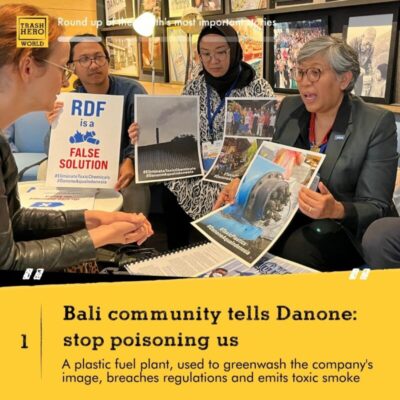
In Bali, members of the Angga Swara neighbourhood in Jimbaran, wrote a letter to Danome asking ‘stop poisoning us’. A plastic plant in the area, used to greenwash the company’s image, breaches regulations and emits toxic smoke. Articles are also available in Indonesian language.
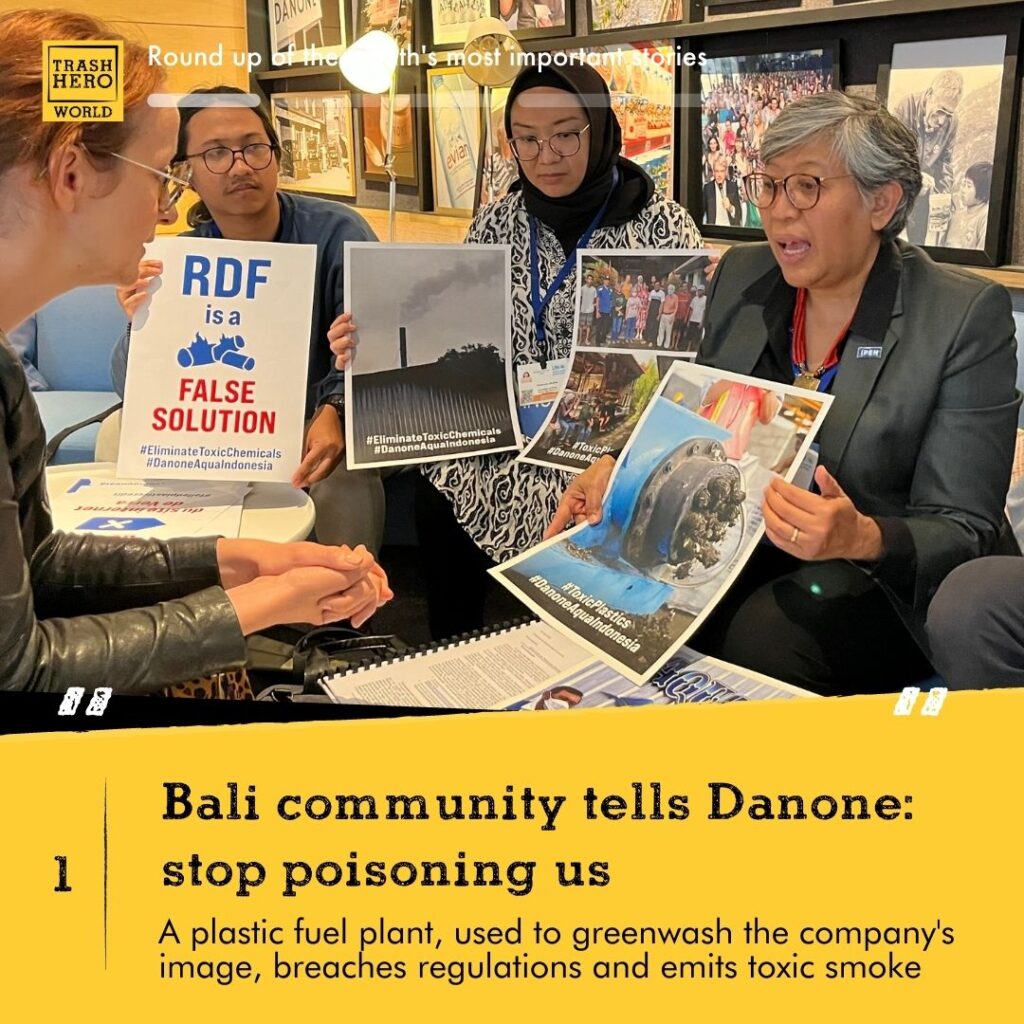
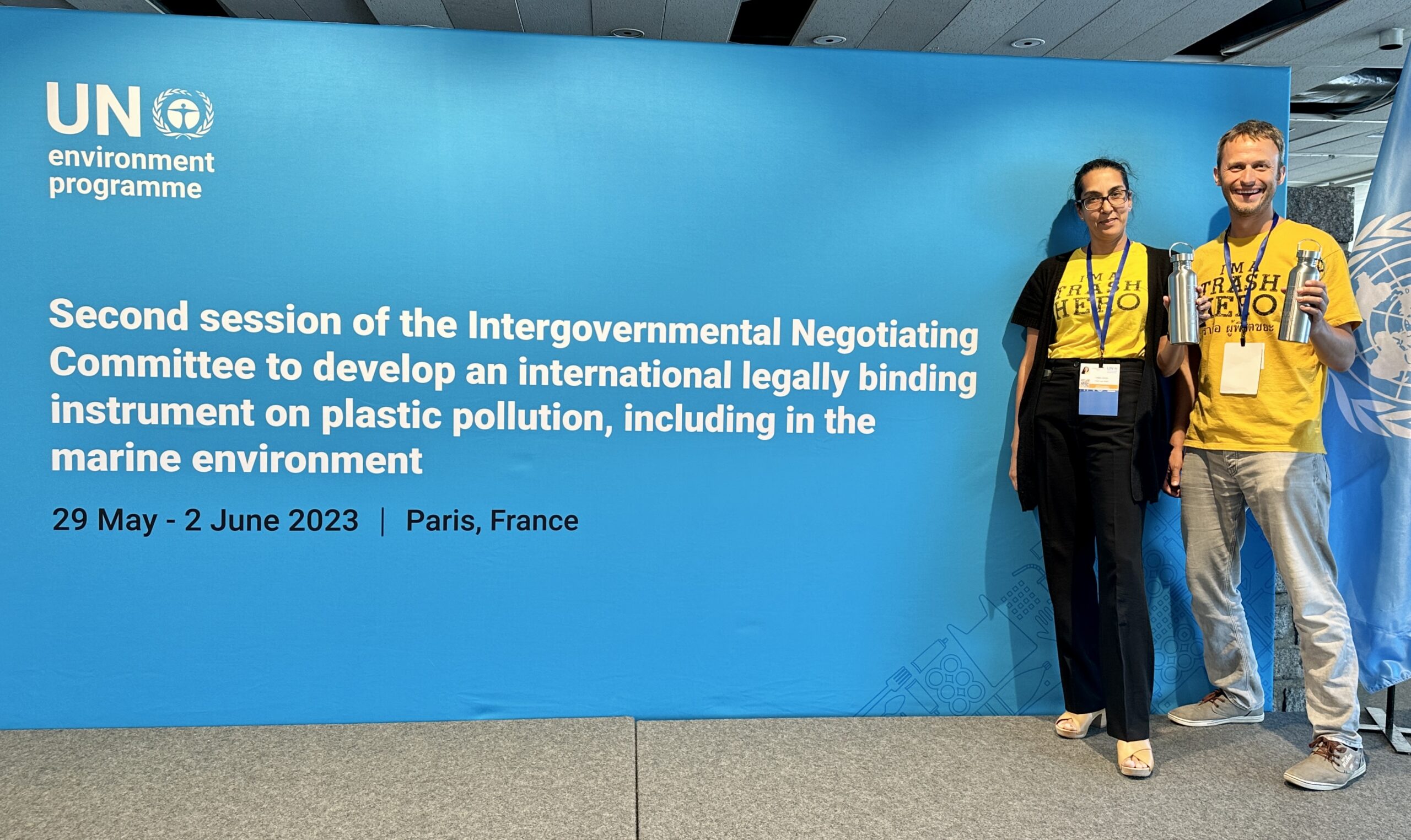
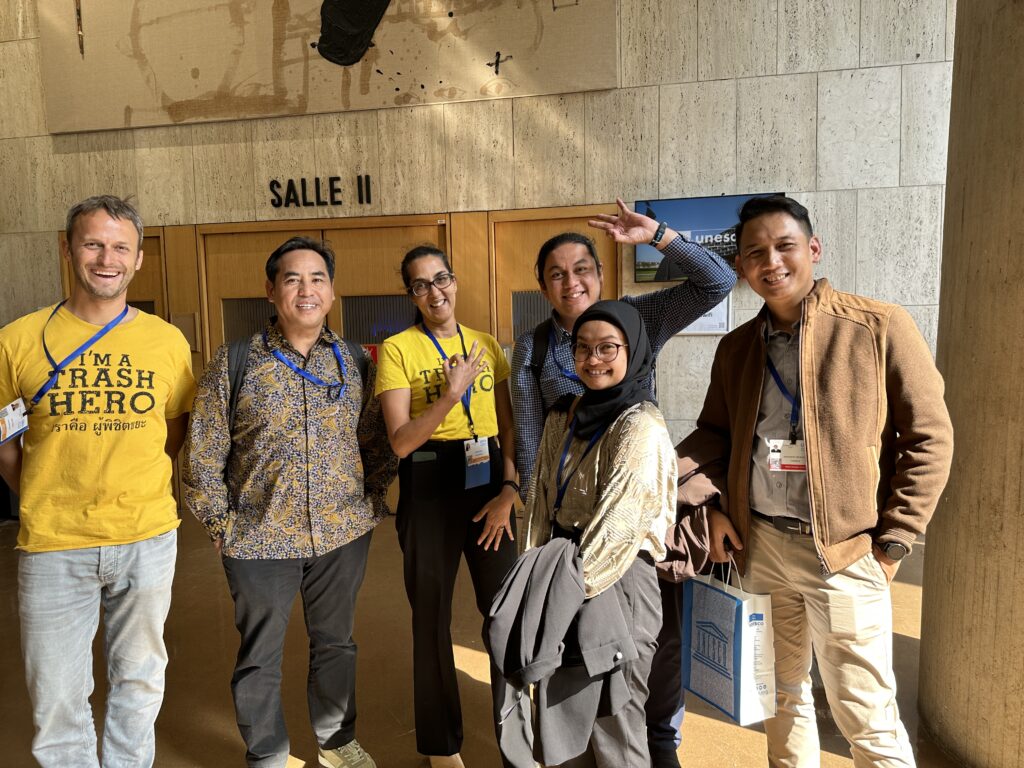
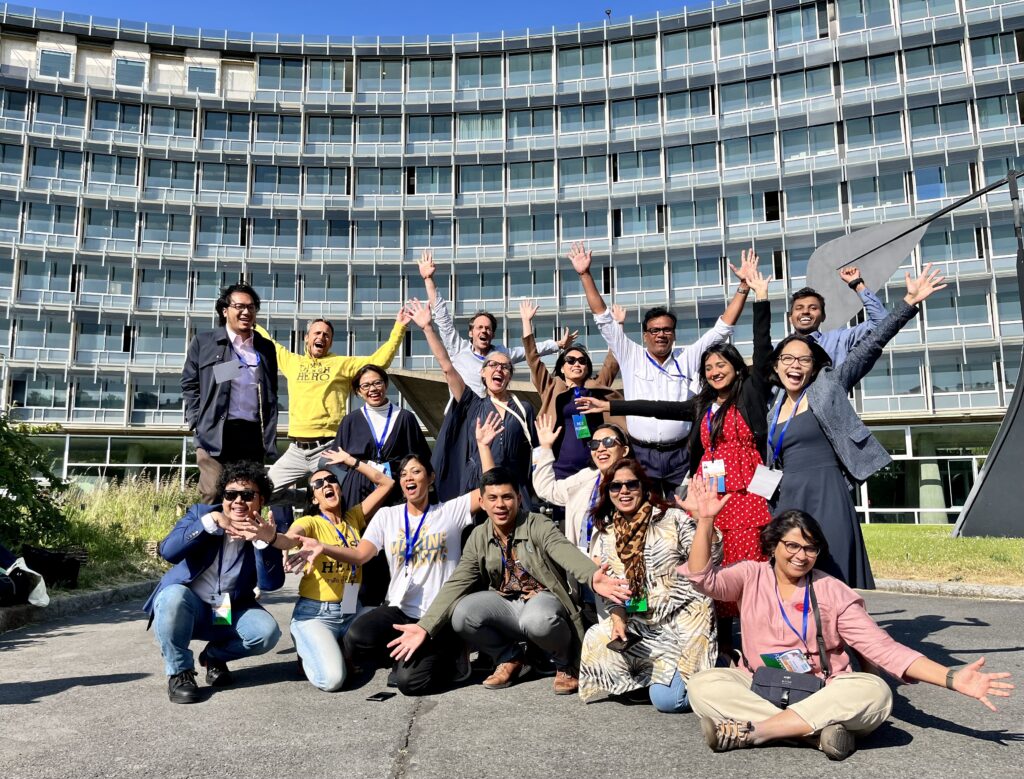
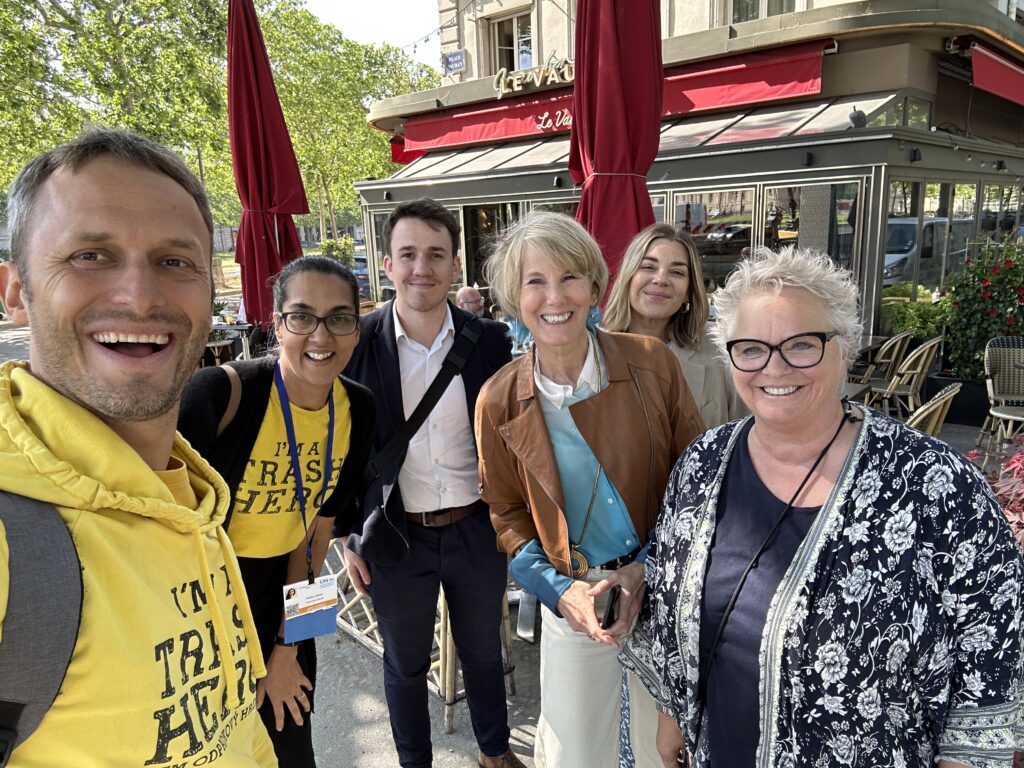
Trash Hero attends UN Global Plastic Treaty talks in Paris
Find out why we were there, the key outcomes and what happens next in our blog post.
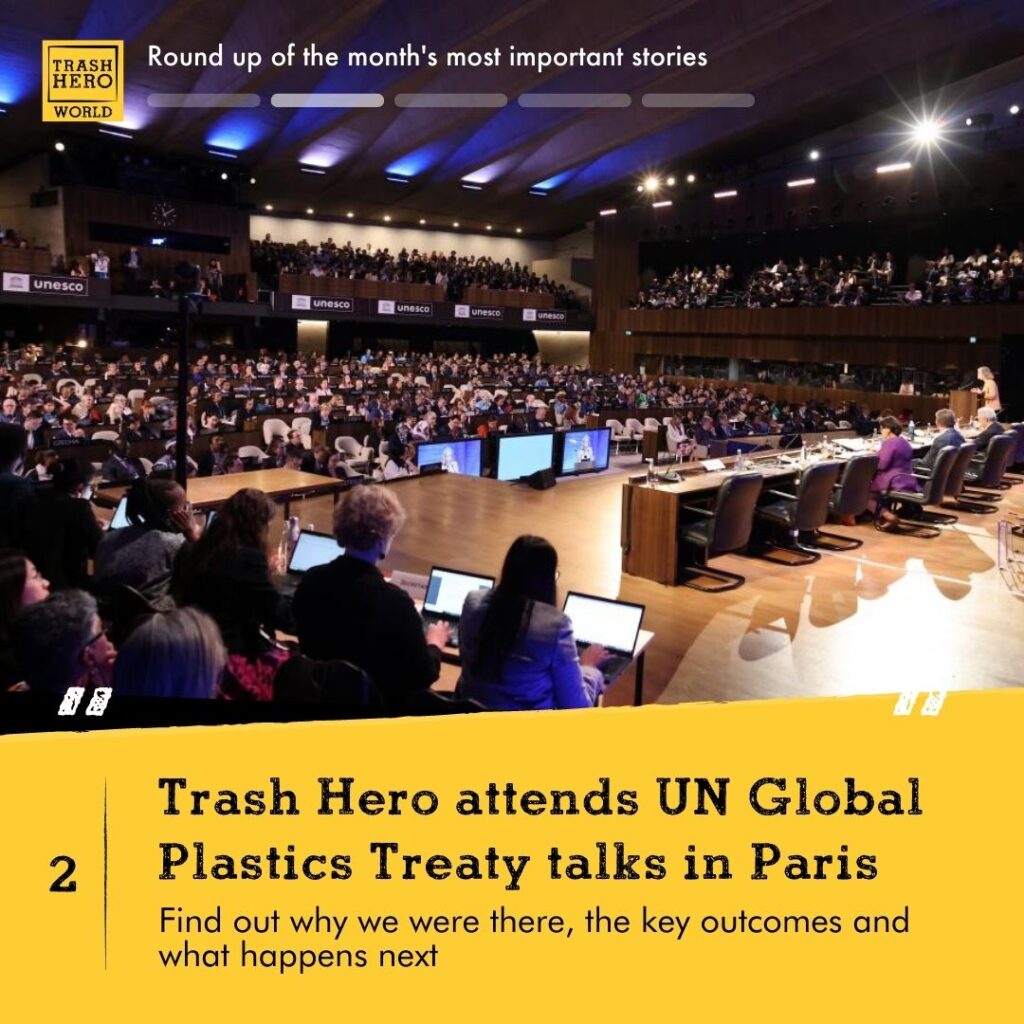
2024 Olympics in Paris to ban single-use bottles and cups
The Paris Olympics 2024 announced they will ban single-use plastic bottles and cups at the event. They are the first large sporting event to make such a commitment, and how the details of how they do it will be key to its success.
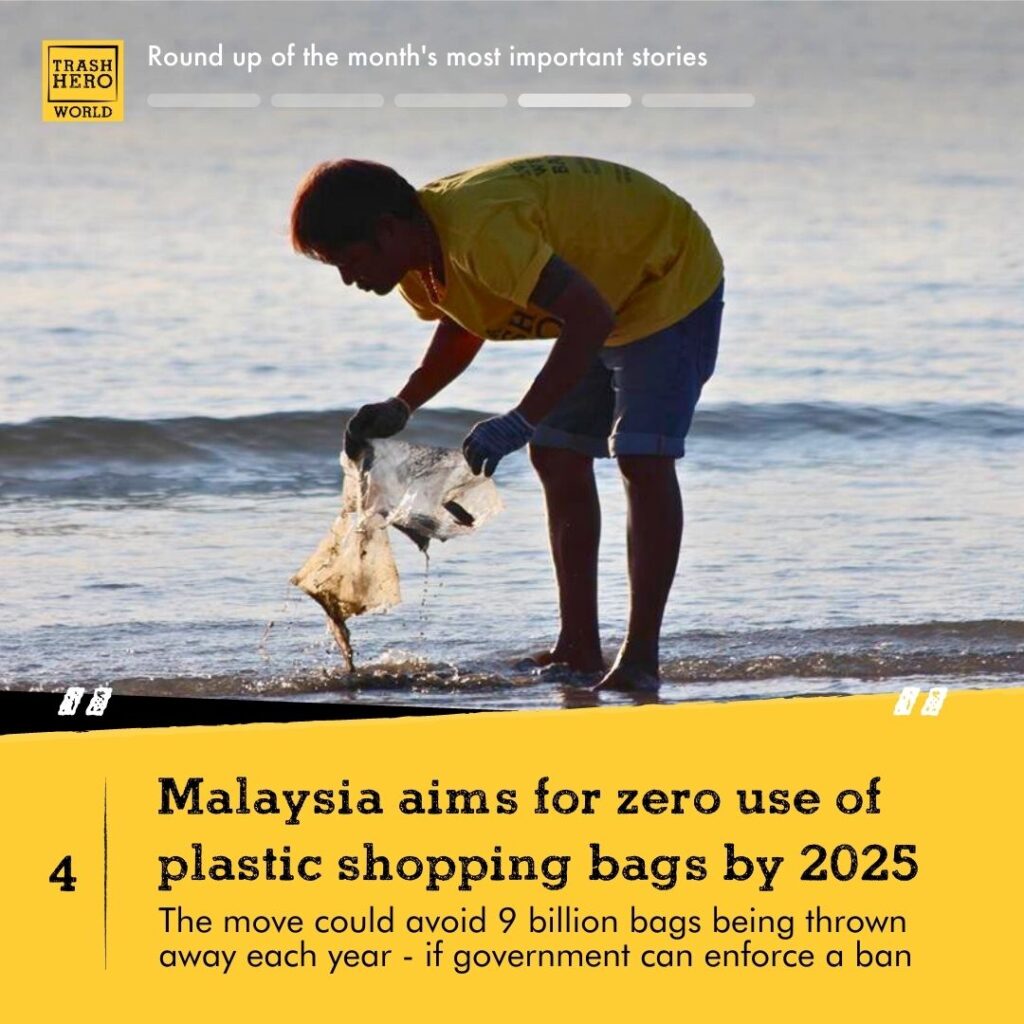
Malaysia aims for zero use of plastic shopping bags by 2025
The ban could prevent the use of an estimated 9 billion bags per year, but for this to happen, the government needs to take important steps, such as public education. Check out our blog if you’re curious about how to make a plastic ban effective.
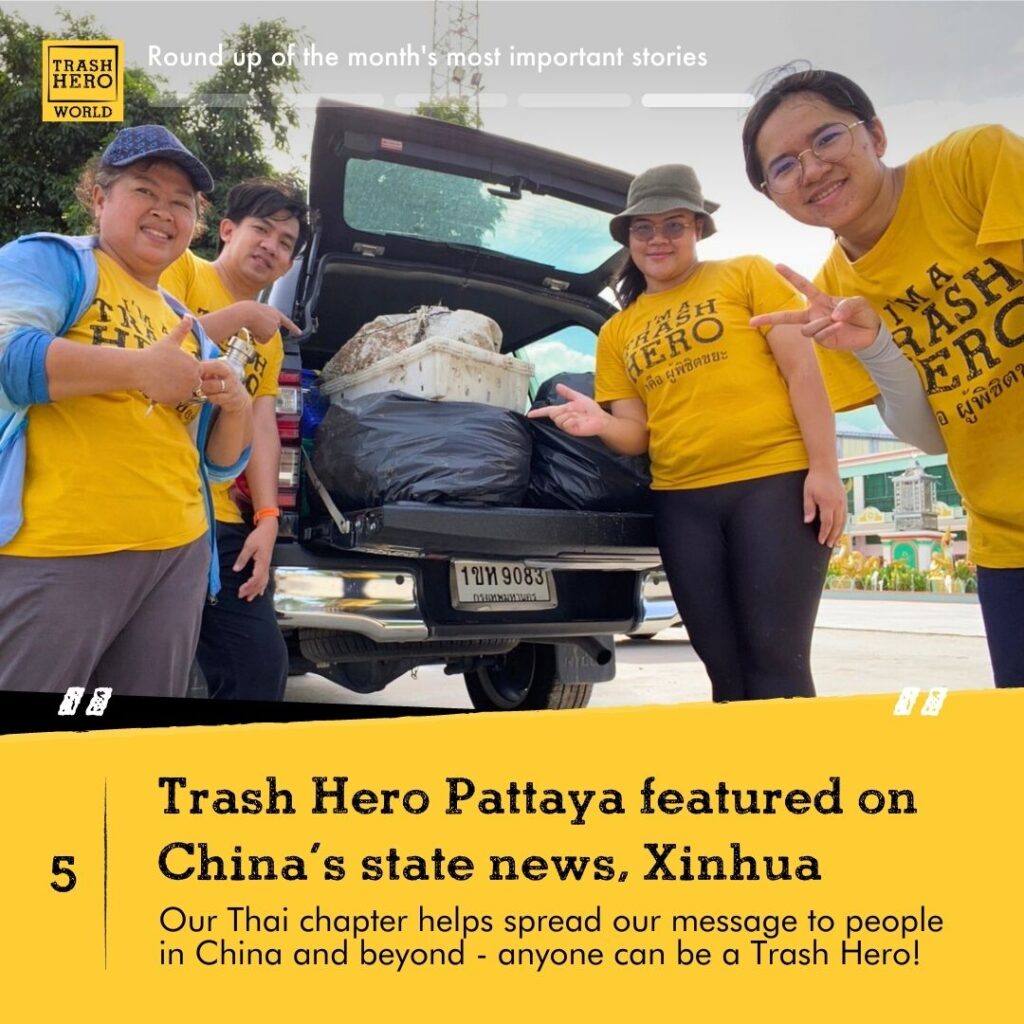
Trash Hero Pattaya featured on China’s state news, Xinhua
The incredible impact that Trash Hero has had is due to the dedication and commitment of our volunteers. They are the movement’s driving force, and their positive attitude and hard work is inspiring
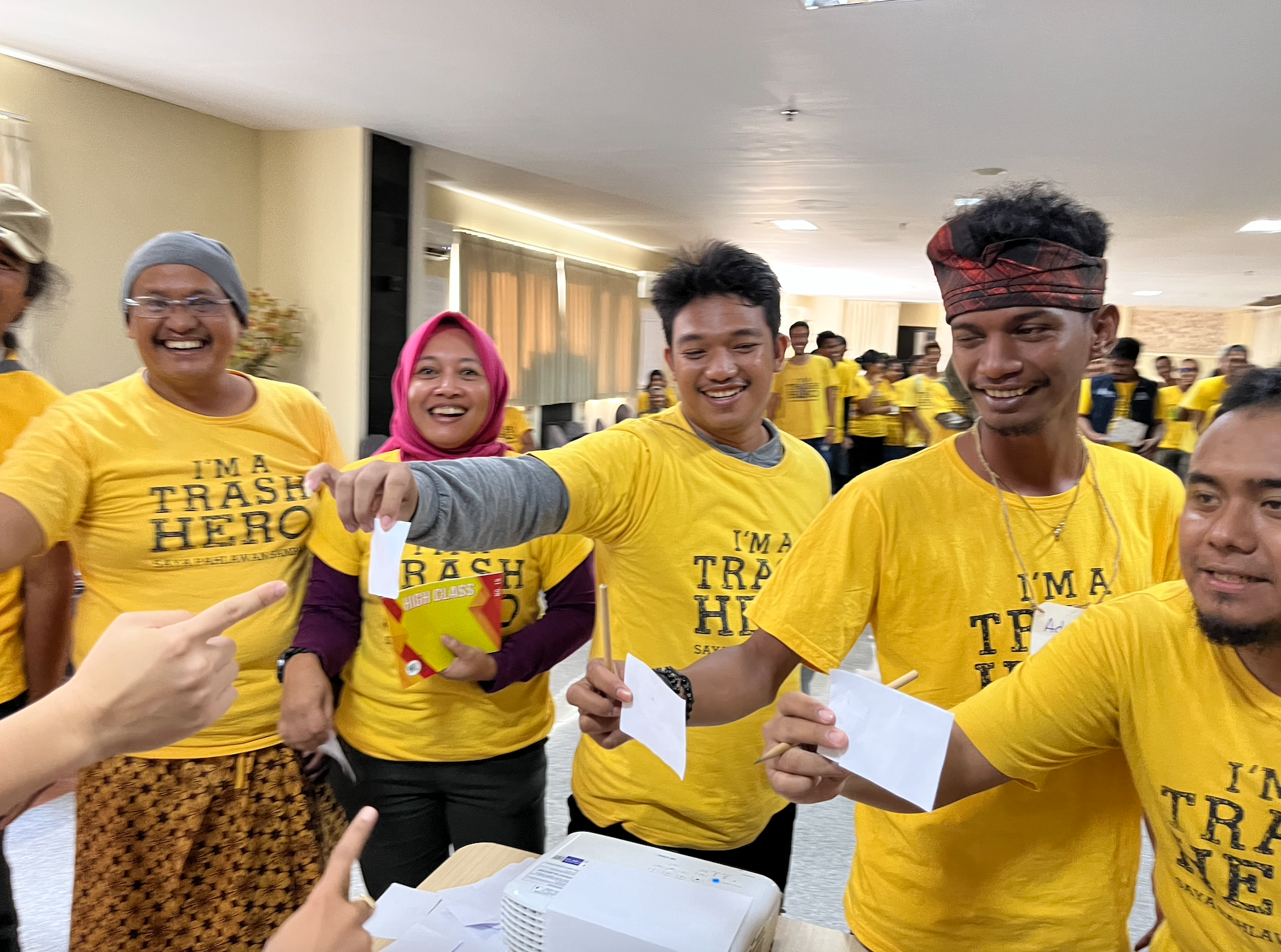
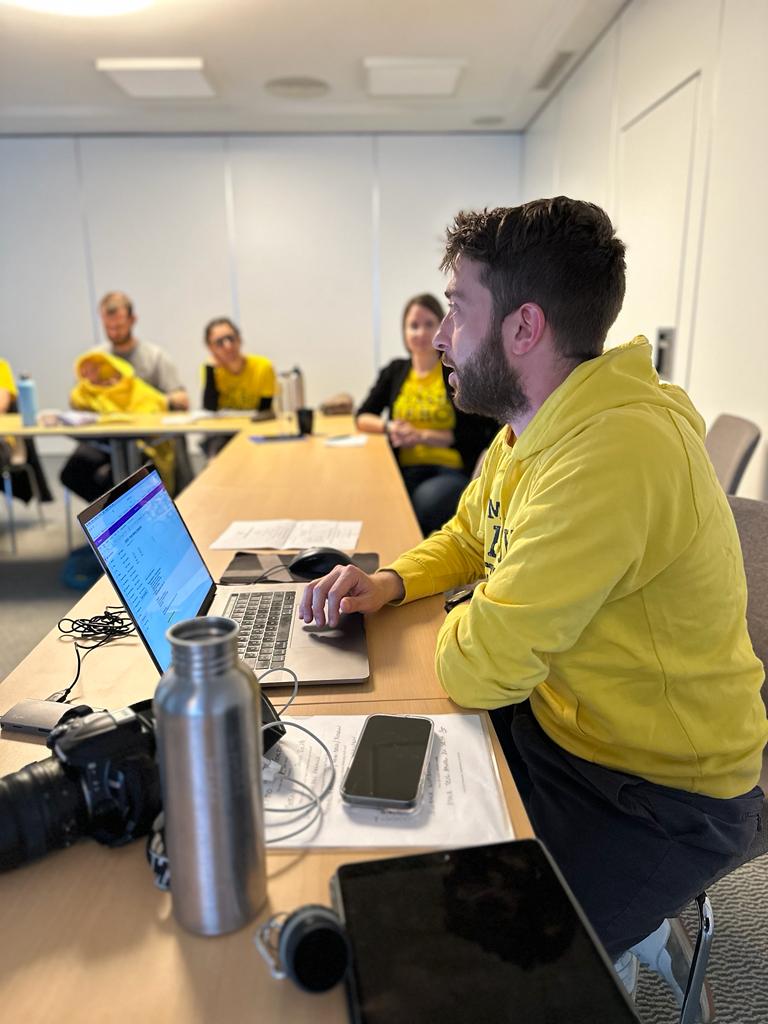
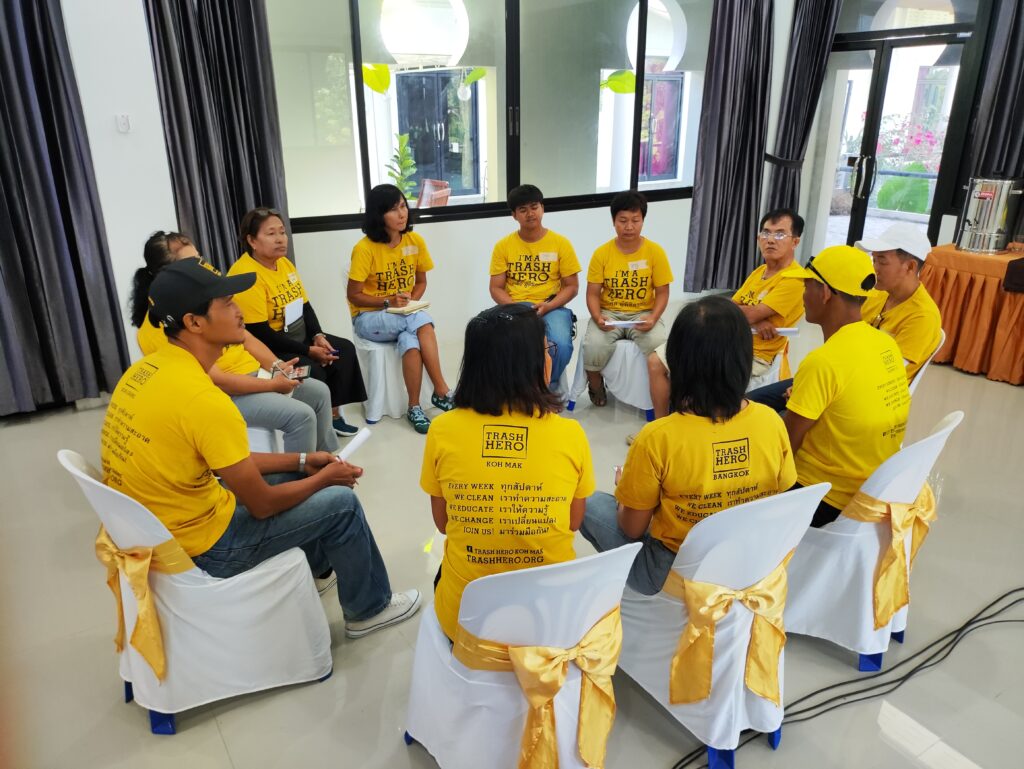
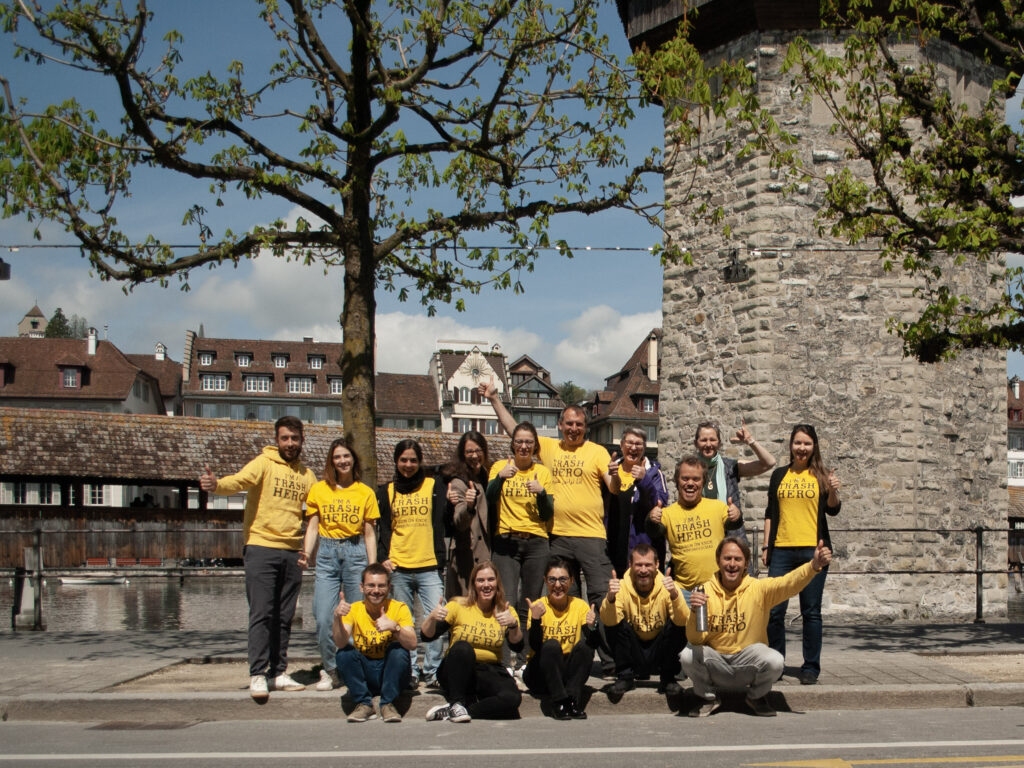
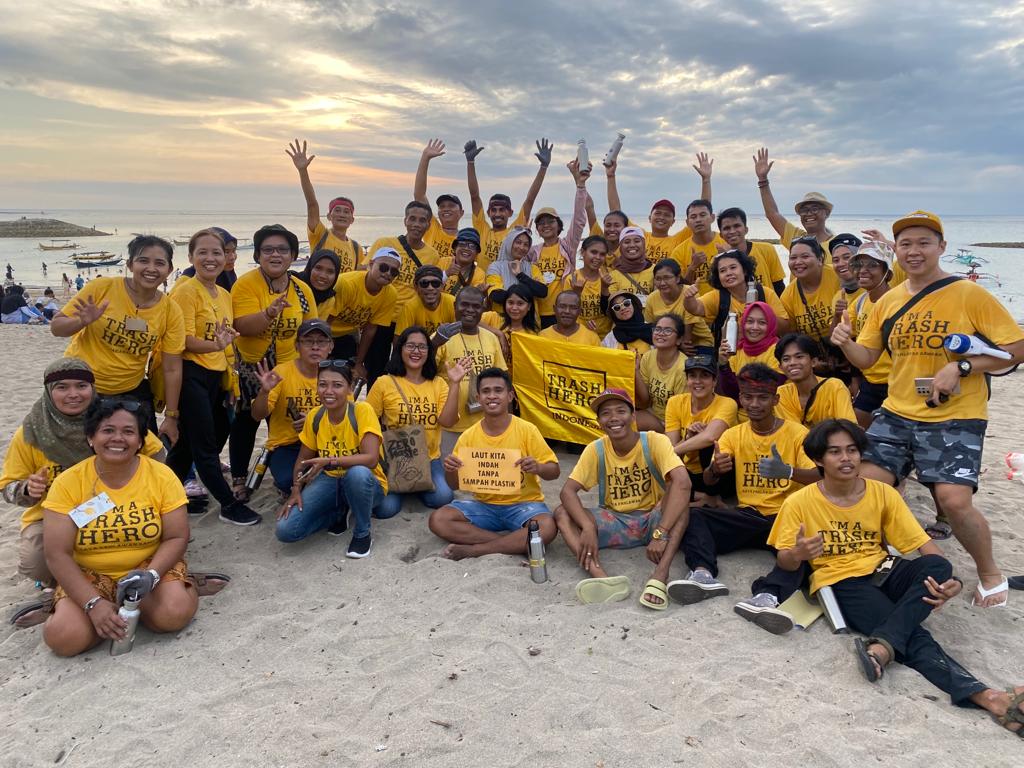
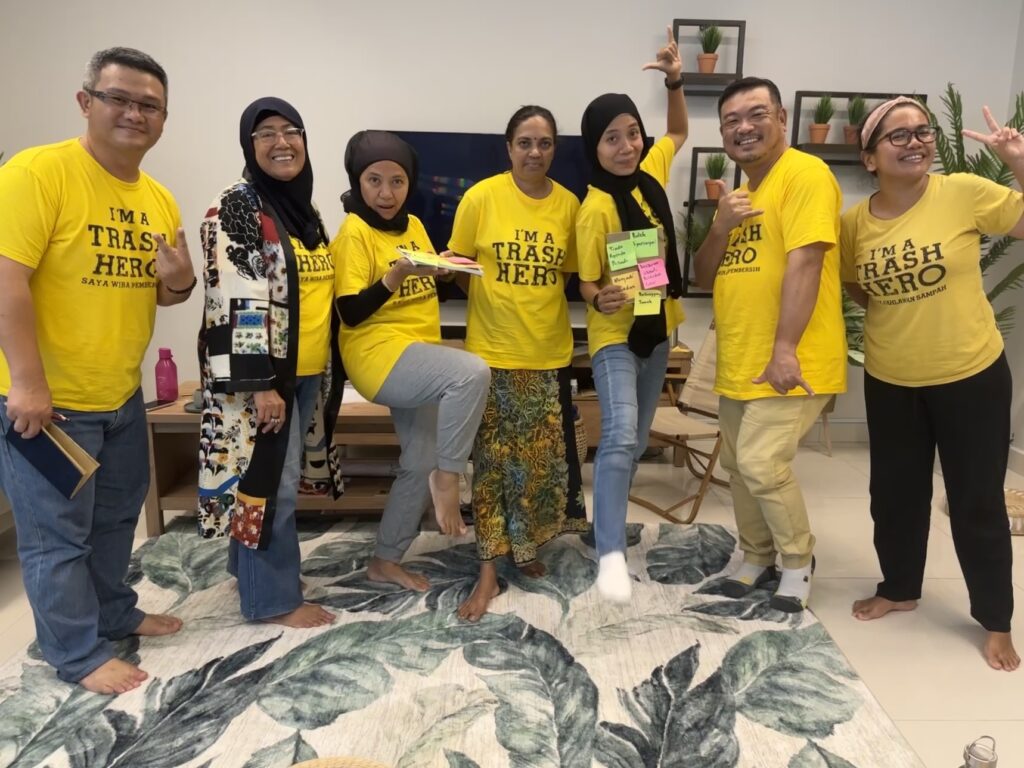
To keep this spirit alight, Trash Hero World holds regular on-site “Family Meetings”, which allow active volunteers inside our major countries of operation to meet and share new knowledge and experiences. In April and May this year, we hosted a one-day event in Switzerland and 3 x three-day residential events in Indonesia, Malaysia and Thailand.
“It was great to see the Swiss Trash Hero Family again, share different experiences, learn from each other and spend a great time together.” Fabio, Trash Hero Bern, Switzerland
In Southeast Asia, volunteers got to know each other through small group work and games, mixing serious learning with plenty of fun. The first day was spent introducing the principles of zero waste systems, including the importance of waste separation, debunking false solutions such as incineration and mapping the problem of waste management in a small island community. Of particular interest was the composting workshop: many participants were keen to try this out on their return home.
The focus of the second day was improving community engagement – exploring how the Trash Hero values and consistent approach establishes trust. This can then be built on to create long term change, for example with the kids’ book programme or the water bottle refill network. The workshops covered social media skills to help increase participation in activities and how to provide meaningful education through cleanups.
“Professional speakers and very good material for us to make improvements in our respective chapters”. Jack, Trash Hero Biak, Indonesia
On day three, volunteers were asked to reflect on the new knowledge and skills they had learned and prepare a strategic action plan to take back to their chapters. Together with support from our mentor teams, this will help to guide their activities over the next six months.
With new friendships formed and new energy found, we see the network stronger than ever moving forward. We are thankful to everyone involved in organising the transport, accommodation and food, creating, facilitating and presenting the sessions, and of course to all those who took time off work to join us.
“This Family Meeting is very extraordinary for each of us chapters to motivate each other more” Trash Hero Volunteer, Indonesia
In total 108 participants joined the Family Meetings from 54 chapters
Trash Hero Switzerland Family Meeting
Date: 23 April 2023
Location: Luzern, Switzerland
Participants: 15
Chapters: 6
Trash Hero Indonesia Family Meeting
Date: 5-7 May 2023
Location: Bali, Indonesia
Participants: 67
Chapters: 33
Trash Hero Malaysia Family Meeting
Date: 12-14 May 2023
Location: Kuala Lumpur, Malaysia
Participants: 9
Chapters: 4
Trash Hero Thailand Family Meeting
Date: 19-21 May 2023
Location: Pattani, Thailand
Participants: 24
Chapters: 11
Thank you to CFLI for supporting the event in Thailand
And there is a lot of ground to cover, with ever-mounting evidence about the toxicity of plastic, from extraction to disposal; its significant role in planetary warming; its destruction of ecosystems and biodiversity; the impossibility of material circularity; and the disproportionate impacts of all of these issues on the Global South and vulnerable communities.
Member states must also agree on the implementation of any agreed measures – whether they will be voluntary or binding, how they will achieve compliance and how they will be financed.
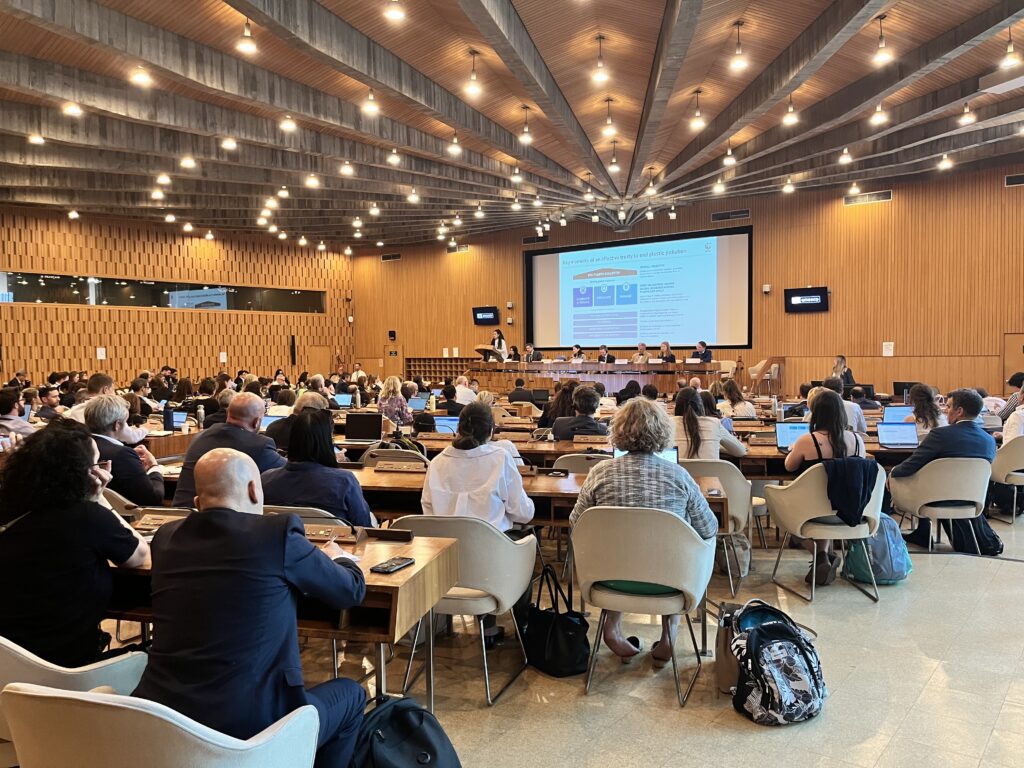
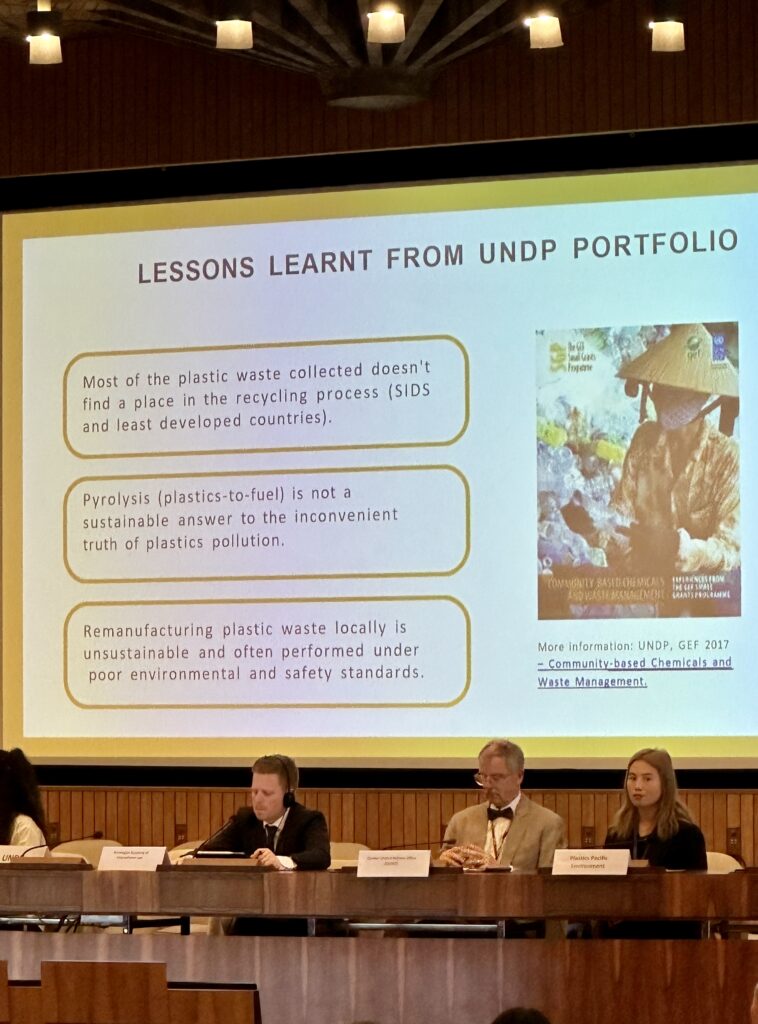
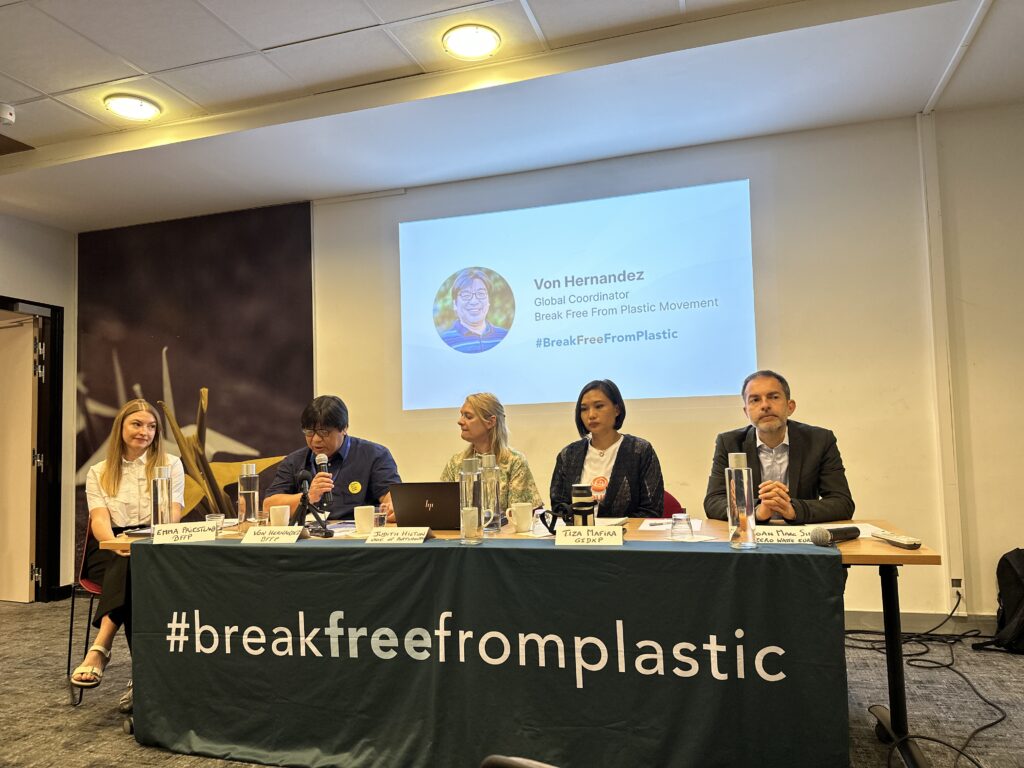
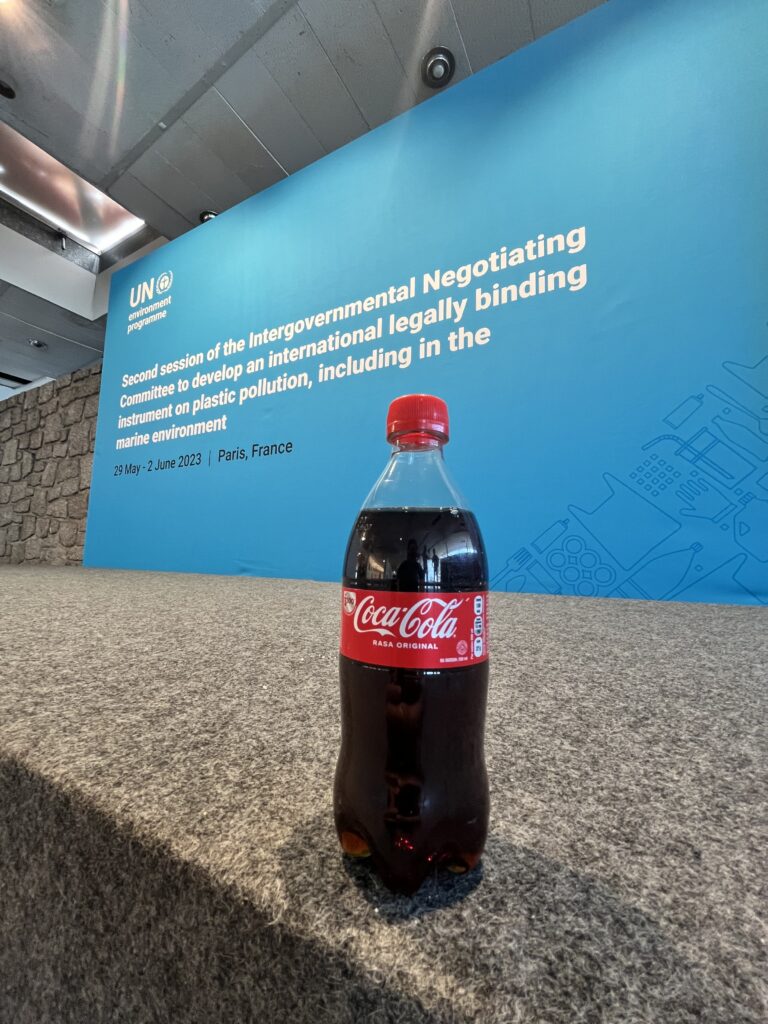
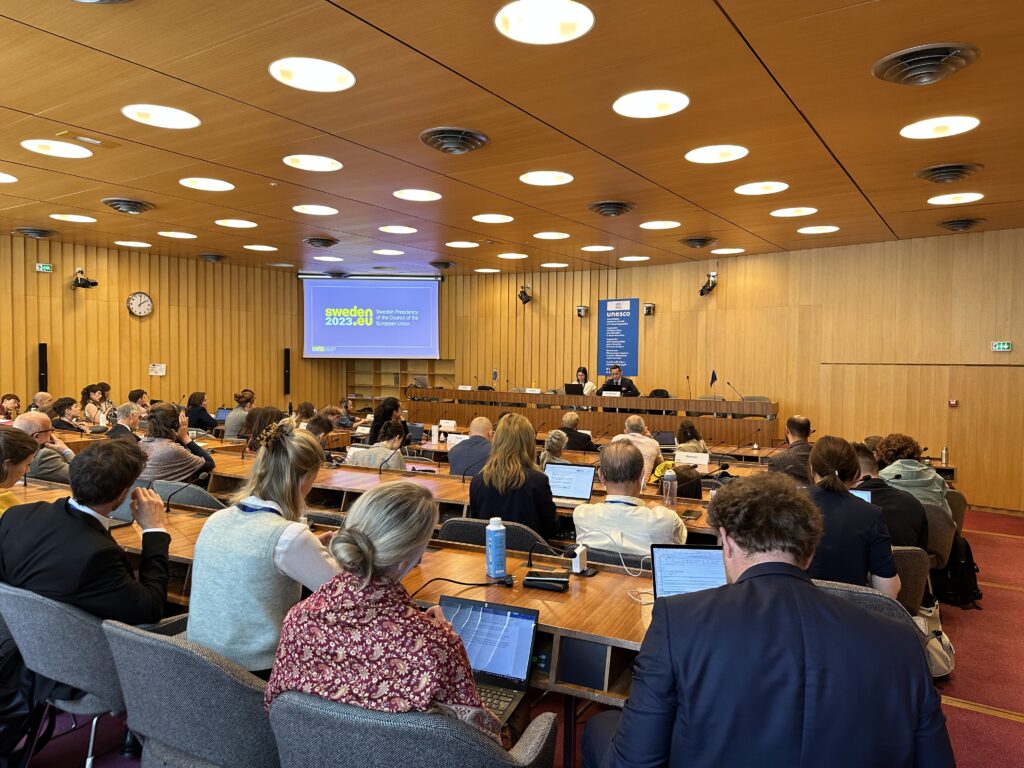
Trash Hero World has just returned from INC-2, the second of five sessions to resolve these issues, held from 29 May – 2 June 2023 in Paris.
To see what we believe the treaty should look like, see this short video:
It was Trash Hero World’s first time attending a UNEP event, as a recently accredited civil society organisation, and it was a huge honour to represent our volunteers and work alongside committed and knowledgeable colleagues in the Break Free From Plastic and GAIA networks.
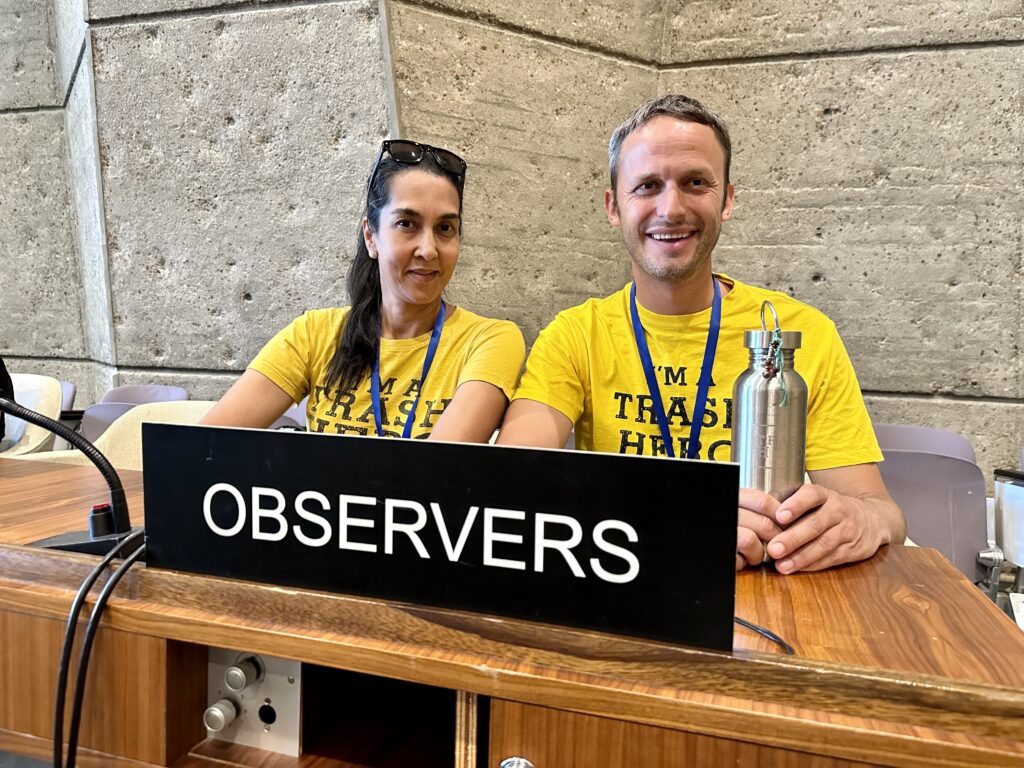
Trash Hero World and other NGOs have the role of “observers” at UNEP: we cannot decide anything that goes into the treaty, but we are allowed to be present and – to some extent – heard at the negotiations, both formally and informally through discussions with official government delegates.
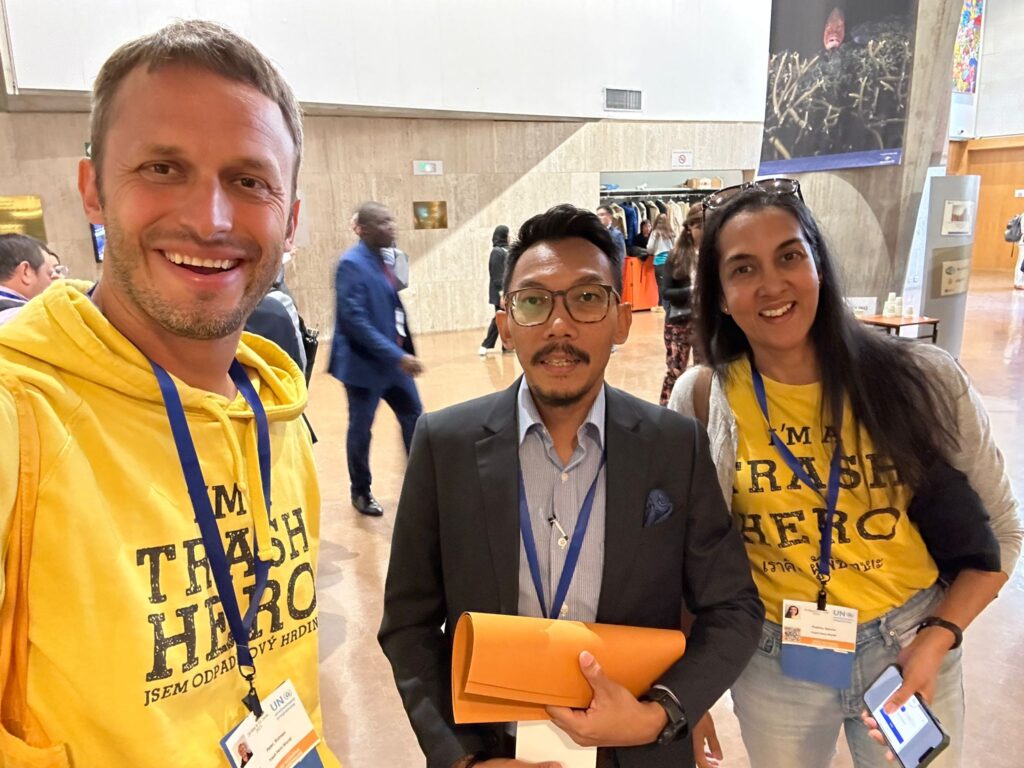
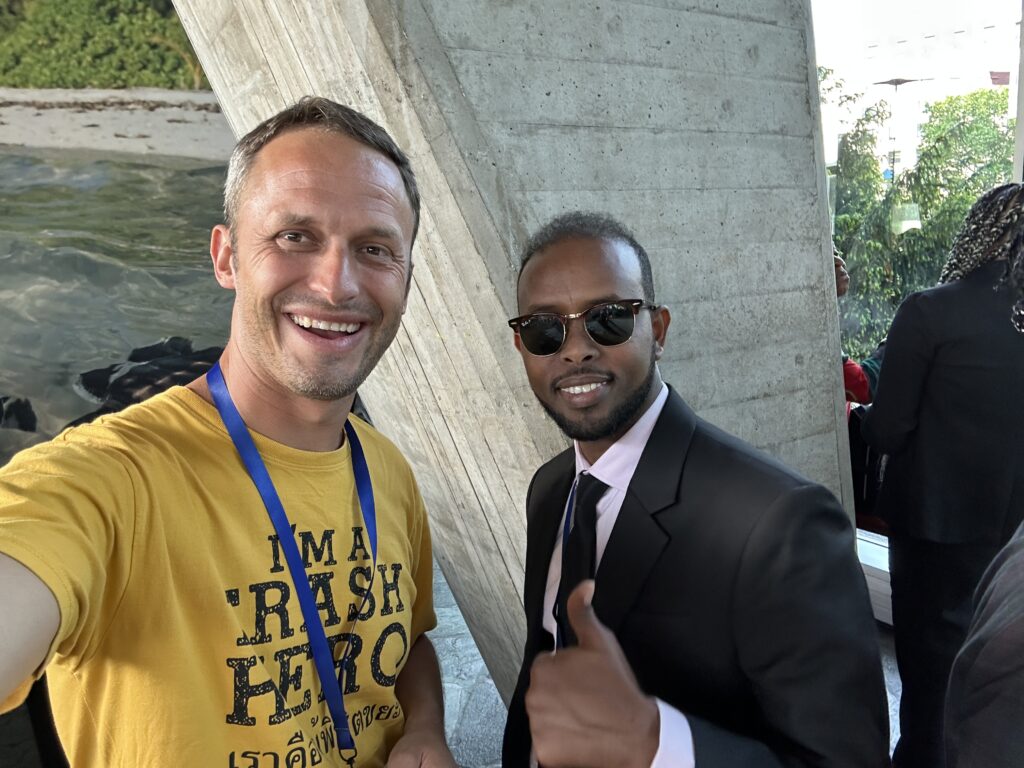
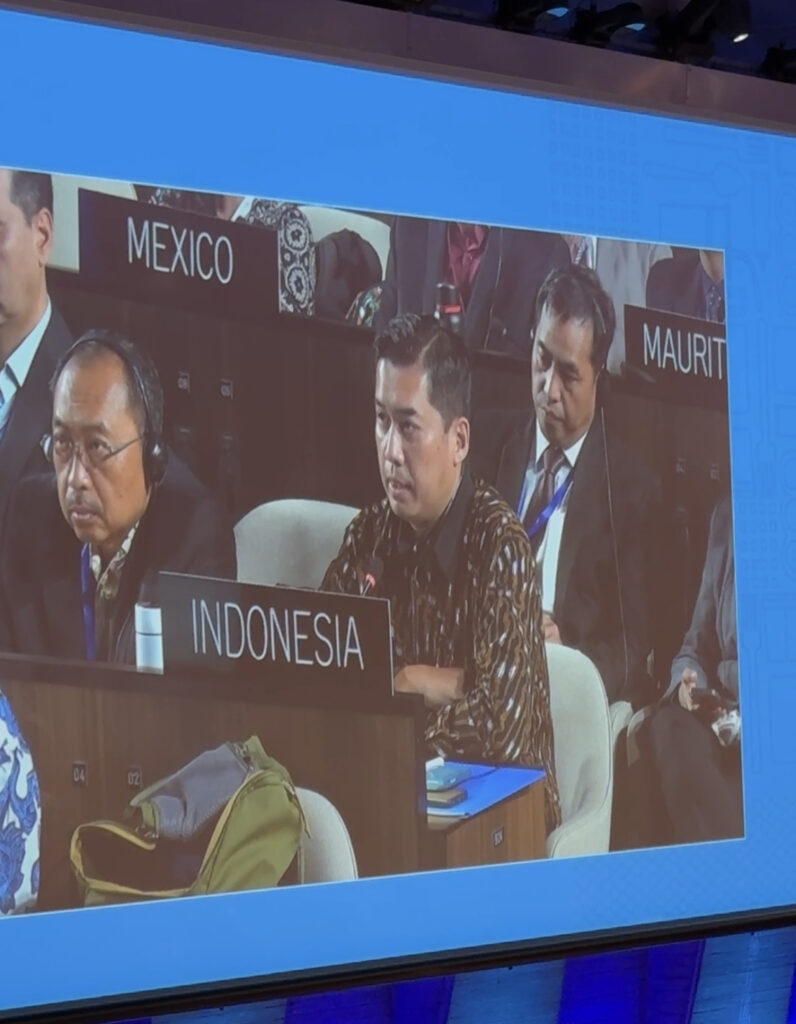
We were able to meet with the representatives from our major countries of operation – Thailand, Indonesia, Malaysia and Switzerland – as well as several others. We also joined many side events to hear from experts in the fields of plastic toxicity and recycling (among others) and from indigenous leaders from the Global South.
With meetings starting early morning and negotiations going on well into the night, it was an intense and fruitful week, despite some early setbacks. Here are the key talking points:
1. Voting vs. consensus Precious negotiating time was lost as a bloc of oil and plastic producing nations reopened an old discussion about the rules of procedure. They called for all treaty decisions to be made by “consensus”, i.e. unanimous agreement, rather than the 2/3 majority vote provisionally agreed at INC-1 in Uruguay, and refused to move forward until this point was resolved. Others present at the meeting observed that consensus would:
a) give any individual country veto power over the rest and b) likely result in a weaker and / or voluntary set of measures being adopted, due to the difficulty of accommodating all interests
After more than 2 days of deadlock, a temporary compromise was reached, whereby the bloc’s objection to voting was mentioned in a footnote to the rule. This left less than 3 days for discussion on content – as well as the possibility that the issue could rear its head again at subsequent meetings.
2. Upstream vs. downstream From the outset, countries have been divided over whether the treaty should focus on stronger, upstream measures to end plastic pollution (such as reducing the production of plastic and its associated chemicals and promoting reuse with safe alternatives) or instead look to weaker, downstream measures (such as reducing “leakage” and “improving*” waste management).
At INC-2, it was encouraging to see a majority of countries, including the EU, Switzerland, many small island developing states, Mexico, Senegal, New Zealand and others, openly support more ambitious upstream solutions. 135 out of 180 countries also called for the final rules to be globally binding for all countries. Countries who produce fossil fuels, petrochemicals and plastic unsurprisingly favoured downstream measures and a “bottom up” approach, where individual countries could pick and choose which measures to adopt.
Despite these fundamental differences, at the end of the week, a mandate was given to the INC secretariat to develop a first draft of the treaty to ‘reflect all viewpoints’. Although this will not be an easy task – especially if we are to keep the original ambition to regulate the whole life cycle of plastics, it was welcomed as a positive outcome and one that puts the negotiations back on track after the delays at the start of the week.
Intersessional work (informal meetings between now and INC-3) has also been mandated to make up for lost time and to set up scientific panels to advise member states on different issues. Who will sit on those panels will also be a topic for debate.
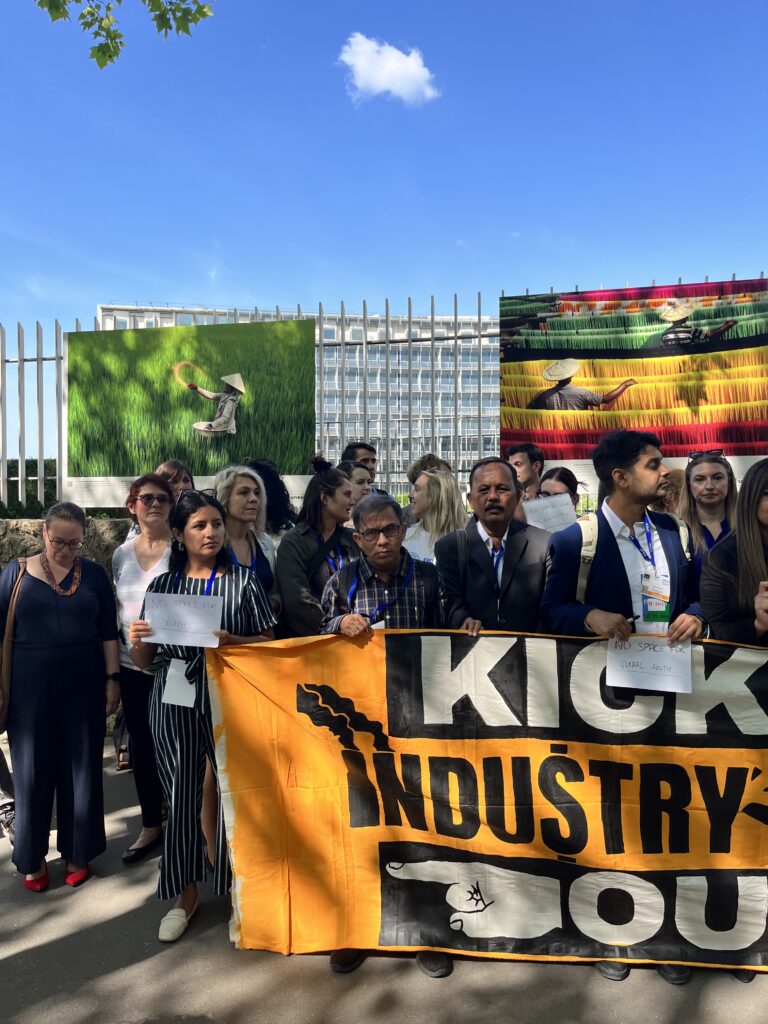
3. Stakeholders vs. rights holders UNEP reversed its decision to restrict access to civil society observers after an NGO action on the first day of the meeting, though access remains an ongoing issue for independent scientists, youth and indigenous peoples.
At the same time, at least 190 plastics industry lobbyists were present at the talks – some even joining official government delegations. UNEP regards this as normal “stakeholder” participation but this term, as GAIA notes, implies a “false symmetry […] between the perpetrators of plastic pollution and affected communities”. We should instead privilege the voices of “rights-holders” across the plastics life cycle. There is already a precedent for this, with WHO keeping the tobacco industry out of negotiations for the Framework Convention on Tobacco Control more than 20 years ago.
What happens now? All eyes are now on INC-3 and the potential draft treaty that will emerge in the coming months, following the intersessional work and further submissions by member states and observers. The meeting is scheduled to be held in Nairobi in November 2023. We will have further updates on our social media channels @trashheroworld.
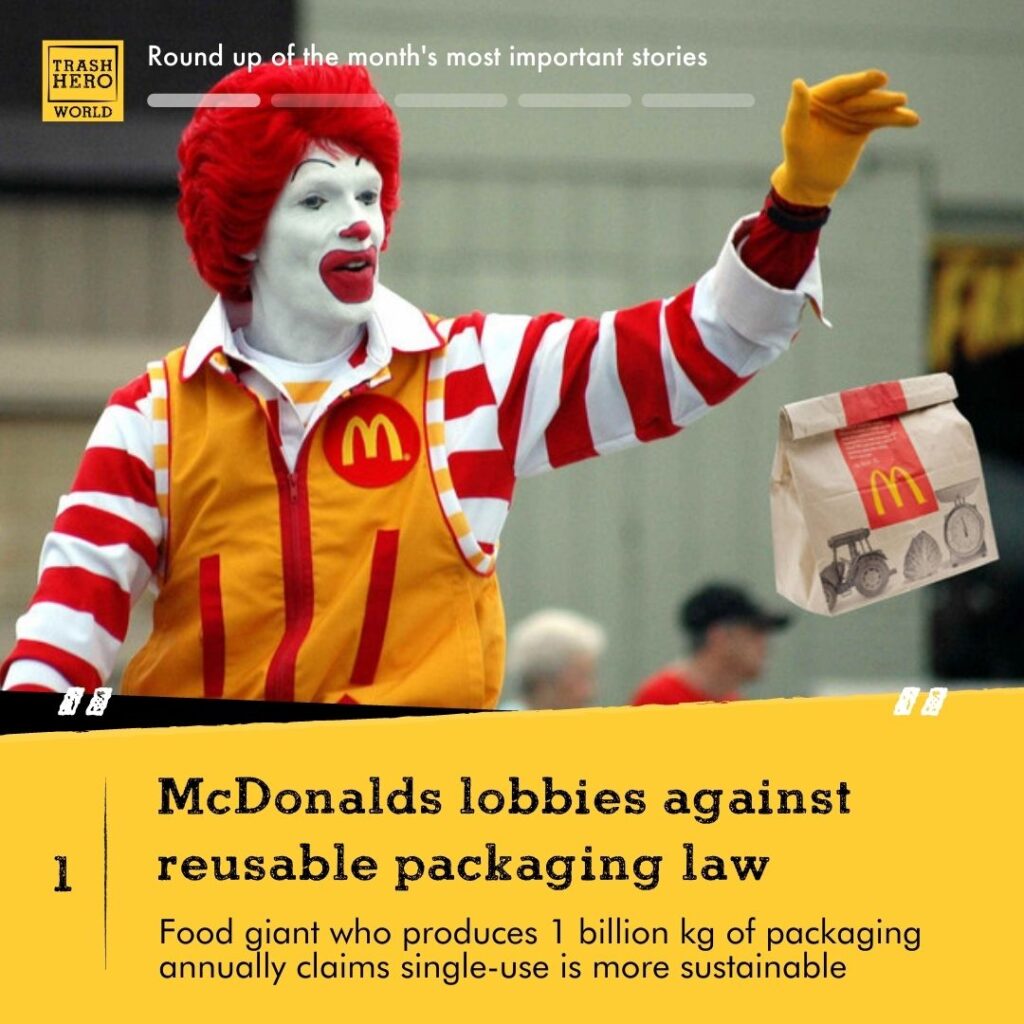
McDonalds produces 1 billion kg of packaging per year, equivalent to the weight of 100 Eiffel towers! Proposed EU regulations would force them to transition to refill and reuse systems. This article from the EU observer reveals how they have been leading campaigns against the legislation.
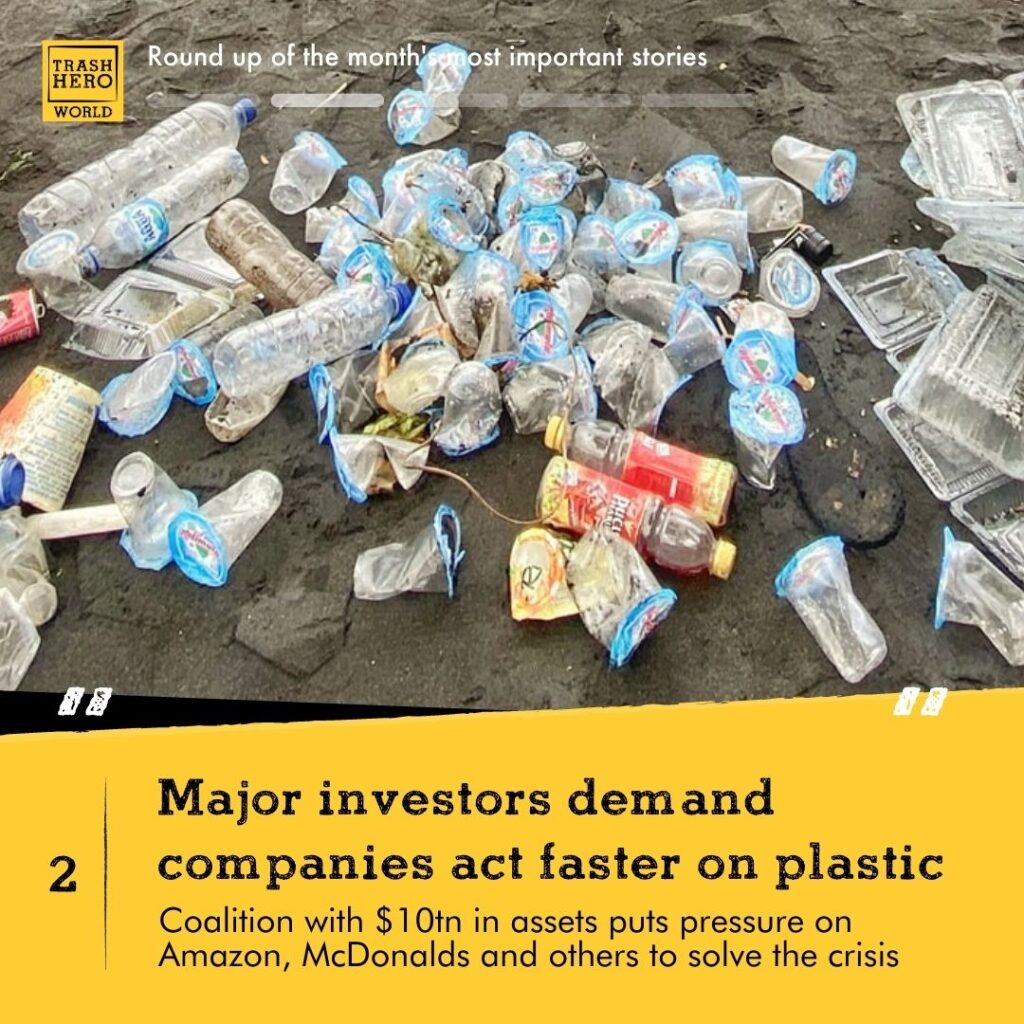
Investors in major FMCGs want the companies to reduce their plastic waste
A Dutch coalition, responsible for $10tn of assets, is calling for FMCGs such as Amazon, McDonalds and Unilever to reduce their single-use plastic in response to concerns about the environment and our health.
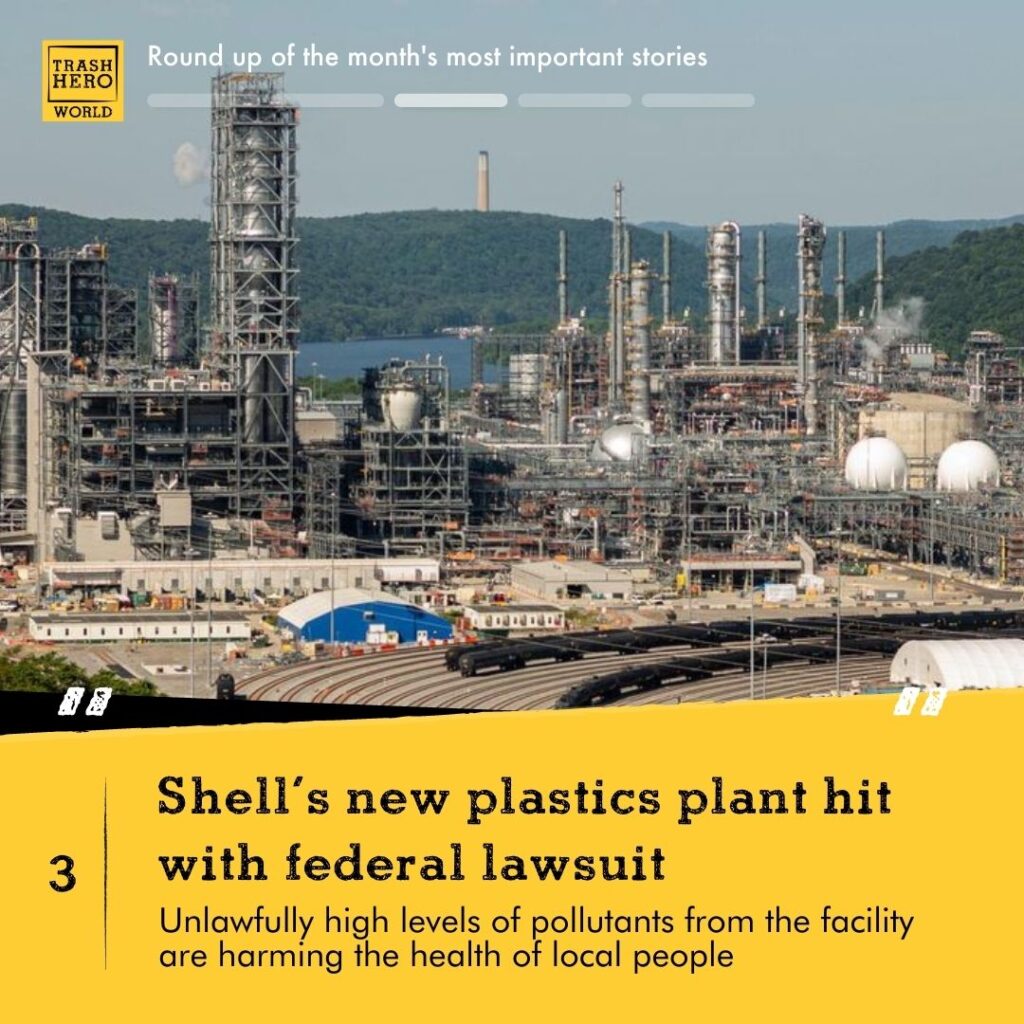
Shell’s new plastic plant facing a federal lawsuit
A lawsuit has been filed against Shell, whose new plastic plant has allegedly been repeatedly releasing dangerous levels of airborne emissions, harming the health of local residents.
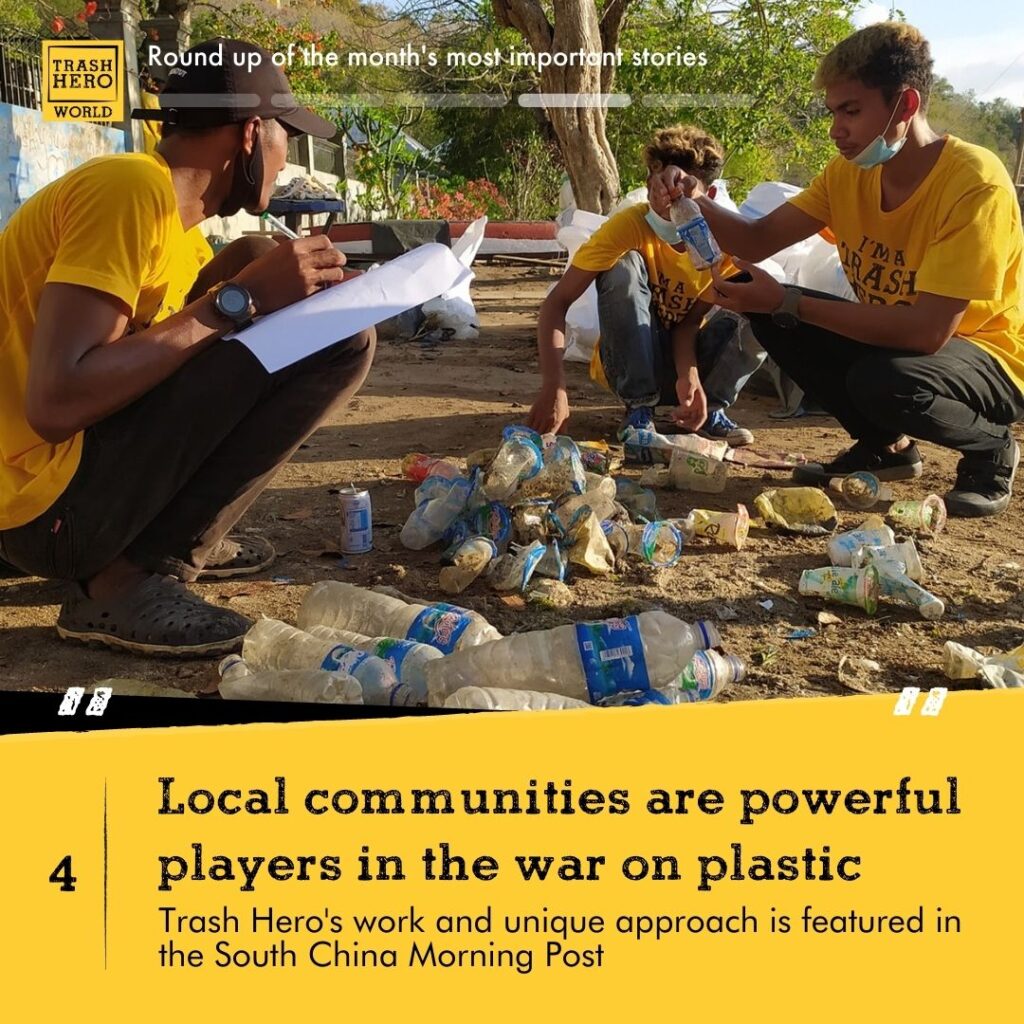
Local communities are powerful players in the war on plastic
In an article in the South China Morning Post, Trash Hero Programme Director Seema Prabhu discusses how cleanups cannot solve plastic pollution, but are an important tool for educating local communities and holding corporate polluters accountable through collected data.
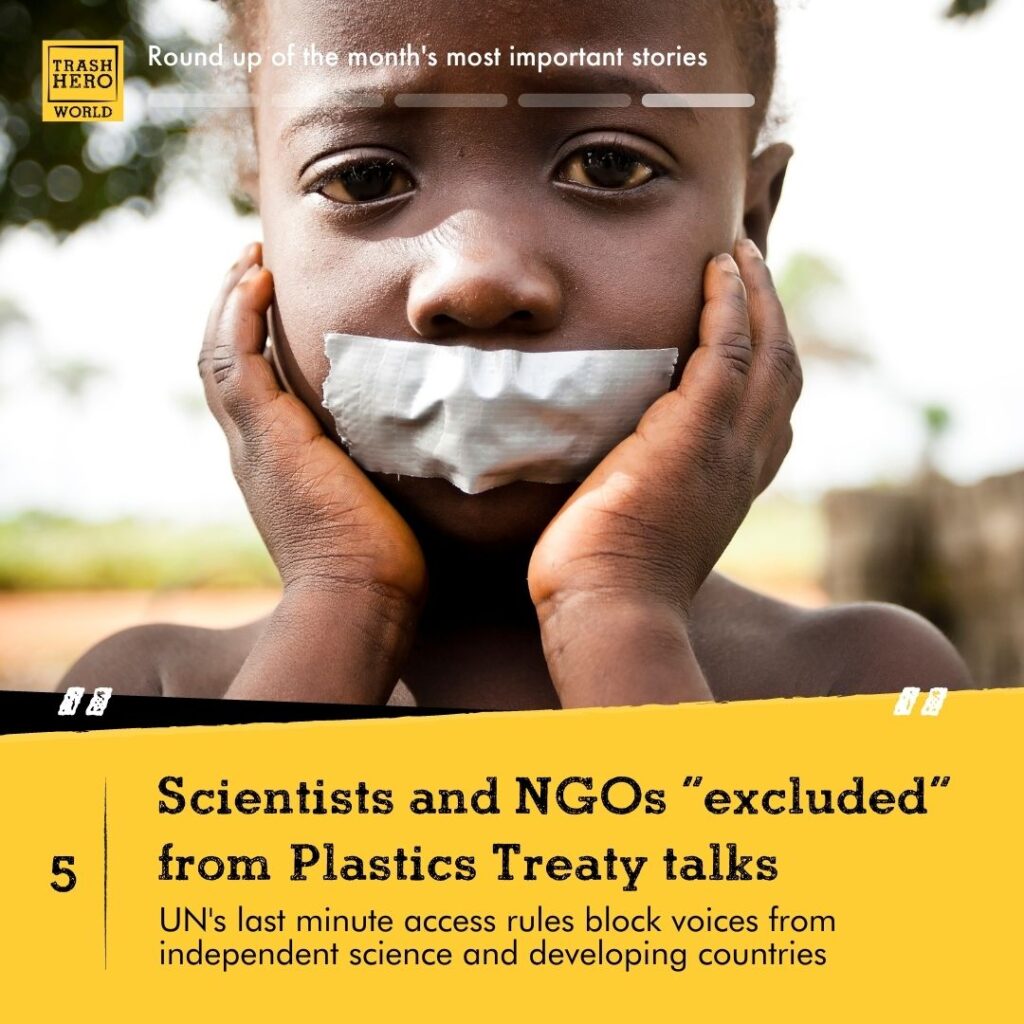
Scientists and NGOs to be “excluded” at Plastics Treaty talks
The UN has been accused of limiting access to the negotiations of the Global Plastics Treaty in Paris, in a last minute change that will allow only 1 out of 5 delegates to take part at any time. This means many voices from independent science and developing countries will not be heard by lawmakers.
What do you think about these stories? Let us know in the comments!
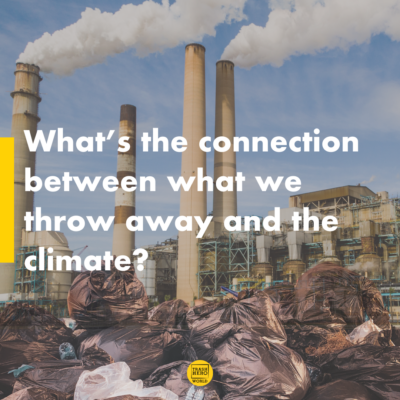
We currently produce an enormous quantity of waste, especially plastic. This overproduction, and the resulting mismanagement, directly increase greenhouse gas emissions and the effects of climate change.
A recent Global Alliance Incinerator Alternatives (GAIA) report reveals the ‘clearest and most comprehensive evidence yet’ that a zero waste approach would totally transform this situation by reducing emissions and mitigating the effects of extreme weather.
In this blog post, we break down some of their key findings.
Separate food waste to reduce methane emissions
Composting is a game-changer when it comes to reducing methane emissions and is better for the planet than recycling. When organic waste, like food scraps, decomposes in landfills, it produces a high amount of methane, which is released into the atmosphere. But by separating it, we can ensure it is composted to create nutrient-rich soil. According to the GAIA report, composting our organic waste will reduce methane emissions from landfills by a whopping 62%. And when we add mechanical recovery and biological treatment of residuals, we can reduce these methane emissions by an average of 95%!
Reuse and refill to reduce emissions from fossil fuels
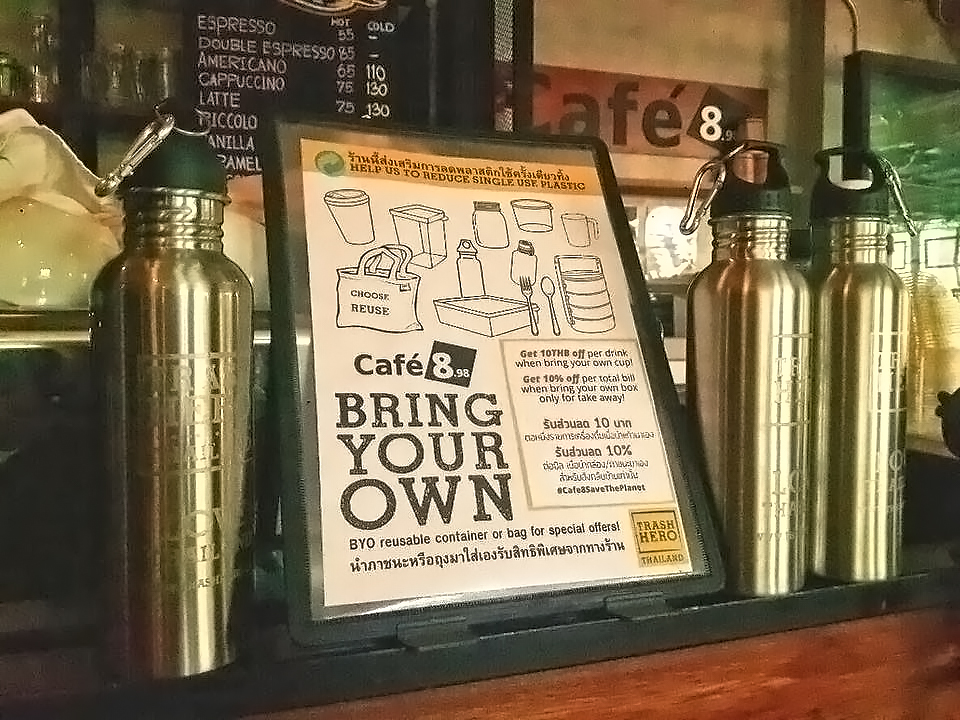
Plastic, over 95% of which is derived from fossil fuel, leaves a massive carbon footprint – creating emissions at every stage of its lifecycle. A staggering 44% of plastic is used for packaging or disposable items. By promoting refill and reuse systems and embracing a zero-waste approach, companies and local governments can easily reduce non-essential plastic use.
This will drastically decrease our fossil fuel-related emissions, as well as our dependency on oil and gas.
Stop burning trash to cut greenhouse emissions
Incineration in various guises, such as ‘plastic-to-fuel’, is often promoted as a “solution” for plastic waste. The GAIA report shows that this is a very expensive, energy-intensive and inefficient process. It also creates a ‘lock-in effect’ that guarantees climate emissions for years to come. A study in Seoul, a city that relies significantly on incineration, found that the emissions from incineration were five times higher than from landfills. Although limited studies have been done on the impact of incineration, it is widely accepted that burning plastic has severe climate, environmental, and health impacts.
Ban plastics to build resilience against extreme weather events
Flooding is becoming more frequent due to climate change, and studies have found that mismanaged waste exacerbates the situation. Plastic waste clogs drainage systems, so much so that Rwanda, Tanzania, and Uganda all banned plastic bags following severe flooding. Discarded waste is a breeding ground for insects known to spread diseases.
In Manila, for example, the dumping of solid waste was identified as a significant factor in the high levels of infections during floods and their aftermath. A zero-waste approach would eliminate this waste, meaning we can mitigate the impact of severe weather events.
Use compost to improve soil health
The final benefit of zero waste that we will discuss here – as there are many more – is how composting can improve soil health. Our planet’s soil, a crucial element of ecosystems, is facing significant impacts from climate change. Soil moisture decreases due to higher air and soil temperatures, leading to aridity and desertification. This, coupled with erosion, could reduce food production by 25% by 2050. Compost provides an easy solution by improving soil organic matter, increasing its capacity for nutrient storage, and improving water absorption, strengthening soil resilience to climate change. Composting also reduces pollution, landfill waste, soil erosion, and surface and groundwater contamination, making it a valuable tool for adapting to climate change.
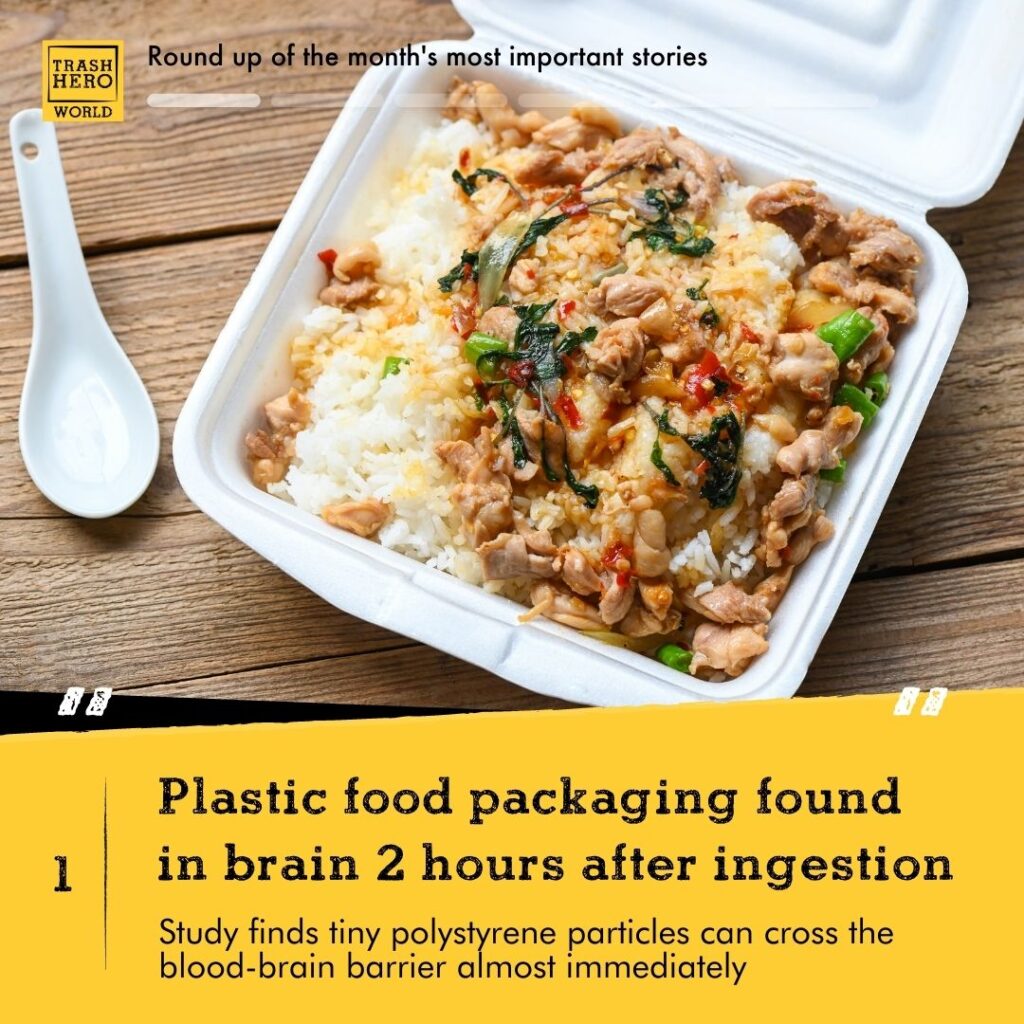
Plastic food packaging found in brain 2 hours after ingestion
A concerning new study on mice shows that tiny particles of polystyrene – a material frequently used to package takeaway food worldwide – were found in their brain just hours after consuming it.
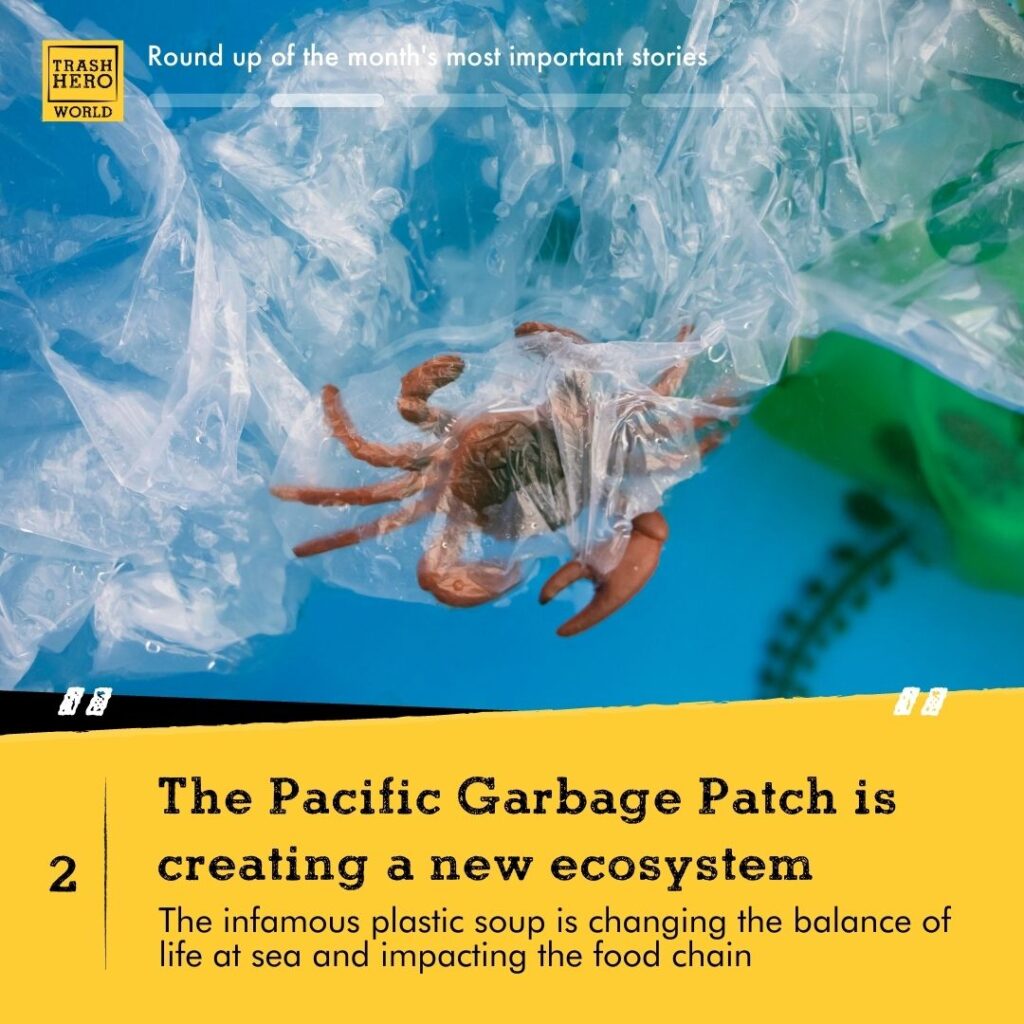
The Pacific Garbage Patch is creating a new ecosystem
Scientists have found 37 new species living in the Great Pacific Garbage Patch, which is now like a new ecosystem. These species may become invasive, and the plastic they’re living on is getting into the food we eat.
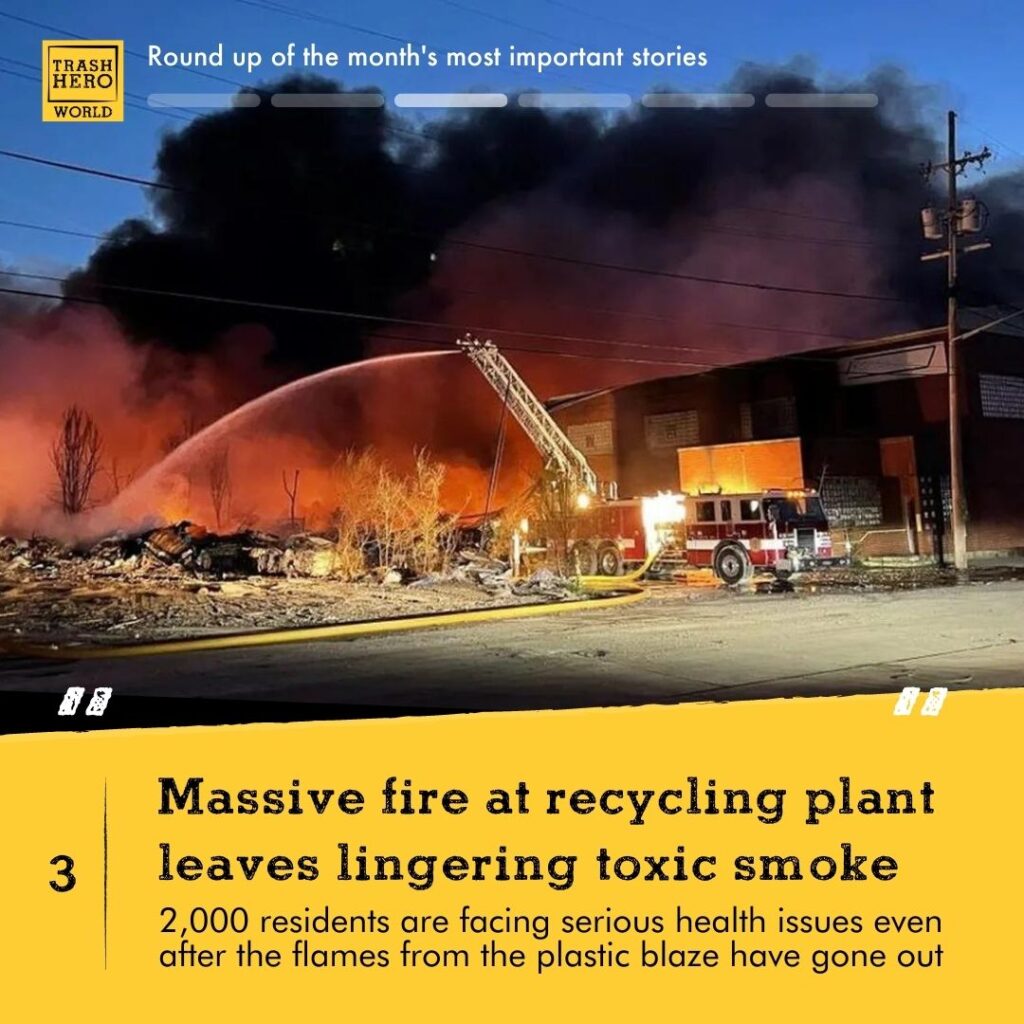
Massive fire at recycling plant leaves lingering toxic smoke
Lingering smoke from the toxic fire at a plastic recycling plant in Indiana is causing health concerns for those who live close by, even after the fire has been put out. This video discuss the health concerns the residents are left with.
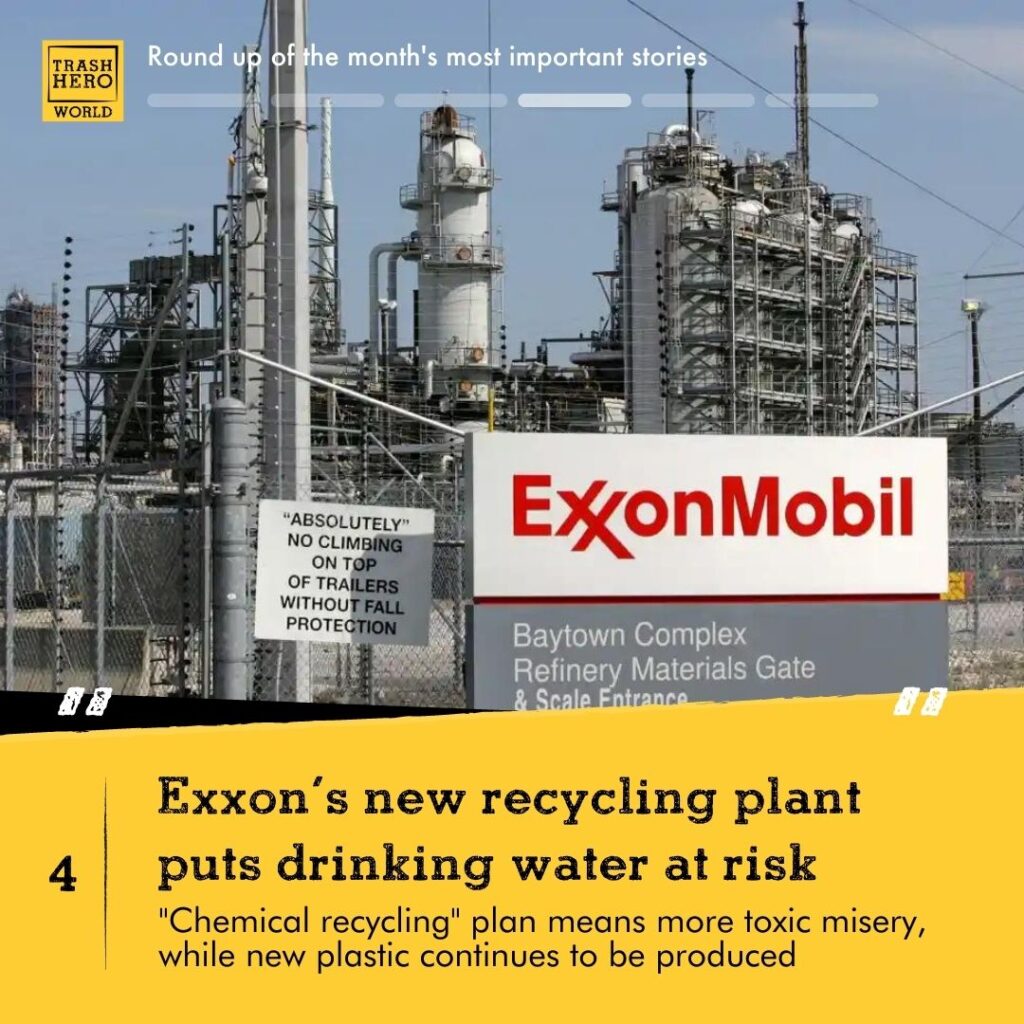
Exxon’s new recycling plant puts drinking water at risk
Experts have warned that Exxon’s newest chemical recycling plant could pollute a drinking water source while enabling oil companies to continue producing plastic pollution
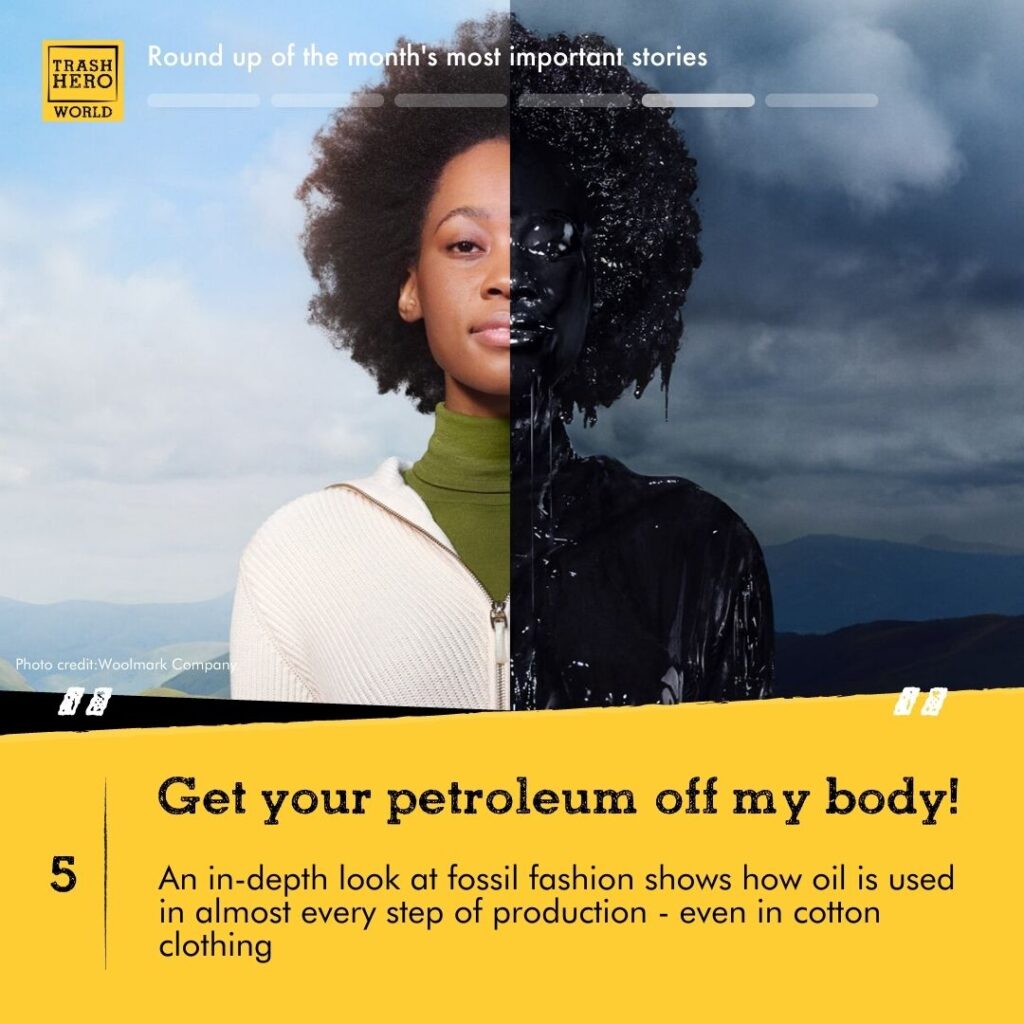
Get your petroleum off my body!
Did you realise that oil is involved in nearly every stage of manufacturing clothes? This article reveals how petroleum is a huge part of the fashion industry – from the materials to the dye.
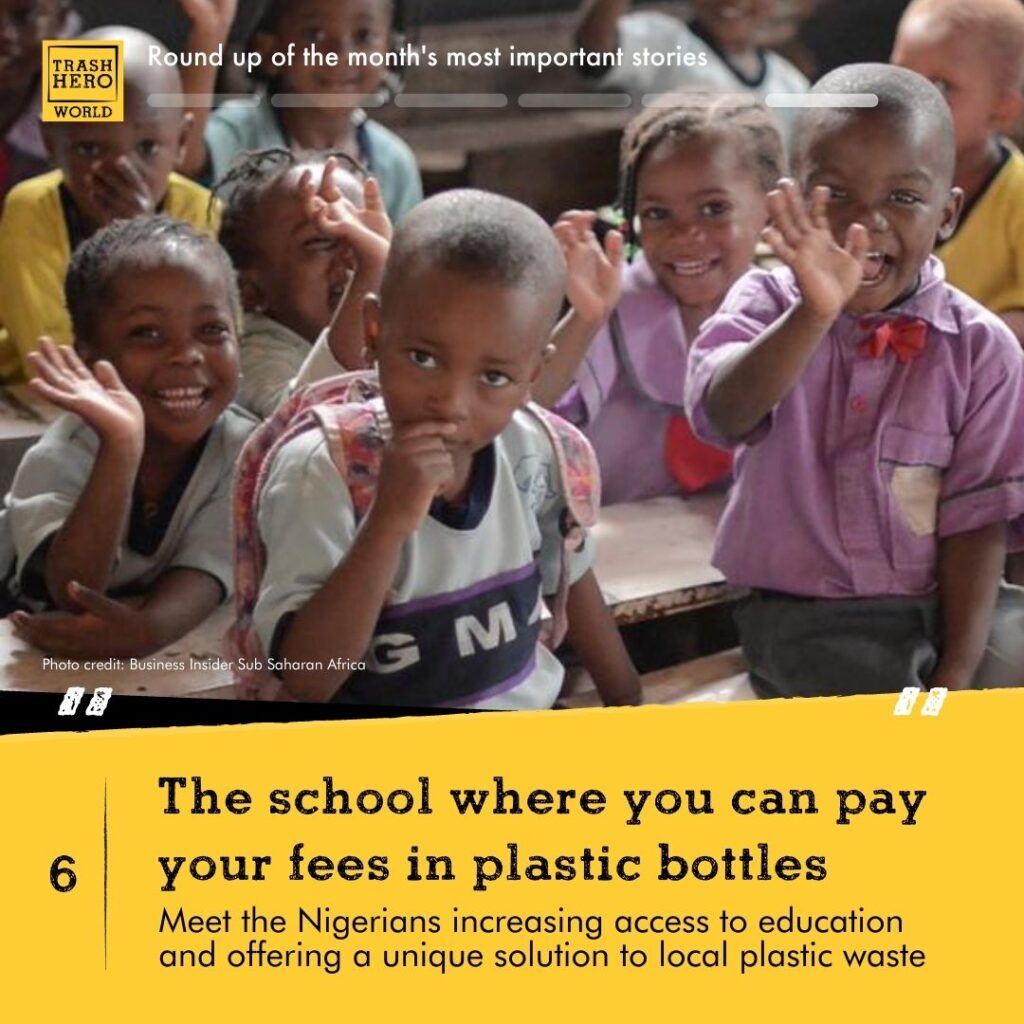
The school where you can pay your fees in plastic bottles
Meet the Nigerians who are helping to increase access to education while tackling the issue of local plastic waste
What do you think about these stories? Let us know in the comments!
Have you ever noticed what brand of coffee the characters on your favourite TV show drink? Or what type of phone the heroes in the latest blockbuster movie are using? This kind of product placement has been used for years by companies to subtly advertise their products.
What’s shown in film and TV can also affect social norms. The changing portrayal of interracial or gay relationships over time has both reflected and shaped our attitudes. It’s well known that the media is an important influencer of culture and opinions.
So what if this thinking was applied to plastic pollution and the way individuals can do their part?
Despite the urgency of the plastic pollution crisis, the media is lagging behind when it comes to depicting reuse and refill instead of single-use. It is failing to show how we can make small but effective changes in our daily life. Many of our favourite characters continue to use single-use plastics, such as cups and plastic bags, without regard for their environmental impact. The media has an important role to play in creating awareness about the problem and its solutions.
Eleanor and Michael from The Good Place use single-use takeaway coffee cups
This is where the Begley-Cohen Test for Film and TV comes in. Created by the Plastic Pollution Coalition, the test is similar to the Bechdel test, which evaluates the portrayal of women in the media. The Begley-Cohen Test encourages viewers to critically evaluate the use of single-use plastic in the media and raises awareness about the media’s role in how society views plastic use.
To pass the test, the media must meet the following criteria
No single-use plastics appear on the screen
If single-use plastic does appear on the screen, it is portrayed or discussed as problematic
Some media automatically passes the test as it is set in a timeline where plastic does not exist. However, there are examples of TV shows that pass the test much more actively – such as The Last of Us where one of the main characters is given a reusable menstrual cup.
Can you think of any others?
Undoubtedly, we are influenced by what we see on the screen, and the test encourages us to evaluate that. When we see characters who avoid single-use plastic and take steps to reduce their use of plastic, we feel inspired to do the same. Furthermore, having reusable and refillable items used by popular characters normalises this behaviour across society.
The test calls out the depiction of single-use plastic on screen and encourages people to be aware of the danger of characters perpetuating its use.
Janine from Abbot Elementary with her reusable coffee cup
The entertainment industry should instead be giving us positive examples of the kind of responsible behaviour we want to see in society.
The Begley-Cohen Test can be used to assess all forms of entertainment that we are exposed to, including social media. Have you noticed single-use plastic portrayed irresponsibly either on screen or in your feed? Does your favourite influencer use plastic? If you spot any instances, let people know. This can also create pressure for the media and influencers to change and be better role models.
In certain circles, plastic water bottles are now seen as very uncool – the Begley-Cohen Test could soon make that a reality everywhere.
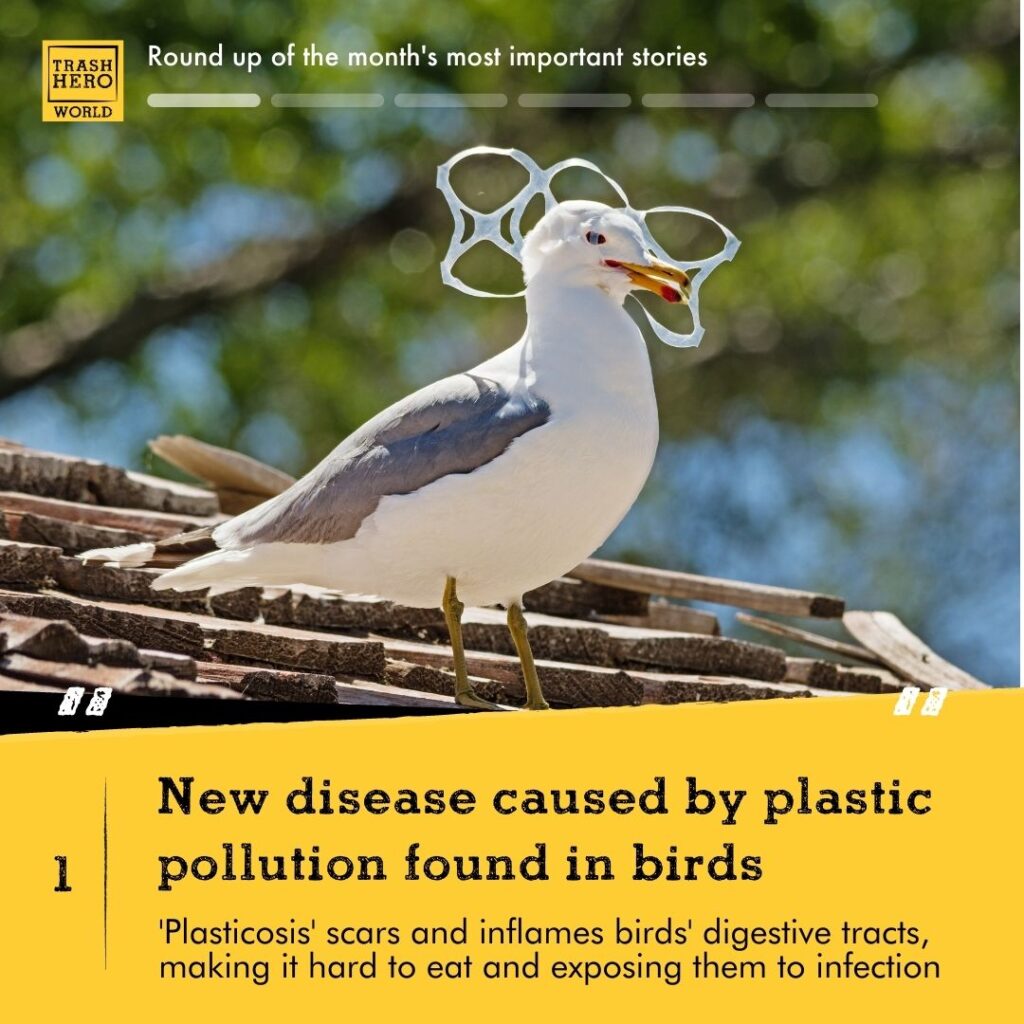
New disease caused by plastic pollution found in birds
A new disease called ‘Plasticosis’ has been found in birds. Caused by plastic pollution, it seriously impacts their ability to digest food, and exposes them to infection and parasites. Watch the report from ABC news.
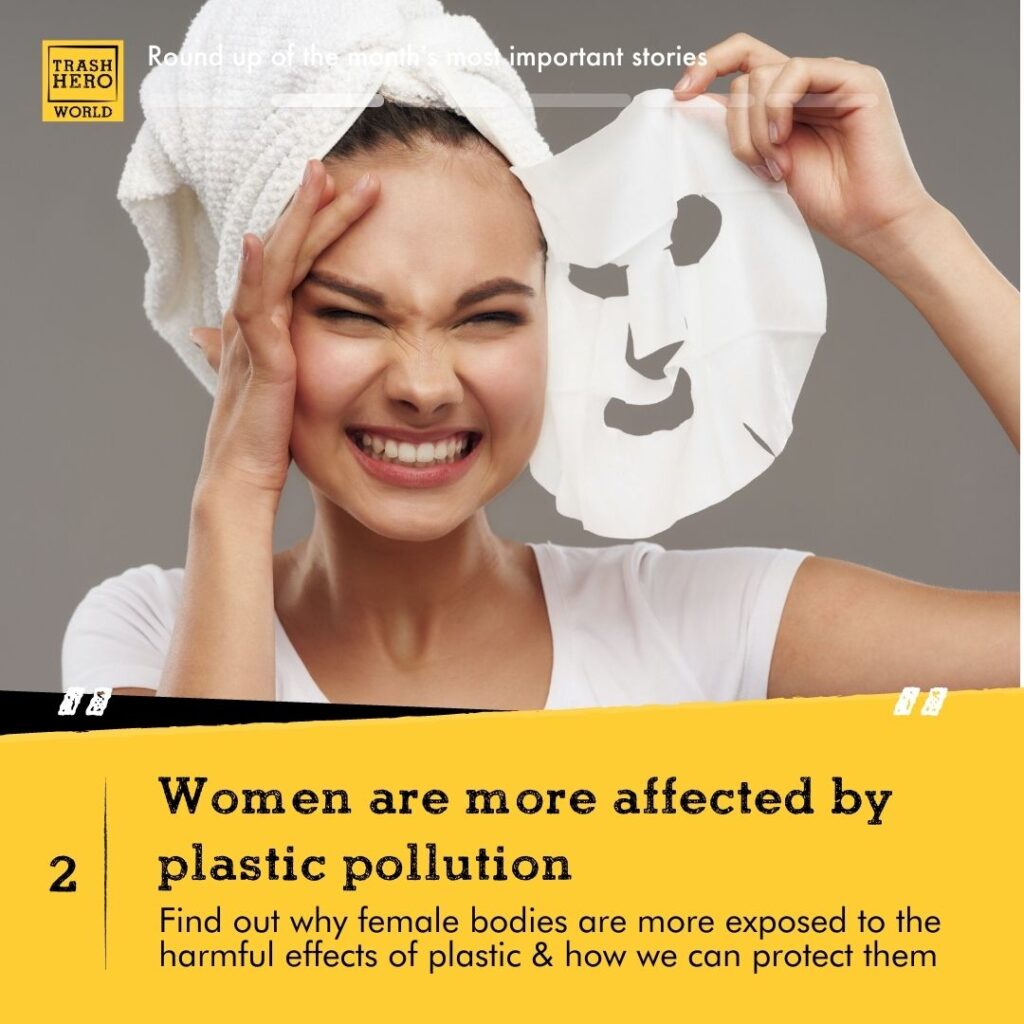
Women are more effected by plastic pollution
Are you aware of the hidden dangers in your period products and daily beauty routine? Vogue France explores why women are more affected by plastic pollution and how we can protect ourselves.
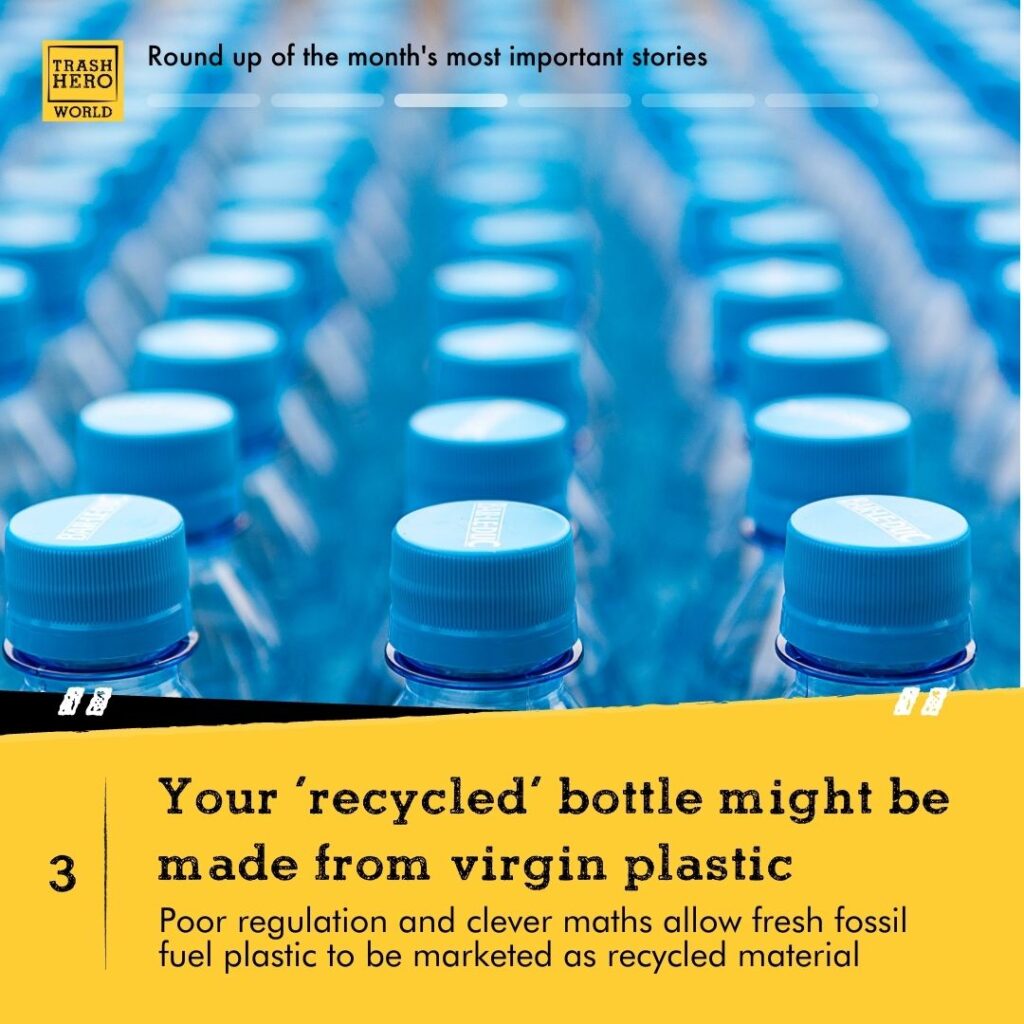
Your ‘recycled’ bottles might be made from virgin plastic
Lack of regulation is making it challenging to verify recycled content, and creating loopholes for companies to label items actually made from virgin plastic as “recycled”
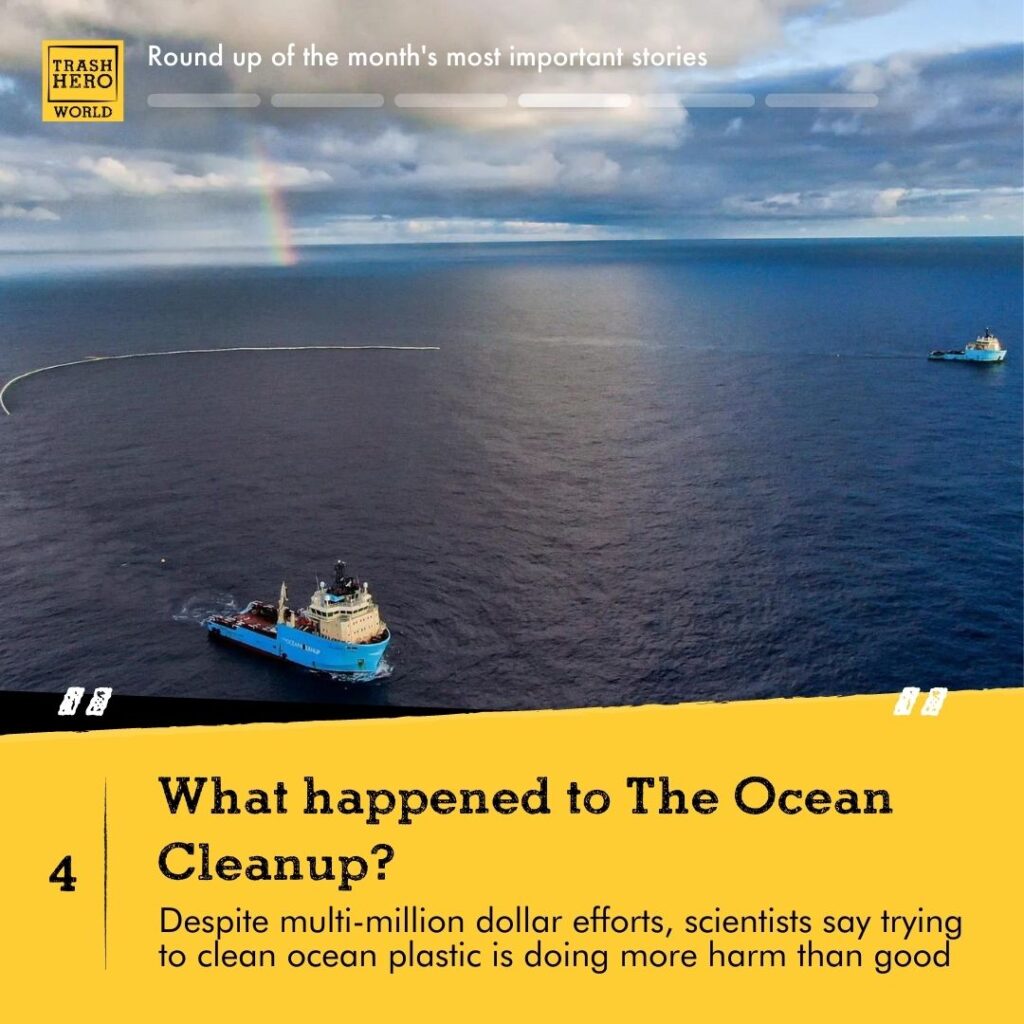
What happened to The Ocean Cleanup?
The Ocean Cleanup raised millions of dollars and made big promises about cleaning up the Great Pacific Garbage Patch. A new report asks if their projects are really working, or doing more harm than good?
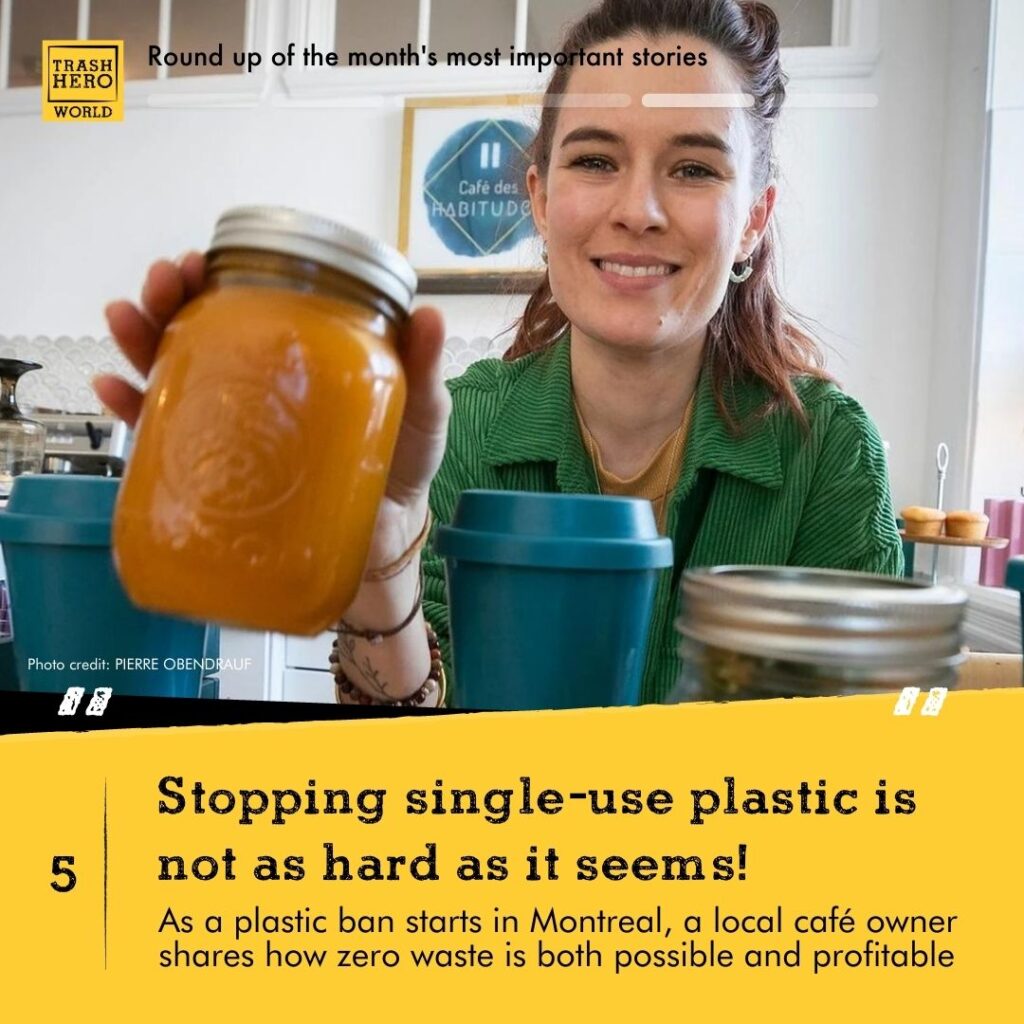
Stopping single use plastic is not as hard as it seems
Stopping single-use plastic is possible! Joanna Nisenbaum in Canada runs a cafe that is 95% zero waste, and she says people are ready for reusables. A great, positive read!
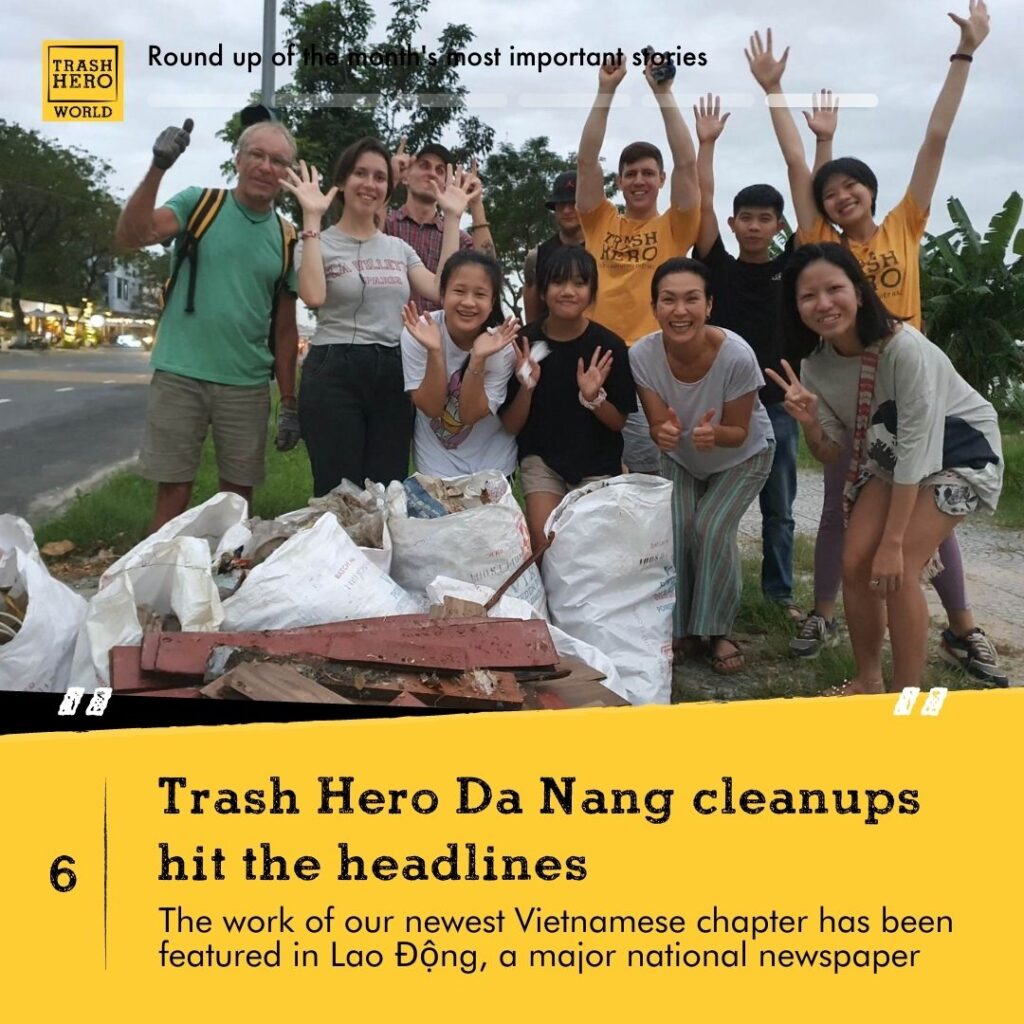
Trash Hero Da Nang cleanups hit the headlines
Trash Hero Da Nang’s hard work running regular cleanups for over six months in Vietnam has been featured in a national newspaper, that praised their success in bringing together strangers to form a civic-minded community.
What do you think about these stories? Let us know in the comments!
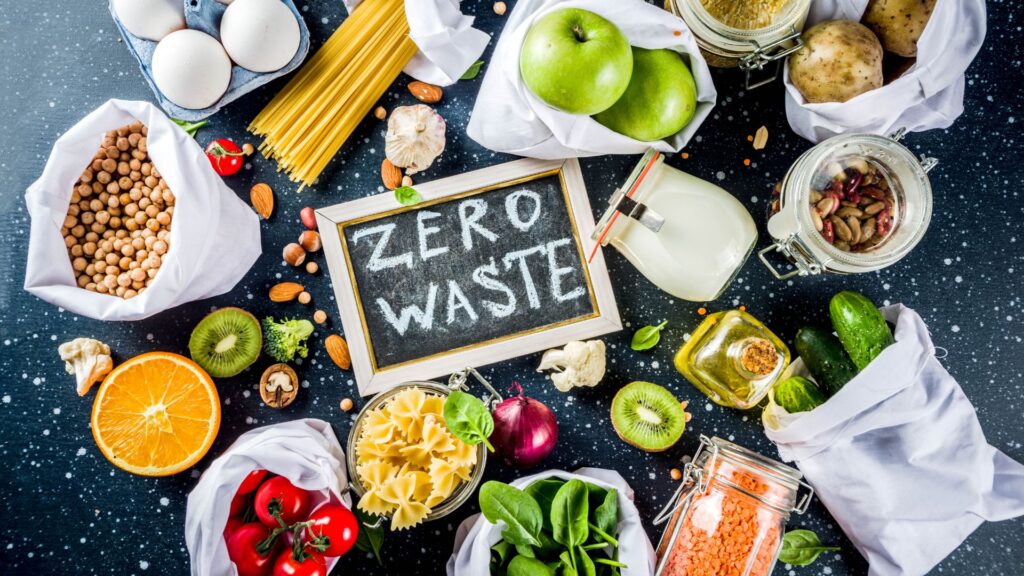
What’s the easiest and most effective recycling in the world? Recycling that you can do yourself at home? The answer may surprise you: organics!
Separating and recycling organics – food and garden waste – is often overlooked when we talk about improving waste management but in truth it is the key to making a circular economy a reality.
Investment in recycling food will have a far bigger, wider and more immediate impact than any equivalent investment in recycling plastic. It needs fewer resources and is much less complicated. To go zero waste, start with food!
So why is recycling food waste, also known as composting, so important?
5 reasons why composting is the foundation of zero waste
It reduces the amount of waste sent to landfills
By weight, food makes up the biggest proportion of our household trash. By separating food and other organic waste and composting it, the amount of waste sent to landfill can be reduced by half or more – up to 70% in some Asian countries. That’s a huge reduction when we consider we are rapidly running out of space to contain our trash – and spending ever more public funds to deal with it.
It prevents greenhouse gas emissions
Food waste piled up in a landfill is starved of oxygen. This leads to anaerobic decomposition – a process that creates methane as a by-product. Methane is a greenhouse gas 80 times more potent than carbon dioxide over its 20 year lifespan, and a major factor in driving climate change. Around 15% of methane produced globally comes directly from food rotting in landfills.
It makes landfills safer
All that methane can build up inside the landfill, and is very flammable. Spontaneous fires are common, especially in poorly managed sites. Burning trash produces dangerous toxins and can spread quickly, contributing to disasters such as the fatal collapse of a landfill in Indonesia in 2005.
Rotting food also releases water that starts to dissolve non-organic waste such as plastic or batteries. The resulting toxic black liquid, known as leachate, can leak into the soil and contaminate water sources. Ammonia and mercury in the leachate are responsible for the “dead zones” in rivers.
It makes other recycling easier
With food and other organics out of the picture, recycling non-organic materials becomes much easier! Dry, non-contaminated glass, metal and plastic can be sorted and recycled more effectively and also fetch a higher price in the market – an important incentive that boosts recycling rates.
It’s infinite and helps nourish the soil
Food waste is infinitely recyclable – something that cannot be said for plastic. Food that is composted can be returned to nourish the soil naturally (avoiding synthetic fertilisers) and grow more food. This cycle can be continued forever with almost no additional resources required. It seems incredibly wasteful – if not a little crazy – to spend money piling food up in a landfill, even without considering the other ill effects of doing this.
So how to start recycling your food waste?
If you live in the countryside, or have access to a garden, it’s easy: compost! We have a simple guide on how to do this on our kids’ website. Almost everything that grows can be composted, which makes food one of the easiest things to recycle – although there may be exceptions depending on the technique you choose.
If you live in a city or have limited outdoor space, it gets more tricky. But it is still doable, without smell or mess! The first option is to look for a community composting service or facility. Many municipalities offer food waste collection, or there are often private enterprises who offer a similar service, such as Urban Compost in Bali.
Other cities have adopted a community garden approach, where organic waste can be dropped off in a nearby green space and the compost bins are managed by a volunteer team. Brussels has a network of hundreds of these collective compost sites. There are also many resources available online if you are motivated to start your own project where you live.
The second option is to manage the waste yourself. This is more challenging, especially in a small apartment, but it is especially worthwhile if you have houseplants or a balcony garden that would benefit from the compost you make. Again, there are many resources online for how to compost in a small space. Two techniques we have used and had success with are bokashi and vermicomposting. Bokashi is the easier and more flexible option, but still needs a patch or container of soil in order to fully break down.
Conclusion
Food recycling – or composting – is the most effective form of recycling we have. Food represents the biggest part of our waste stream and, unlike plastic, it is not complicated to recycle, requires minimal resources and can be done an infinite number of times. It vastly reduces the size of landfills, avoids disastrous greenhouse emissions and environmental pollution, and improves the ability to recycle other materials. Get rotting today!
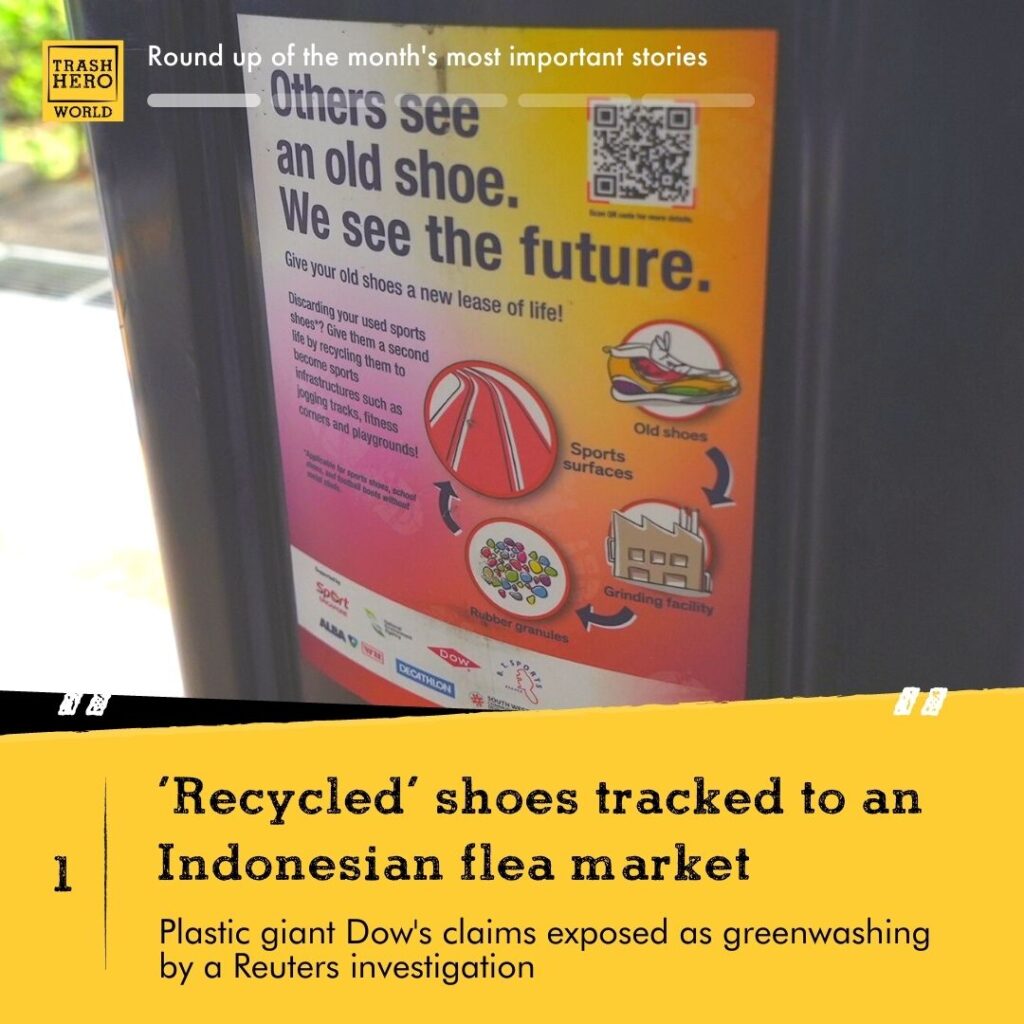
‘Recycled’ shoes tracked to an Indonesian flea market
A shocking report from Reuters exposes a “recycling scheme” from Dow Chemicals. It promised that old trainers would be turned into playgrounds and roads, but tracking devices found the waste had been exported to Indonesia instead.
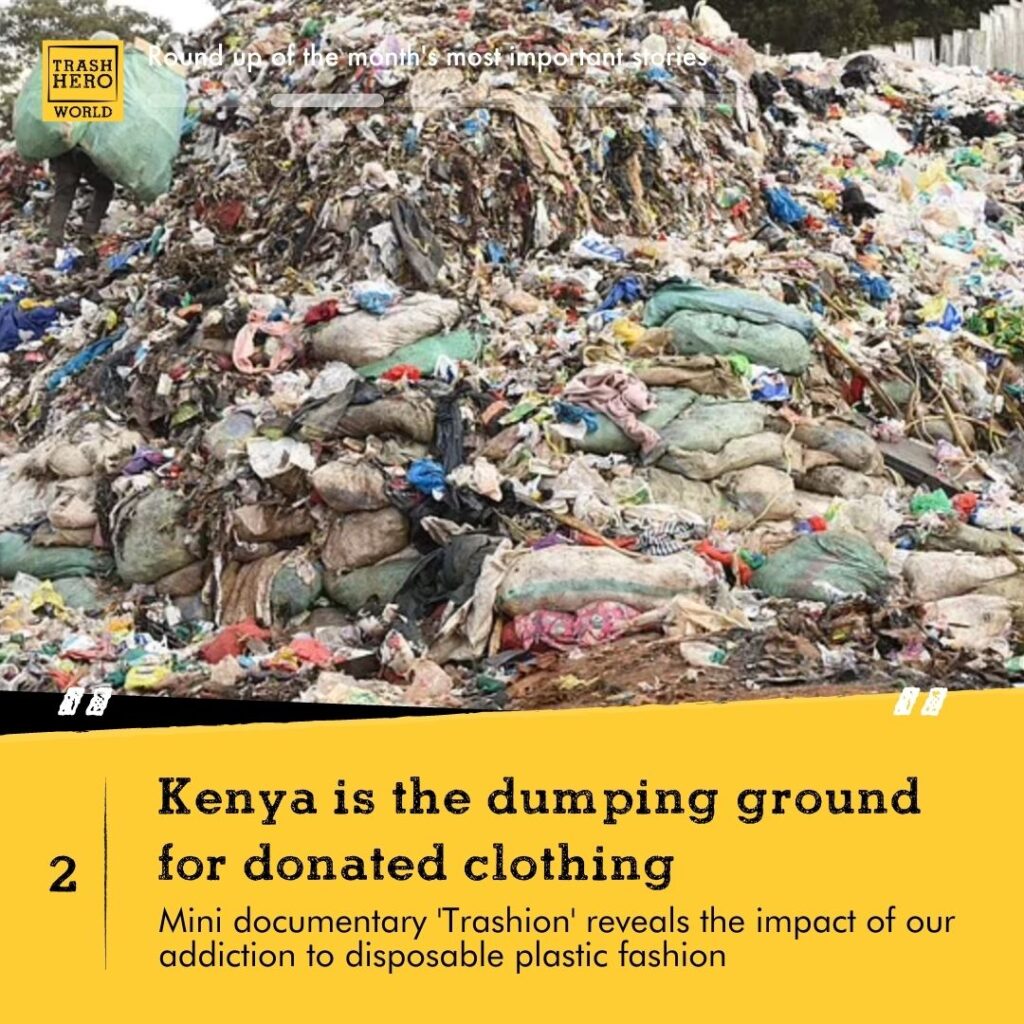
Kenya is the dumping group for donated clothes
New mini-documentary ‘Trashion’ reveals that in Kenya, half of donated clothes sent from overseas are poor quality, plastic fast fashion. These unusable garments are piling up, causing an environmental crisis in the country.
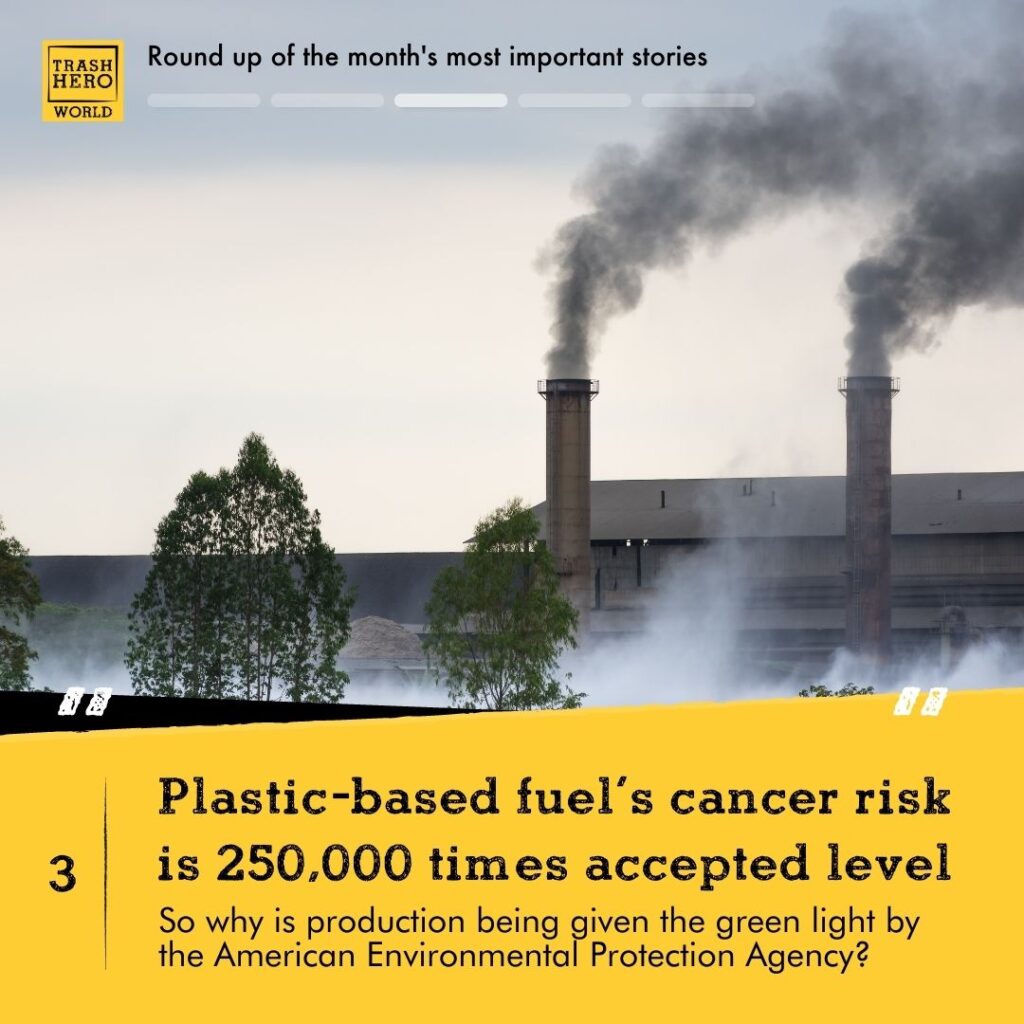
Plastic to fuel’s cancer risk is 250,000 times accepted level
Plastic-to-fuel production increases the risk of getting cancer to 1 in 4 over a lifetime – 250,000 times above the accepted level. So why is the American Environmental Protection Agency allowing this to go ahead in poor communities?
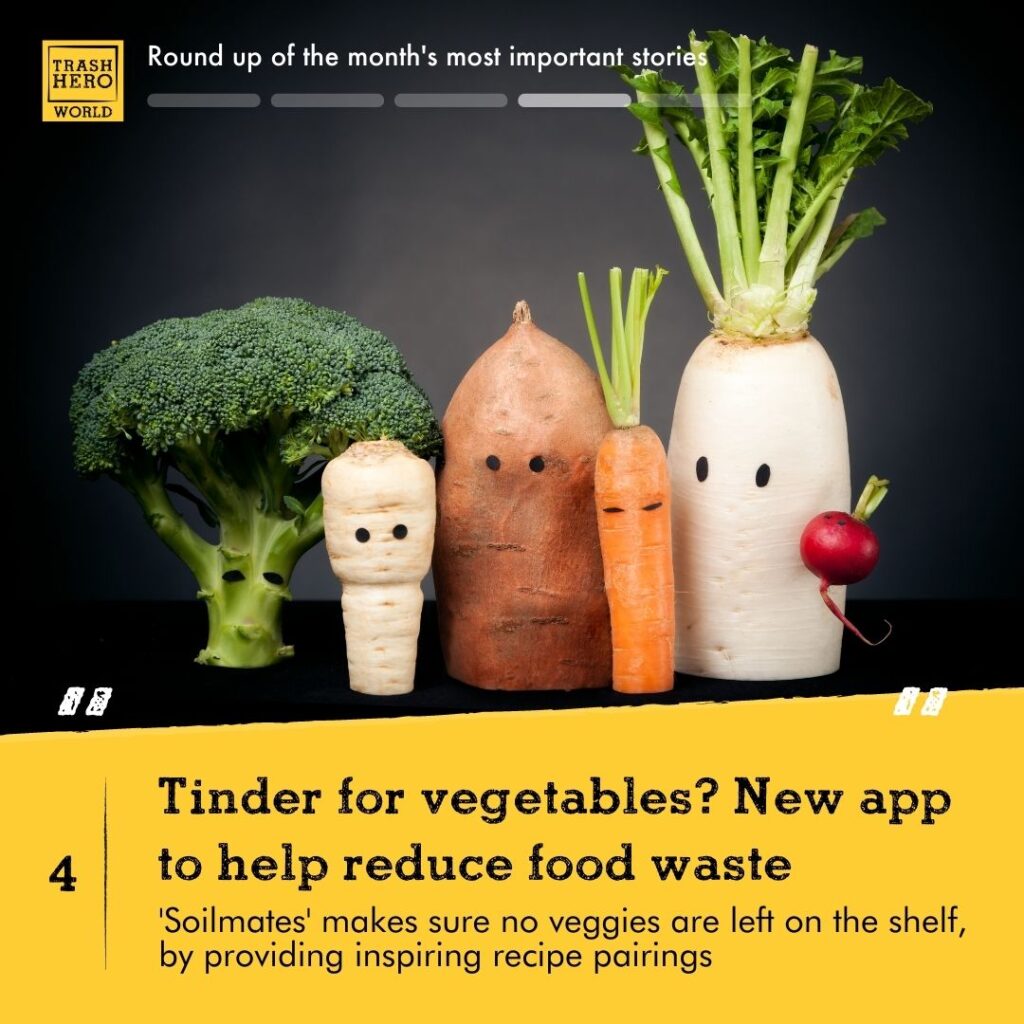
Tinder for vegetables? New app will help to reduce food waste
A new app launched by Oddbox will help reduce food waste by providing recipes inspired by vegetable pairing in their Tinder-style app. Swipe left or right on the vegetables to get a match made in heaven for your dinner!
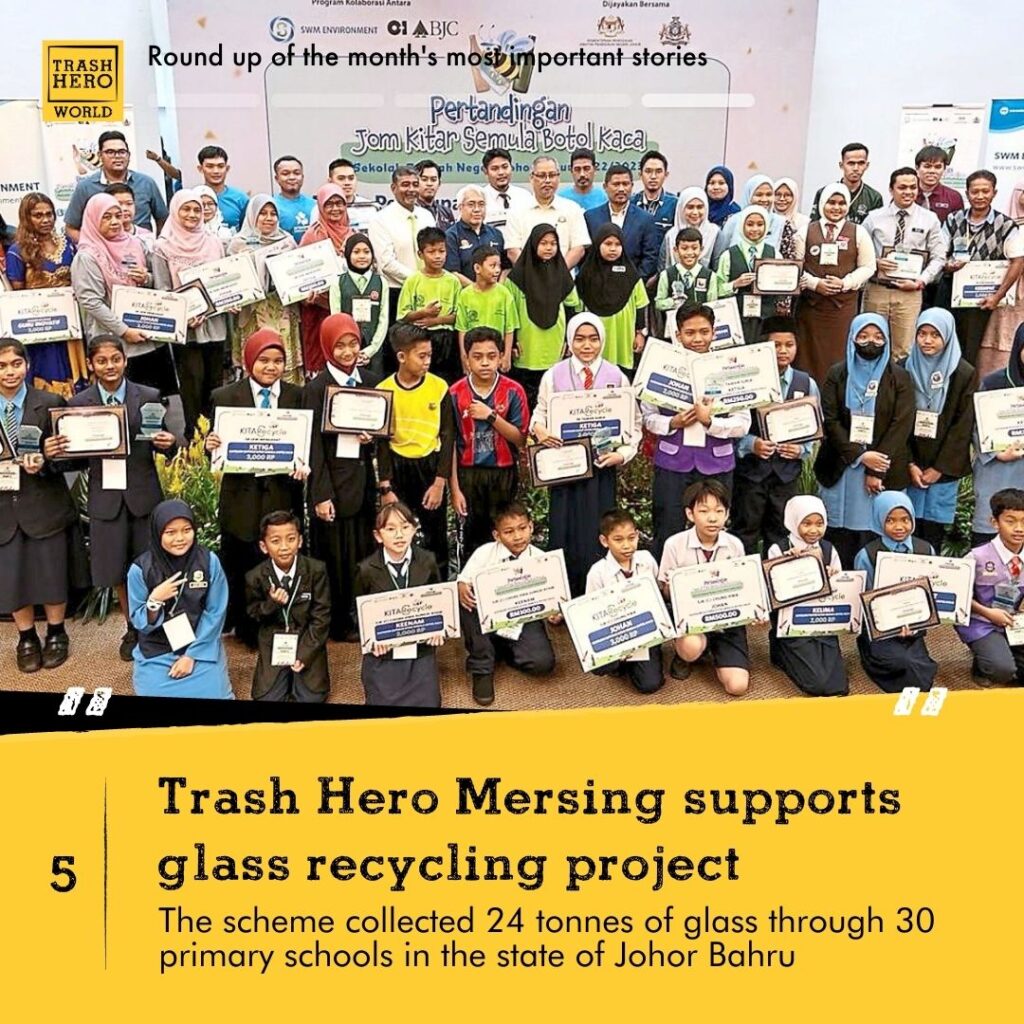
“Let’s Recycle Glass Bottles” challenged primary schools to collect 10 tonnes of glass in a local competition. The goal was smashed, and a total of 24 tonnes was collected, with the help of Trash Hero Mersing at their weekly cleanups. The success of the initiative has inspired a yearly event.
What do you think about these stories? Let us know in the comments!
This website uses cookies to improve your experience. We'll assume you're ok with this, but you can opt-out if you wish. Cookie settingsACCEPT
Privacy & Cookies Policy
Privacy Overview
This website uses cookies to improve your experience while you navigate through the website. Out of these cookies, the cookies that are categorized as necessary are stored on your browser as they are as essential for the working of basic functionalities of the website. We also use third-party cookies that help us analyze and understand how you use this website. These cookies will be stored in your browser only with your consent. You also have the option to opt-out of these cookies. But opting out of some of these cookies may have an effect on your browsing experience.
Necessary cookies are absolutely essential for the website to function properly. This category only includes cookies that ensures basic functionalities and security features of the website. These cookies do not store any personal information.