Our Trash Hero chapter in Langsuan, Chumphon Province, Thailand, has come up with an ingenious scheme to motivate local residents to separate and recycle their waste.
In an area with no waste management infrastructure – not even basic garbage collection – most households either dump or openly burn their trash, as they have done for generations. The difference, of course, is that 20 – 30 years ago, the waste was mainly biodegradable. Now, the majority is toxic plastic.
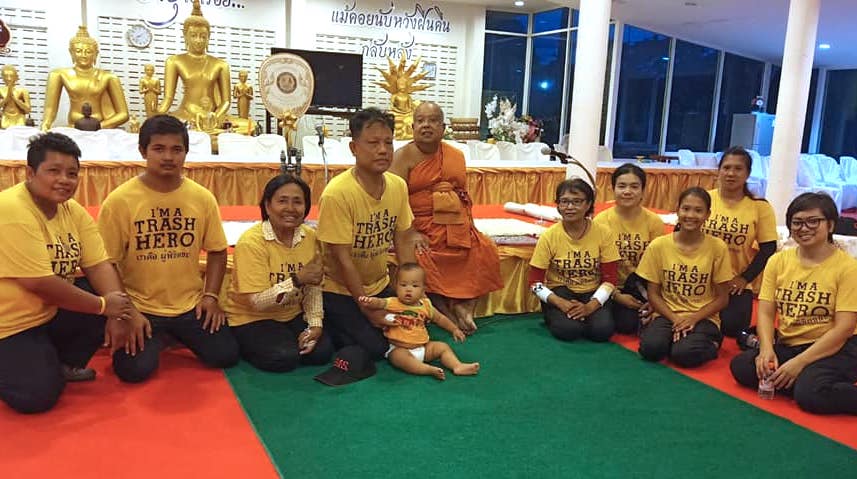
Working together with sub-district adminstrations; local schools; hospitals; private sector representatives; and a local temple, our Trash Hero volunteers created a “waste bank” scheme, launched at an official ceremony on 24 June 2019.
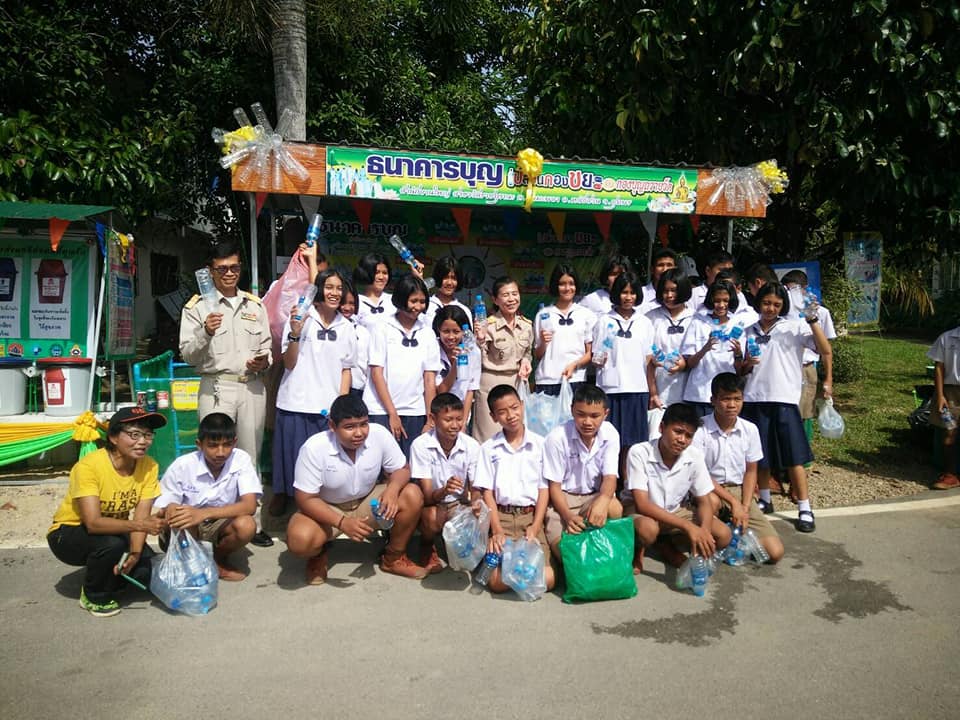
Communal life in this mainly rural area is focused around Wat Ratchaburana, a royal monastery in Tha Maphla sub-district. So the headquarters of the “waste bank” is located here. With the support of the Abbot and the resident monks, the local villagers can bring their separated waste to the temple, or to 9 other collection points – one in each village in the district. Organic waste will be used to make biogas and fertiliser; cleaned plastic will be recycled, with all proceeds going to the temple.
A typical “waste bank”, such as those found in Indonesia, incentivises recycling through personal financial gain. People are encouraged to make “deposits” of their recyclable waste at a central location. Each type of waste carries a market value and is exchanged for a fixed rate. The waste bank administration then sells this trash on to local recyclers and places the income received (minus a small admin fee for running costs) into each person’s account. Records are kept in a “bank book” and withdrawals are allowed at any time.
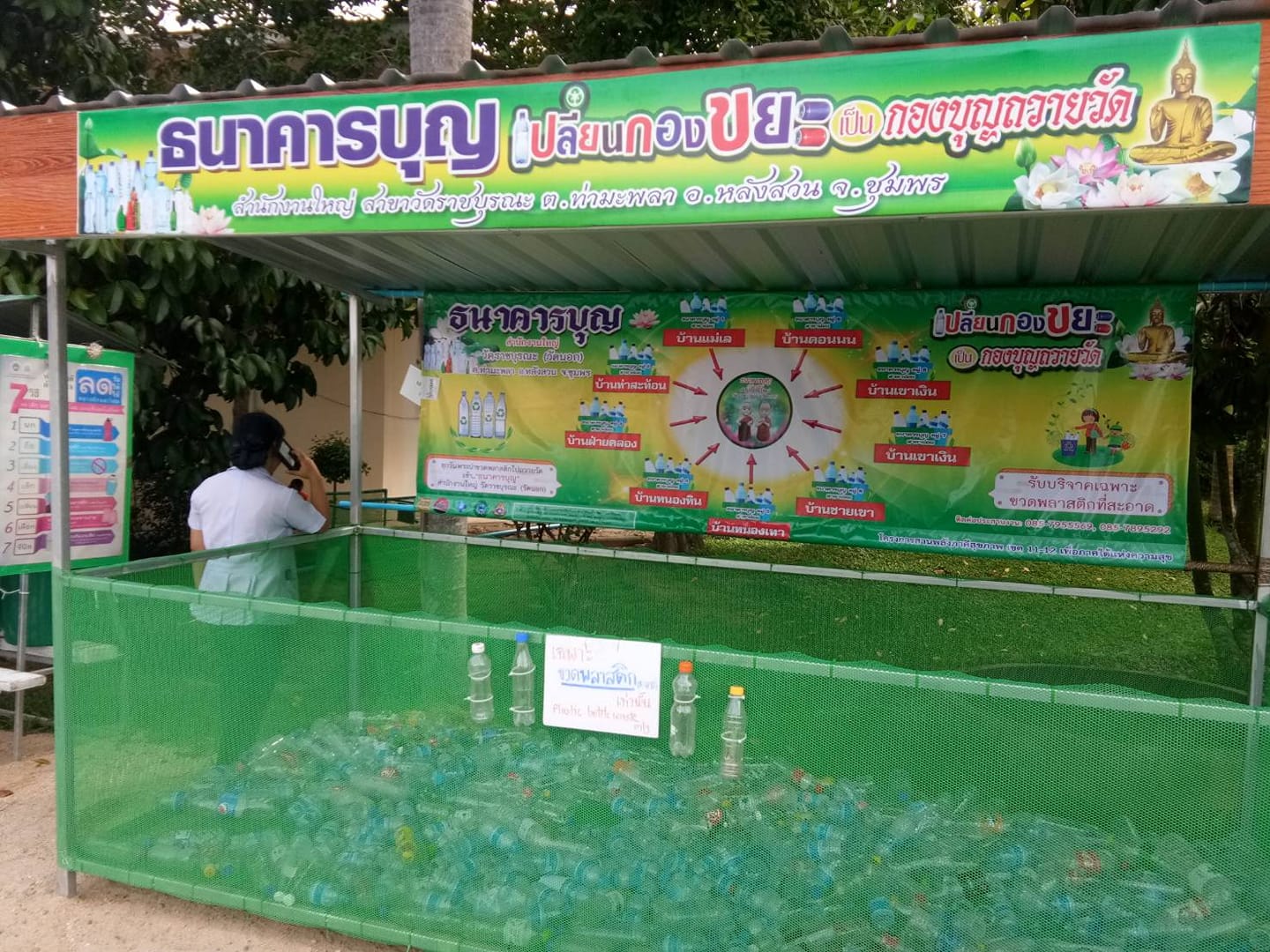
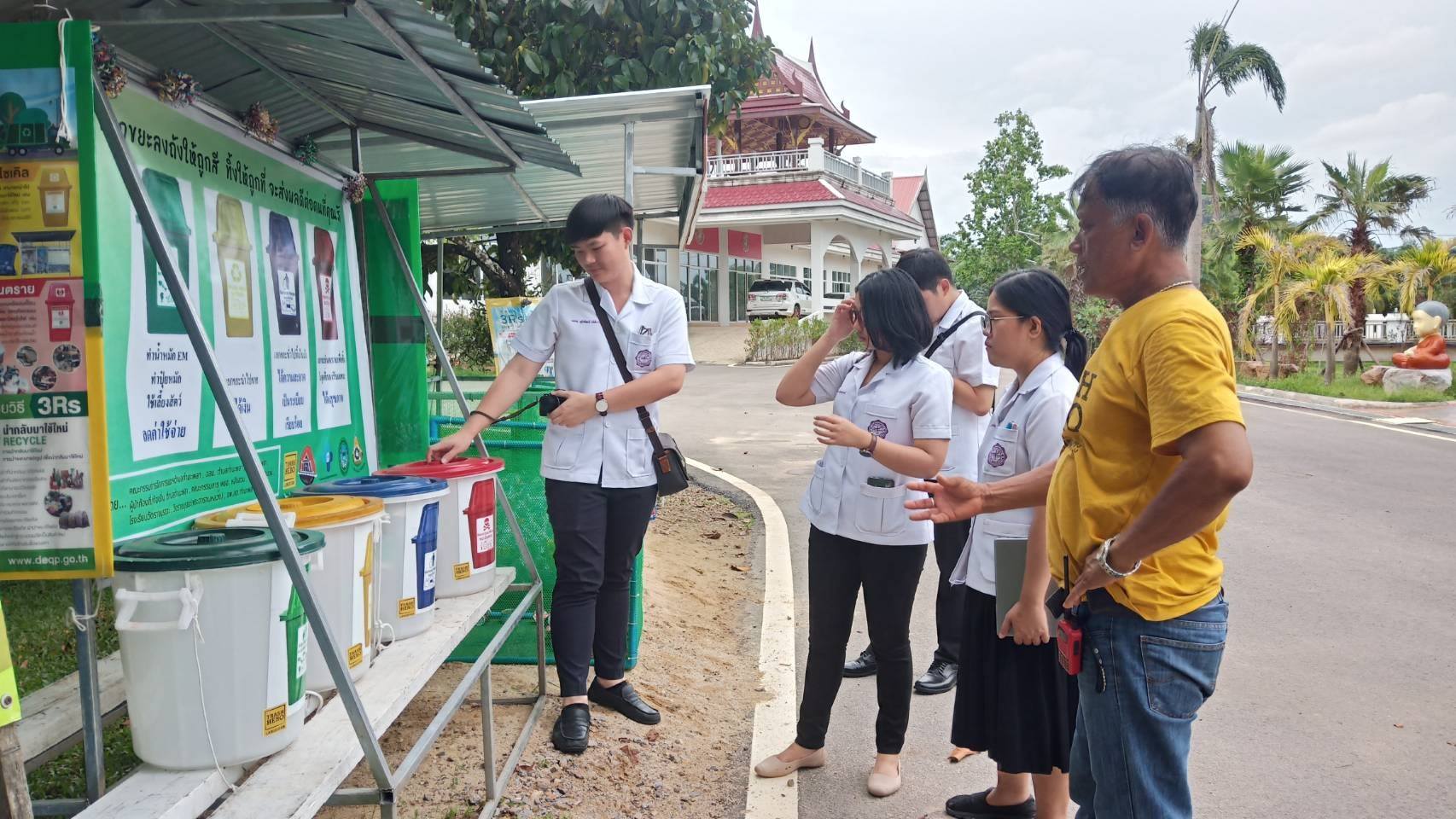
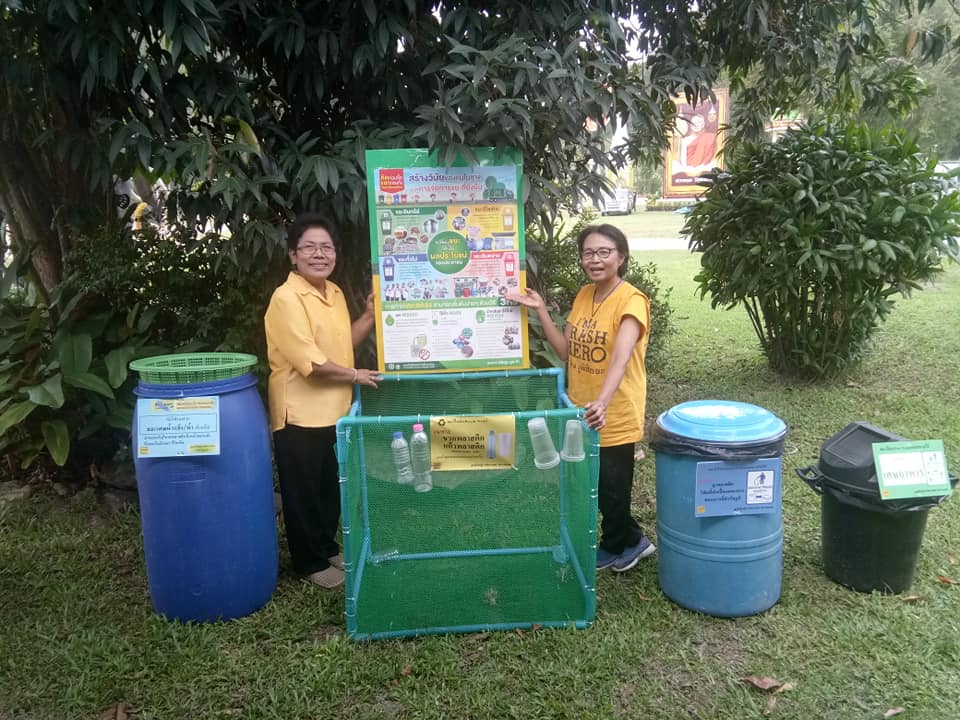
In Langsuan, this concept has been taken and combined with the Thai Buddhist tradition of “merit-making“. One of the most basic ways to accumulate merit in this culture is to practice almsgiving to local monks. This involves making regular monetary or in-kind donations of food, clothing or household goods. Villagers can now instead donate their trash, and gain the same merit: the slogan of the Langsuan scheme, roughly translated from the Thai, is “Transform a pile of trash into a pile of merit”.
This is a very powerful association, providing an incentive to recycle that goes well beyond the monetary value of the waste. Recycling becomes not just a source of income that can be donated to the temple; but a source of good karma, a virtuous deed that will lead to a better next life for the donors and their families.
In addition, the “deposit days”, on which the bank is open for business, are on the Buddhist holy days, when it is customary to make a special offering to the temple. To make the link even clearer, the name has been changed from “waste bank” to “merit bank” (Thai: ธนาคารบุญ / thanakhan buh!n).
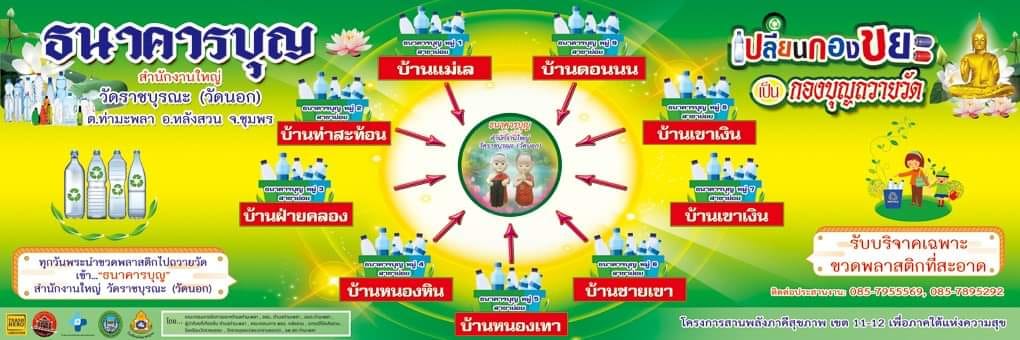
The poster above explains the scheme and shows the nine village collection points
Suttipun Suwanbundit, the leader of Trash Hero Langsuan, explained: “the heart of the issue we have here is that people simply will not separate their waste. It is mixed all together – rotting food and recyclable waste – which makes it impossible to do anything with. The use of law or fines is just not effective for Thai people. There have been big campaigns but then after the initial fuss, people would quietly go back to their old habits. We needed a continuous solution and one that showed people a clear benefit in waste separation, which would give them a reason to do it long term.”
Alongside the merit bank, Trash Hero Langsuan volunteers, in conjunction with the temple and related government departments, will be holding education sessions for local residents on how to reduce waste, in particular plastic. With the endorsement of the Abbot, who carries great authority in these deeply religious rural communities, the scheme has already seen a large uptake.
Trash Hero Langsuan is grateful for the cooperation and support of the District Health Committee, Quality of Life Development Committee, Waste Management Commmittee and all other stakeholders that enabled the project to come to life.
read more