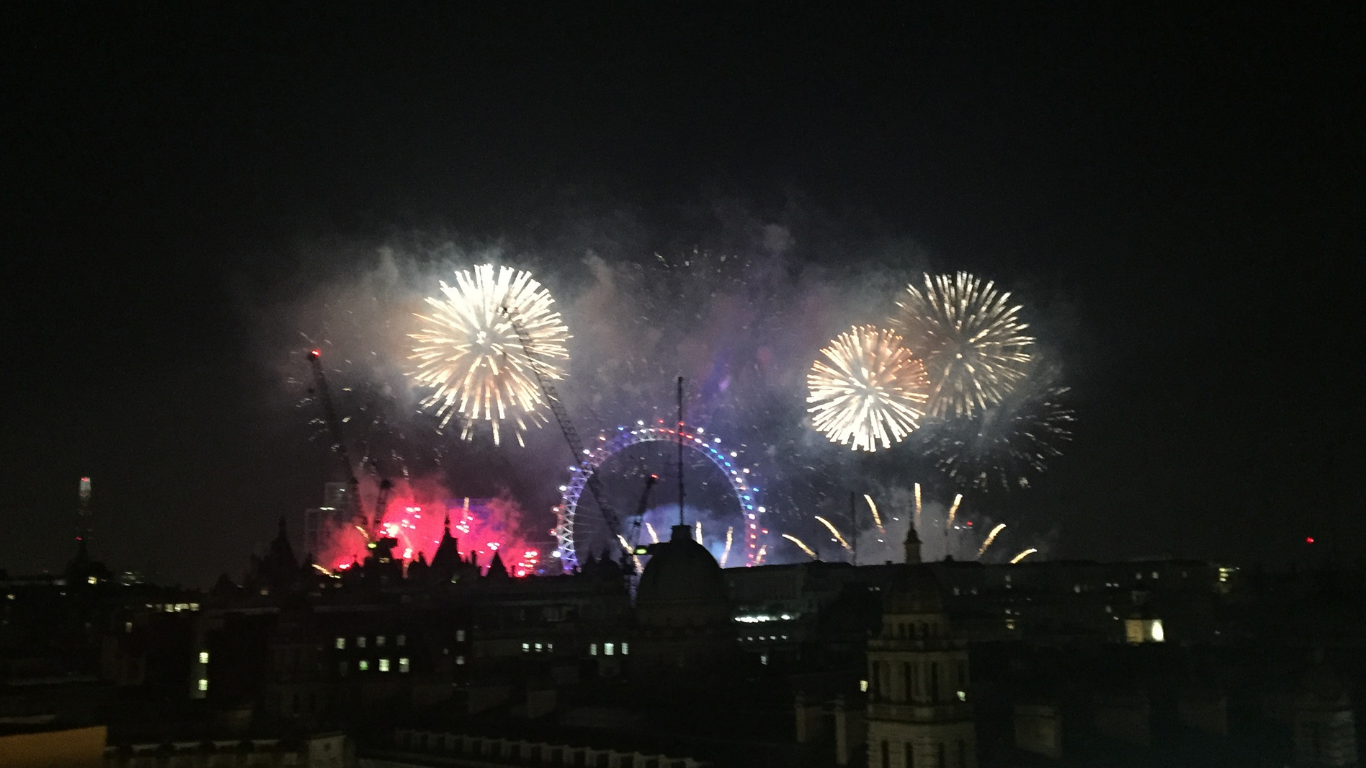
Independence Day, Diwali, Chinese New Year, Bonfire Night, New Year’s Eve. What do these occasions have in common? They are all commonly celebrated with fireworks! Different occasions, different cultures worldwide, yet the same global reflex: we celebrate by blowing things up in the sky.
But why do we do that? Where does this fascination come from, and do we ever really pause to reflect on the consequences once the sky has gone dark again? In this post, we’re taking an honest look at the impact of fireworks and exploring what alternatives already exist.
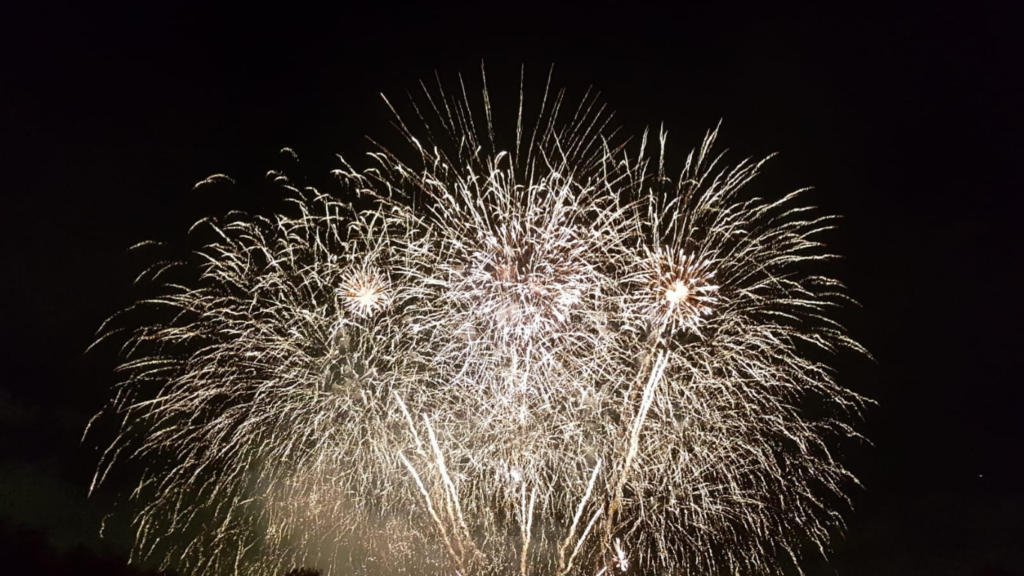
The spark of the past
Let us very briefly rewind 2,000 years to ancient China: the first “pyrotechnicians” used exploding bamboo tubes and later gunpowder as a protective ritual to ward off evil spirits.
Later, black powder arrived in Europe via global trade routes, and kings and emperors used fireworks as a symbol of their power and wealth.
Today, fireworks have evolved to become festive and represent community and new beginnings.
The dark side for the environment and for our health
Every year, over half a million tons of fireworks explode worldwide. The downside of these colourful traditions? Massive particulate matter pollution, mountains of trash, and extreme stress for animals.
When the smoke is gone, reality kicks in for the environment and for our health. We can measure the price we pay for the few minutes of 🎆🎇🧨:
Particulate matter and our health
When fireworks burn, particulate matter (PM) is created as a by-product. These tiny particles are so small that they can enter our respiratory tract, bloodstream, and organs directly. PM₁₀, the “largest” particulate matter category, is only about one-fifth the thickness of a human hair.
PM2,5, which is even smaller, can remain in the atmosphere for days up to weeks, and can travel up to 1,000 km before settling on the ground.
Studies show that increased exposure to PM2,5 is linked to severe health conditions (e.g., cardiovascular diseases). The WHO classifies particulate matter (especially soot particles) as a proven carcinogen.
In Germany alone, more than 2,000 tons of particulate matter (PM₁₀) are released every year by burning fireworks. This is 1% of its total PM₁₀ emission. In many places after New Year’s Eve, air pollution from health-endangering particulate matter is much higher than at any other time of the year, and often rises far above set limits. So much for “healthy resolutions for the New Year”!
Particulate matter in the environment
Particulate matter doesn’t just burden humans. It also affects forests, fields, rivers and lakes and the wildlife living in them. The chemicals and heavy metals that create the colourful displays in the sky eventually end up in our soil and groundwater, where it disrupts our ecosystems, acidifies our rivers and lakes, and poses a lasting threat.
Mountains of trash and microplastic
And finally, there is the trash we can actually see: to be exact, two-thirds of each firework, as a study by Pforzheim University in Germany found. The study also showed that the COVID-related ban on firework sales in Germany at the turn of the year 2020/2021 saved a total of around 3,500 tons of plastic waste.
About 10–15% of a typical firework consists of synthetic resin and plastic, which either remains on the ground as a base or packaging material, or explodes as part of the projectile into hundreds of tiny pieces. Those often turn directly into microplastics. When these enter the soil or local waterways, they can migrate via crops and fish into our food chain.
We have covered the harmful effects of microplastics on our bodies in detail in another blog.
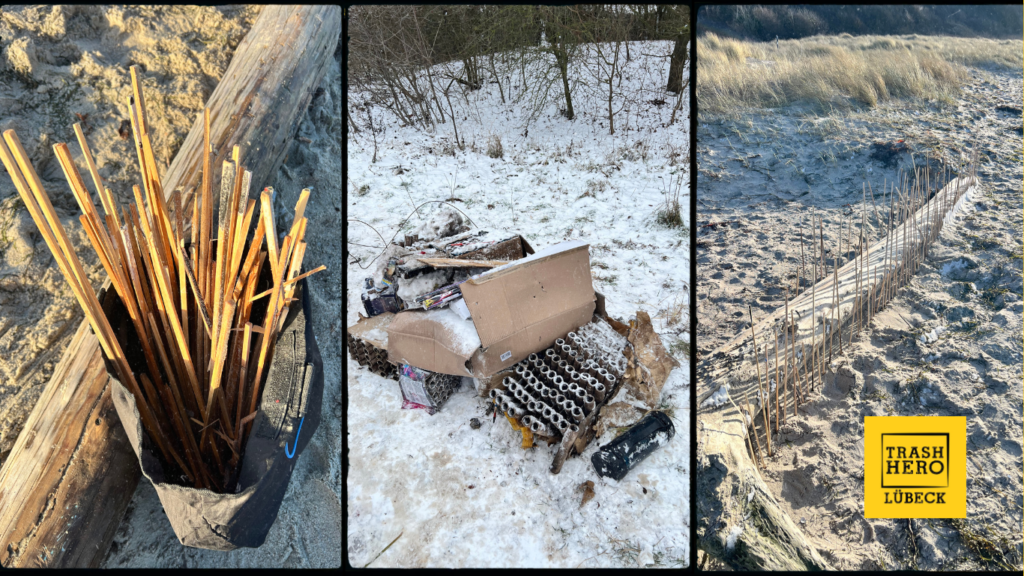
New Year’s Eve trash collected by our Trash Hero chapter in Lübeck
The consequences for wildlife and for our pets
Firework noise doesn’t leave animals unscathed either. On New Year’s Eve, record numbers of pets run away from home in panic. For animals in the wild, the stress caused by the noise leads to high energy loss and can cause them to injure themselves. Every year, there are reports of dead animals after New Year’s Eve.
A study by the Max Planck Institute of Animal Behaviour analysed movement data from 347 geese around New Year’s Eve. The geese had still not returned to their normal flight and sleep rhythms by the end of the study on January 12.

Information sign in a veterinary practice in England
Celebrating yes, but how?
Nobody wants to ban joy or celebration. However, at Trash Hero, we ask ourselves: does community or a special occasion really need a big physical bang?
We need to take an honest look at the trade-offs: do those few minutes of 🎆🎇🧨 really justify the long-term consequences for people, the environment, and our animals?
Eco-friendly alternatives and global firework bans
There is a rising number of initiatives and cities that celebrate festivals without the smoke, noise, and microplastics. And there are eco-friendly alternatives that are just as spectacular and colourful as traditional fireworks:
- Dynamic drone and laser shows;
- Video mapping that brings historic facades to life through projections;
- Atmospheric and cosy lantern parades.
Traditional bonfires also offer an alternative: admittedly, they do release particulate matter, but unlike fireworks, they do not leave behind widespread plastic waste and can be cleaned up quite easily after the celebration.
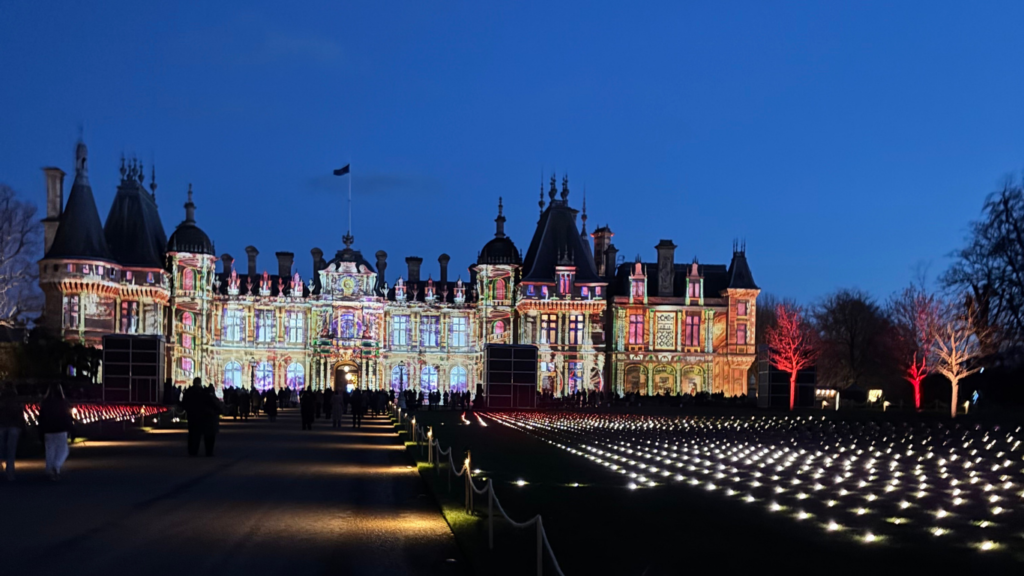
Waddesdon Manor near Oxford, England, at Christmas time
International examples of action on fireworks show that change is possible:
- Ireland has prohibited private fireworks since 2006. Instead, they organise drone and laser shows as well as building projections.
- The Netherlands have also banned private fireworks. The ban came into effect on August 1, 2026. However, central, professionally organised firework displays will still take place in city centers or harbour basins.
- Salt Lake City replaced its traditional Fourth of July Independence Day fireworks with a spectacular drone and laser show.
- And in China, over 400 cities, including major hubs like Beijing and Shanghai, have imposed strict firework bans to reduce particulate matter pollution. There was even a world record this year at Luogang Park in Hefei: 22,580 drones were used for their Spring Festival show. The previous record was set the year before with 15,947 drones.
- In Switzerland, these exact considerations will be put to a vote on November 29, when the public voted on the so-called Fireworks Initiative, “For a Restriction of Fireworks.” The proposal aimed to ban the sale and use of loud fireworks for private individuals, while allowing authorities to grant exceptions for events of supra-regional importance.
It all points in one direction: we begin to question how we celebrate. At Trash Hero, we love celebrating life and successes. That’s why we celebrate our achievements after every cleanup. But we strongly believe: true heroes celebrate with consideration and pay attention to what they leave behind.
***
IndexBox, 2024, https://www.indexbox.io/blog/fireworks-world-market-overview-2024/
Kuiying, G. et al. (2025). “Risk of PM2.5 and its constituents for cardiovascular diseases: A cohort study of over 5.8 million participants”. PMC. https://pmc.ncbi.nlm.nih.gov/articles/PMC12874432/
Press release N°221,WHO, 17th October 2013, https://www.iarc.who.int/wp-content/uploads/2018/07/pr221_E.pdf
Bundesamt für Umwelt, https://www.bafu.admin.ch/de/feuerwerke-und-umweltbelastung
GEO Magazine, 21st Januar 2021, https://www.geo.de/natur/nachhaltigkeit/feuerwerk-erstmals-berechnet-so-viel-plastikmuell-sparte-die-absage-30181618.html
Devereux, R., Westhead, E. K., Jayaratne, R., Newport, D., (2022). “Microplastic abundance in the Thames River during the New Year period.” ScienceDirect. https://www.sciencedirect.com/science/article/pii/S0025326X22002168
Shelter Animals Count, https://www.shelteranimalscount.org/closer-look-at-post-holiday-trends-in-lost-pets/
BBC, 1st January 2021, https://www.bbc.com/news/av/world-europe-55511016
Research release, Max-Planck-Institute for Behavioural Science, 2022, https://www.mpg.de/19528005/fireworks-have-long-lasting-effects-on-wild-birds
Citizens Information, https://www.citizensinformation.ie/en/justice/criminal-law/criminal-offences/the-law-on-fireworks/
Government of the Netherlands, https://www.government.nl/themes/justice-security-and-defence/crime-and-crime-prevention/rules-on-setting-off-fireworks
KSL Media, 29th June 2026, https://www.ksl.com/article/51578495/salt-lake-city-continues-drone-show-tradition-for-fourth-of-july-celebrations
Reuters, 29th December 2023, https://www.reuters.com/world/china/chinas-fireworks-ban-sparks-fiery-debate-ahead-lunar-new-year-2023-12-29/
AV Magazine, 13th April 2026, https://www.avinteractive.com/territories-news/apac/worlds-largest-drone-show-record-broken-with-22580-uavs-13-04-2026/
read more