
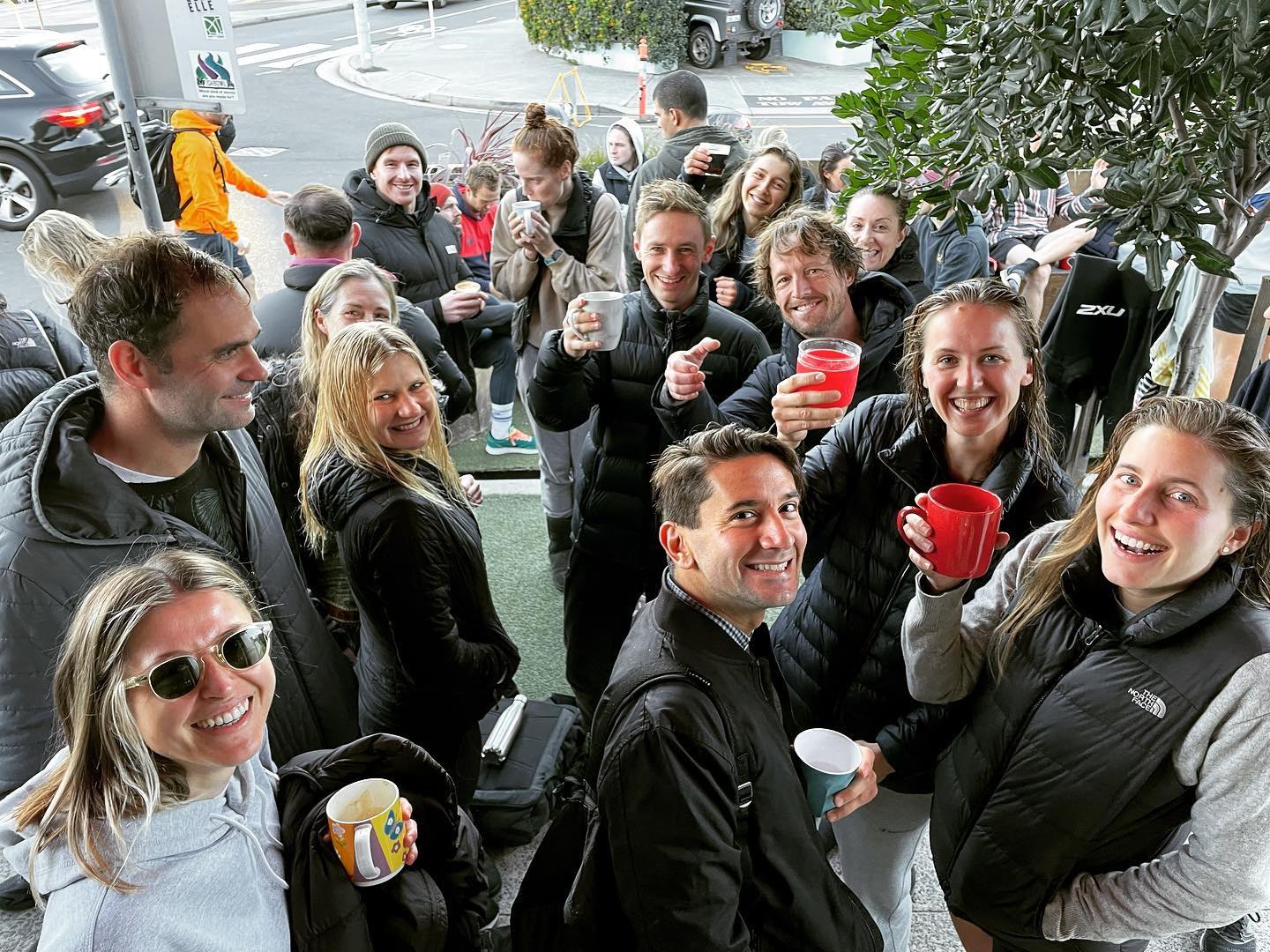
Every July, a global movement takes over kitchens, cafes, schools, and offices in 190 countries. The challenge is simple: refuse single-use plastic for one month. The impact, it turns out, is anything but small.
That is the idea behind Plastic Free July, a global movement that has grown into one of the most widely recognised environmental campaigns in the world, and if you have never heard of it before, this is your introduction.
Where it started
Plastic Free July began in 2011 with one woman in Western Australia. Rebecca Prince-Ruiz, who had spent years working in waste management, had grown concerned about the sheer volume of plastic heading into landfill. So she asked forty of her friends to try something simple: avoid single-use plastic for the month of July.
Forty became four hundred, four hundred became four thousand and more. In 2017, the Plastic Free Foundation was registered as an Australian charity to support what had clearly outgrown a grassroots experiment.
Rebecca herself has spent over three decades working in environmental management, waste reduction, and behaviour change, and has taken part in plastic pollution research expeditions across the Pacific, Atlantic, and Indian Oceans. She co-authored a book on the movement she built and in 2023 was appointed a Member of the Order of Australia for her contribution to conservation. But she still describes the work in simple terms: changing our relationship with plastic, one choice at a time.
The idea is simple
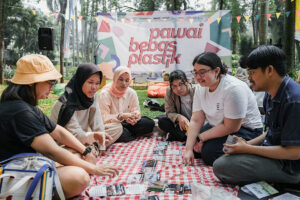
Photo credit: Plastic Free July – Pawai Bebas Plastik, Indonesia
For one month, you commit to avoiding single-use plastics. The things we are handed on a daily basis, like the cups, plastic bags, straws, sachets, and cutlery that get thrown away after one meal. Once you start noticing them, you can choose differently.
You also get to decide your own level of commitment: Plastic Free July does not ask everyone to go zero waste overnight. Some people take on the full challenge, avoiding all single-use plastic across the whole month and others can start with what the campaign calls the “Big 4” or plastic bags, disposable coffee cups, plastic straws, and plastic water bottles. Both approaches are valid.
The point in this campaign is not perfection, but attention. When you start looking for plastic, you see it everywhere – and that is the beginning of doing something about it.
Why July, specifically?
There is nothing special about July as the month itself is not magic! But having a shared, fixed moment in the calendar creates collective momentum.
When millions of people are trying the same thing at the same time, the conversation spreads naturally. Colleagues challenge each other, families compare notes, cafes put signs on their counters, schools run campaigns, communities organise events which make individual action start to look, and feel, like something much bigger than one person making a swap.
A full month allows for discoveries – that your local coffee shop is happy for you to bring a reusable cup or there is a bulk store near your work. These discoveries tend to stick, making the habits formed often outlast the month itself.
What you can actually do
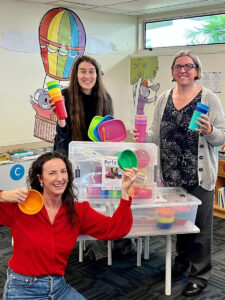
Photo credit: Plastic Free July – Party Kit Network; The Ballina Library Reusable Party Kit
Taking part in Plastic Free July is free. You go to the Plastic Free July website, make your pledge, and decide what level you are committing to. From there, the campaign gives you a huge range of practical ideas and resources, from swaps for your kitchen, tips for eating out, guides for workplaces, toolkits for schools, to the countless ideas for running community events.
Some of the most common starting points include bringing a reusable bag every time you shop, carrying a water bottle so you never need to buy a plastic one, choosing loose produce over wrapped, and saying no to a straw before one lands in your drink. None of them require a special shop or a significant budget.
Why single-use plastic, specifically?
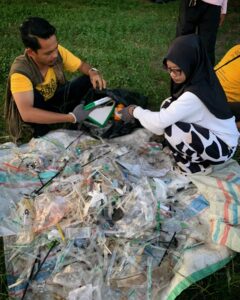
Trash Hero Yogyakarta
Of all the plastics in the world, why does Plastic Free July focus on single-use items?
Because single-use plastic is the most visible, the most avoidable, and the most absurd part of the crisis. As filmmaker Jeb Berrier put it: “Why would you make something that you’re going to use for a few minutes out of a material that’s basically going to last forever, and then just throw it away? What’s up with that?”
A plastic straw is used for approximately twenty minutes, a plastic water bottle for perhaps an hour, a plastic bag often for less time than it takes to walk home from the shop, and yet all of them will outlast every person alive today. They will break into smaller and smaller toxic pieces, entering soil, water, food chains, and bodies. They will turn up in the stomachs of sea turtles, in the lungs of birds, and increasingly in human blood, breast milk, and placentas. Their production – from fossil fuels – is accelerating climate breakdown and destroying entire communities and ecosystems.
At Trash Hero cleanups every single week the same items turn up again and again: plastic bottles, sachets, straws, bags, food packaging. In 2025 alone, our volunteers collected 115.2 metric tons of waste across 2,074 cleanups, and single-use plastic made up the overwhelming majority of it. You can read the full picture in our 2025 Annual Report.
Every bottle and wrapper we pick up tells the same story: something used briefly, then left behind for someone else to deal with, often decades or centuries later. Single-use plastic is not a convenience. It is a cost that gets pushed onto the environment, onto communities without the infrastructure to deal with it, and onto future generations who never asked for it.
What about the bigger picture?

Photo credit: Plastic Free July – bRU Coffee
We know that individual action alone cannot solve a system-level problem, and the Plastic Free July campaign does not pretend otherwise. The companies producing billions of single-use plastic items each year carry responsibility that no amount of personal reusable cups can fully offset.
But individual awareness is where systemic pressure often begins. When enough people start asking why their salad comes in a single-use plastic container, or why their shampoo cannot be bought in a refillable bottle, those questions eventually reach the people with the power to answer them differently. Consumer behaviour sends signals, campaigns create visibility, visibility creates pressure, and pressure, over time, changes what gets made and how it gets sold.
Plastic Free July sits at that junction between personal habit and public accountability. It does not ask you to fix the system on your own, but it asks you to be part of the culture shift that makes fixing the system more likely.
What this means for Trash Hero
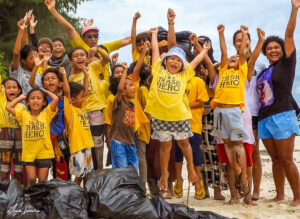
Trash Hero Gili Meno
At Trash Hero, we start by cleaning up the plastic that is already in the environment. We also know, better than most, that cleaning up is not the answer on its own. The plastic keeps coming because production keeps going, and because communities around the world are left to manage waste that was never designed to be managed safely.
Plastic Free July connects to our year-round work on behaviour change. Every piece of single-use plastic refused in July is one less piece that ends up on a beach, in a river, or in a landfill fire. Every person who takes the challenge can carry that habit into August, September, and beyond. Every conversation the campaign starts is a conversation about what we are actually producing, why, and whether there is a better way.
This July, we are encouraging our community to do both: clean up what is there, and cut down on what is coming. Join a Trash Hero cleanup near you, and take the Plastic Free July challenge while you are at it.
Because the plastic crisis is not going to be cleaned away. It needs to stop being made in the first place.
How to get started
Taking part is free and takes about two minutes to set up. Head to plasticfreejuly.org, make your pledge, and choose your level. The website is full of practical ideas for every context: at home, at work, at school, at events, and in your community.
If you want to go further, share the challenge with someone else. The campaign is always more powerful when it is something people do together rather than alone.
More to explore this Plastic Free July
Break Free From Plastic’s Asia-Pacific network is running their #FalseSolutionsExposed campaign throughout Plastic Free July, exposing the harms of plastic pollution, debunking false solutions like waste-to-energy and incineration, and celebrating real solutions like reuse and zero waste.
The campaign includes a free weekly webinar series, covering everything from building plastic-free campuses to the stories of women waste workers on the frontlines of toxic exposure.
Join the conversation