Meet the businesses refusing to sell plastic bottled water

by Fayrouz on 07/08/2026 No comments

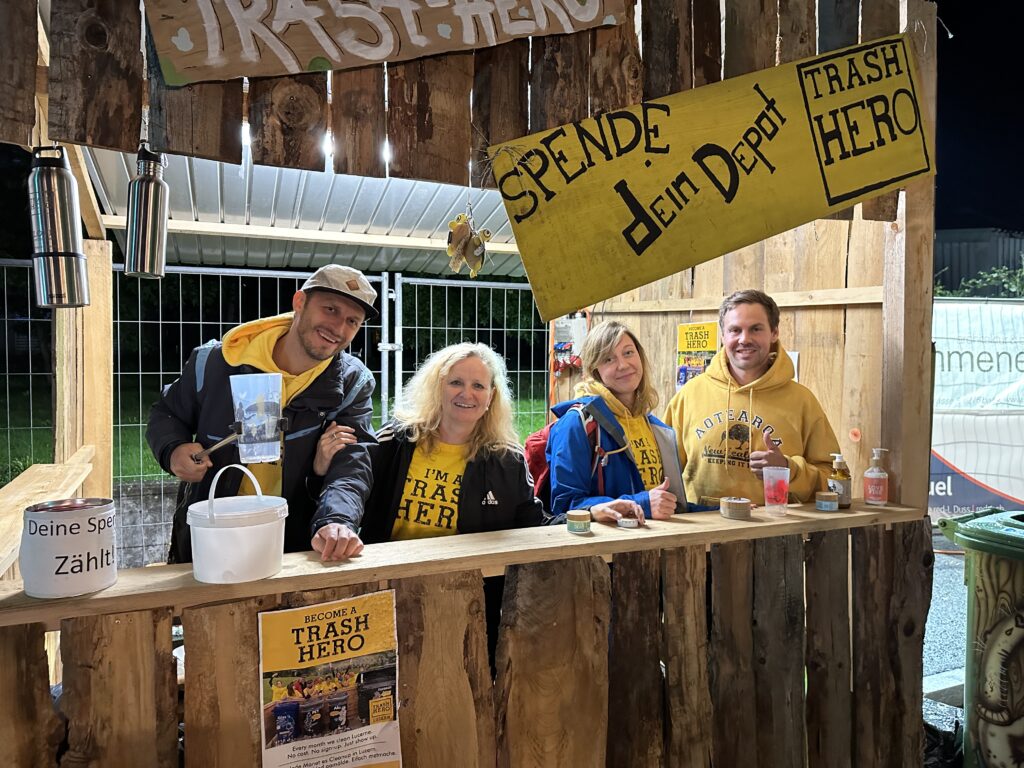
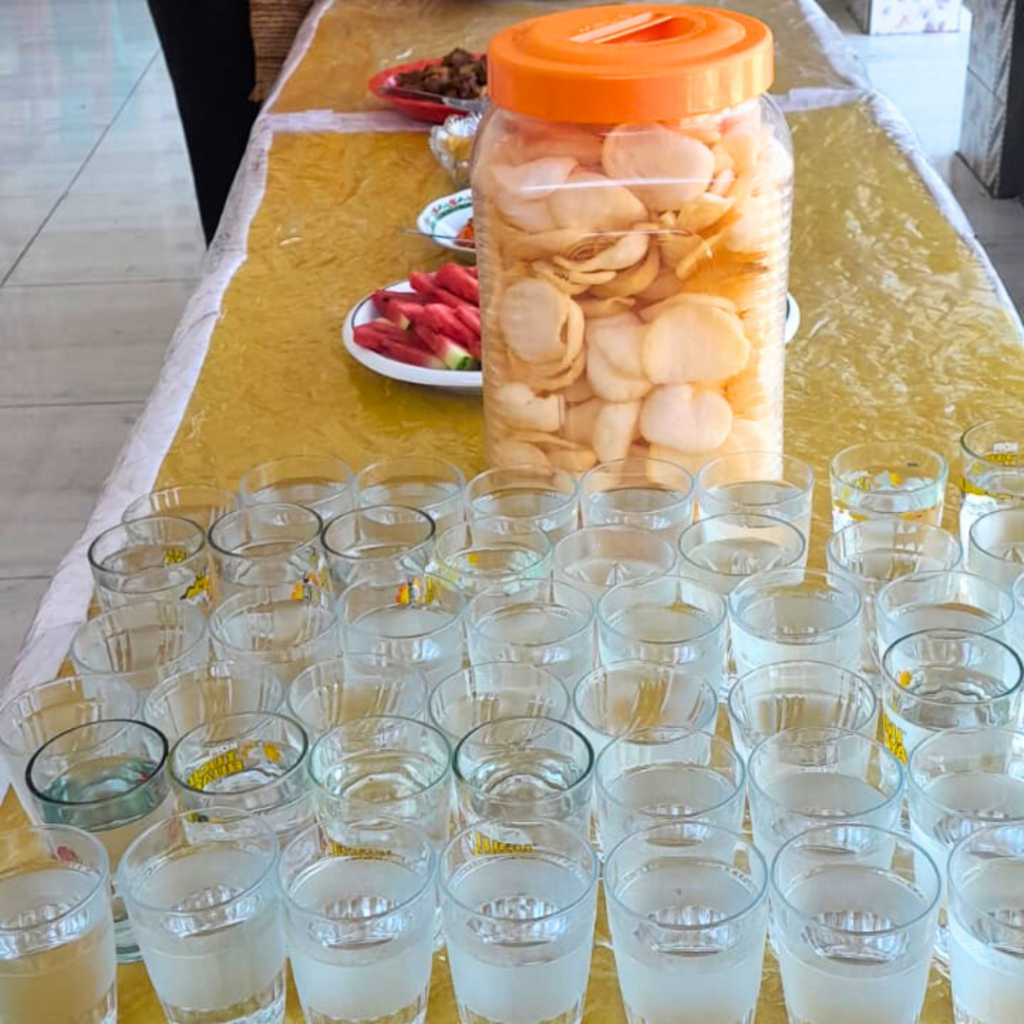
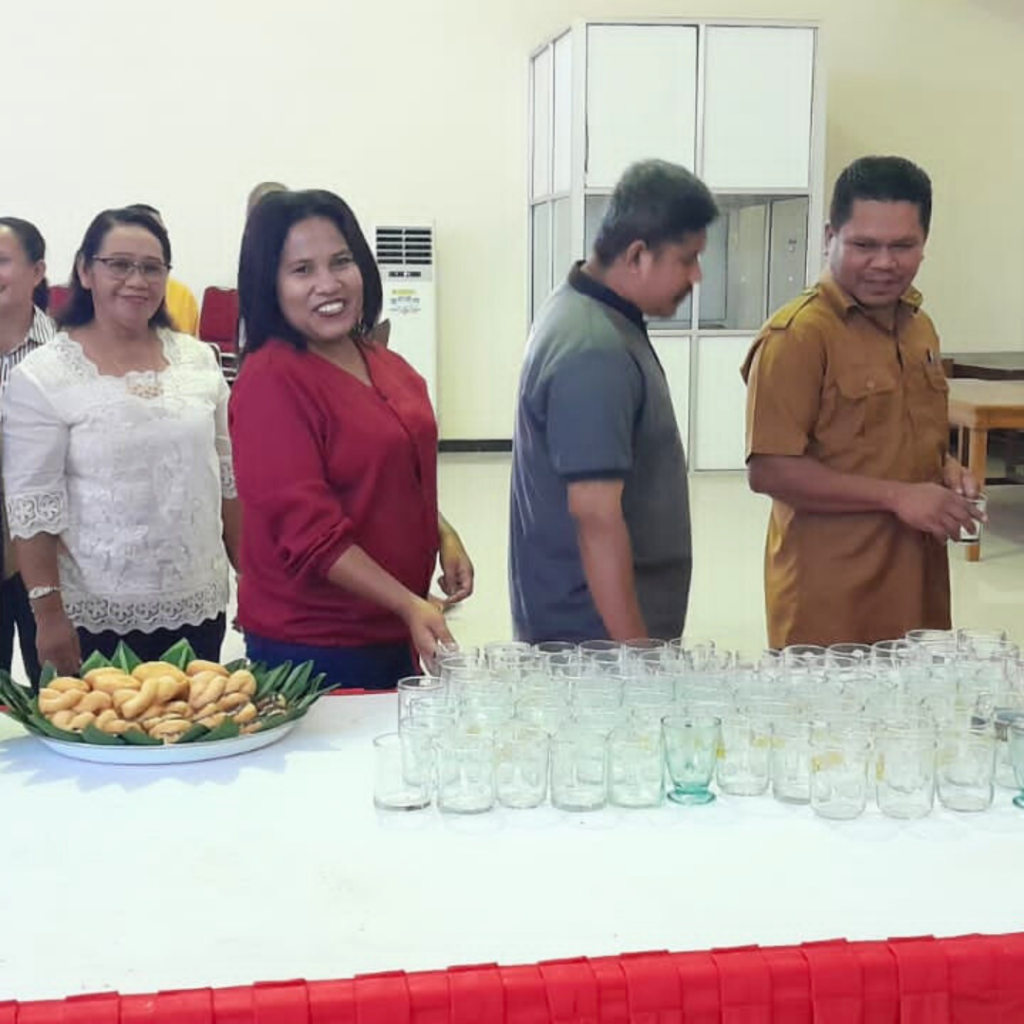
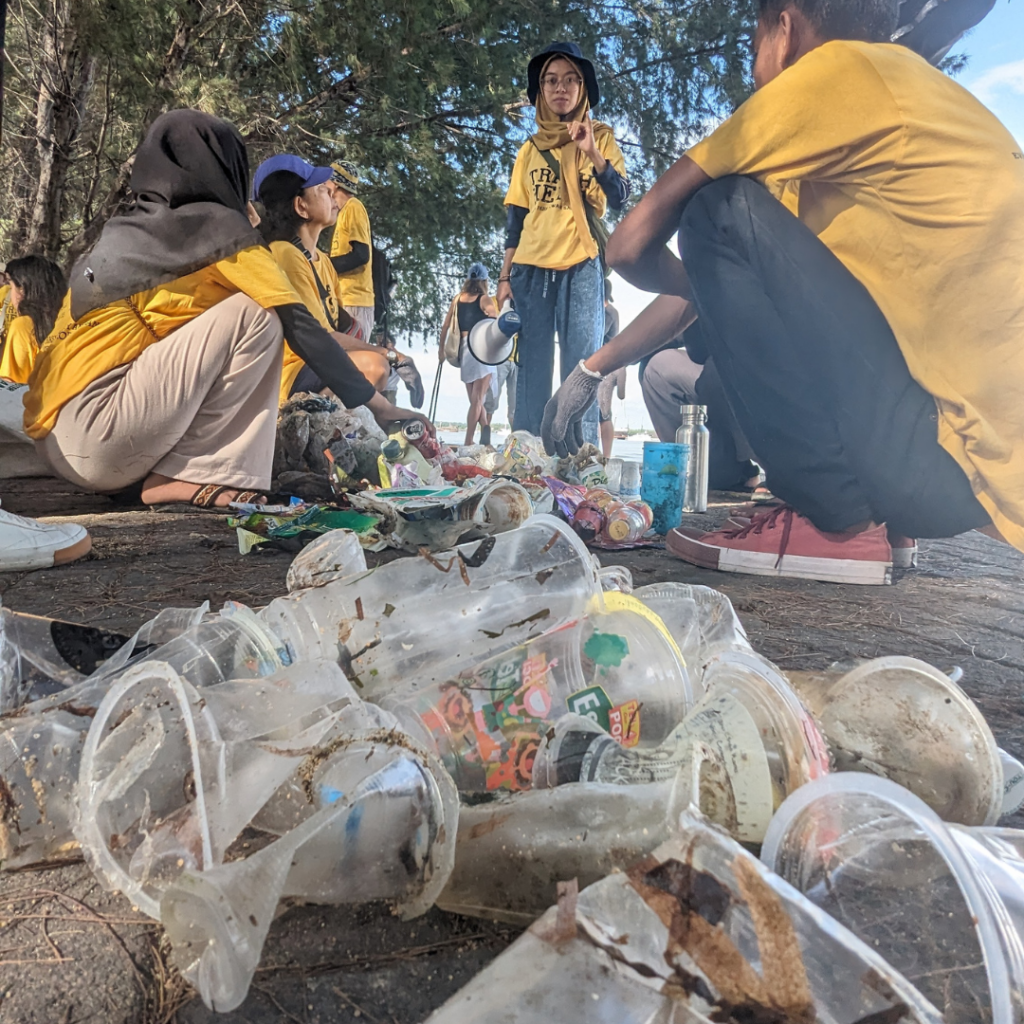
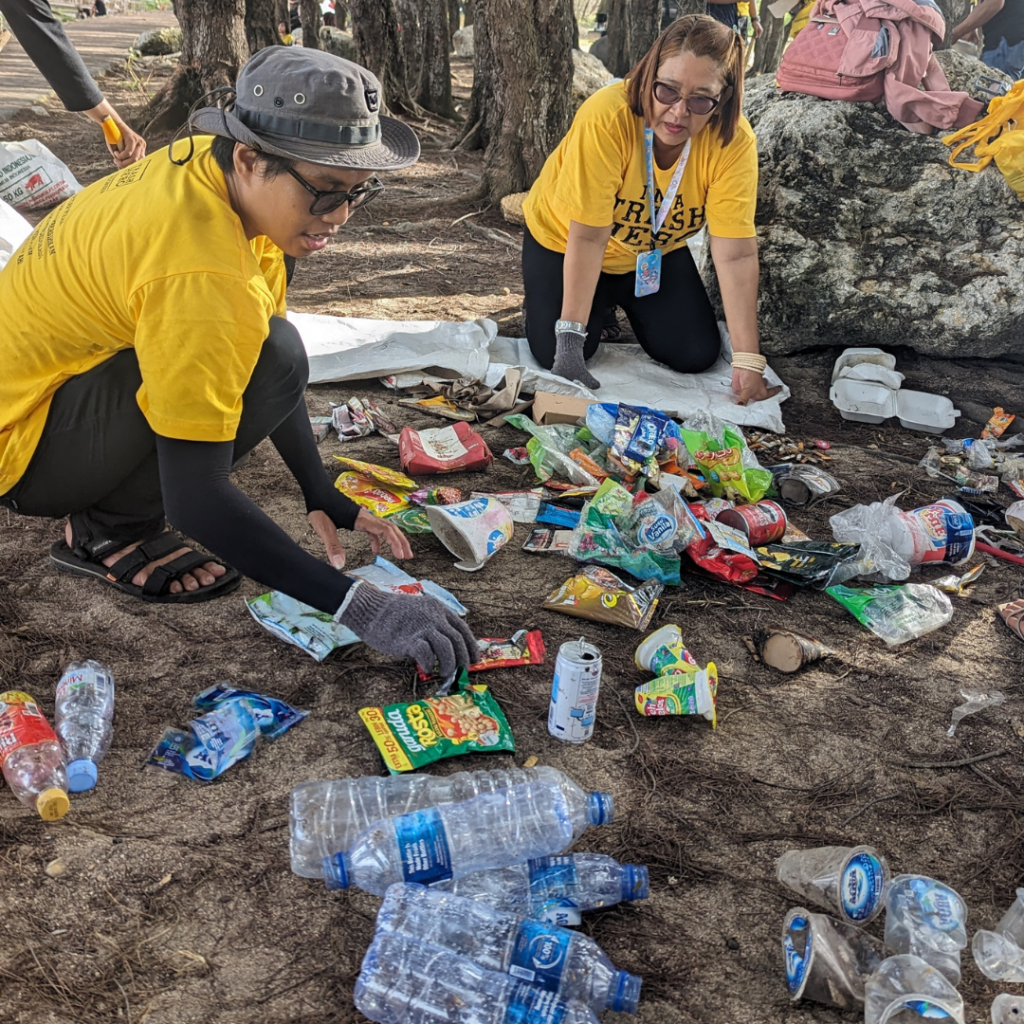
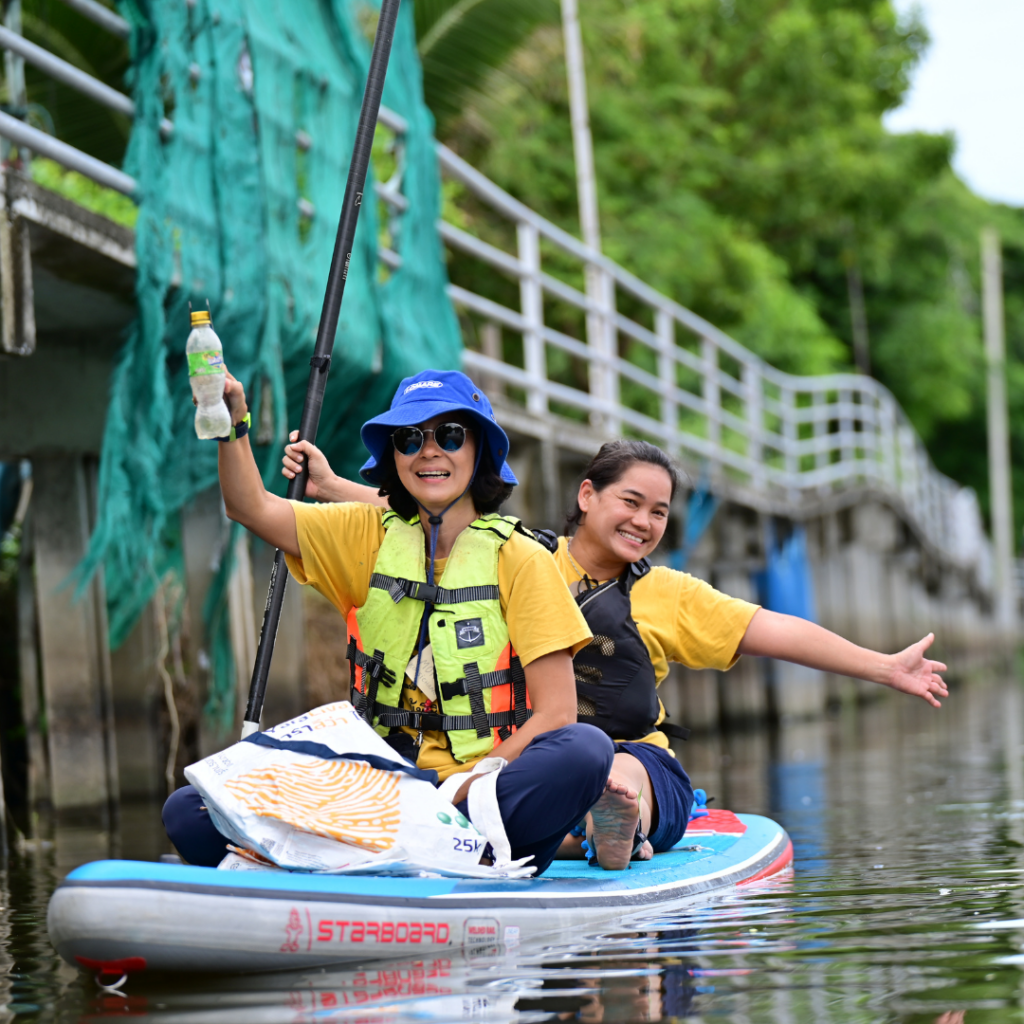
Safe, drinkable tap water is a privilege much of the world doesn’t have. While solutions like refillable purified water tanks or simply boiling water exist for households and businesses, consuming water while out and about usually involves single-use plastic. After picking up thousands of these bottles on beaches, we decided to create the Trash Hero Water Refill Network in 2014: a simple way to prevent plastic bottle waste, by bringing together businesses willing to offer free water refills to customers.
We encourage businesses to sign up to the network by offering a free listing on our online refill map and promoting their efforts on local social media channels. To support the move to refill for both the businesses and their customers, Trash Hero optionally provides high quality stainless steel water bottles at cost price. By selling the bottles to customers with a small profit, the cost of providing the water is covered. Customers benefit from having a cool reusable bottle and free refills through the network for life. 

But who are the businesses to agree to support this scheme? And what motivated them to join?


Meet our refill point partners 
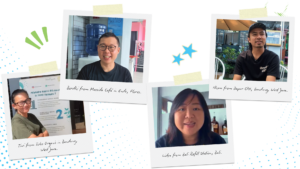
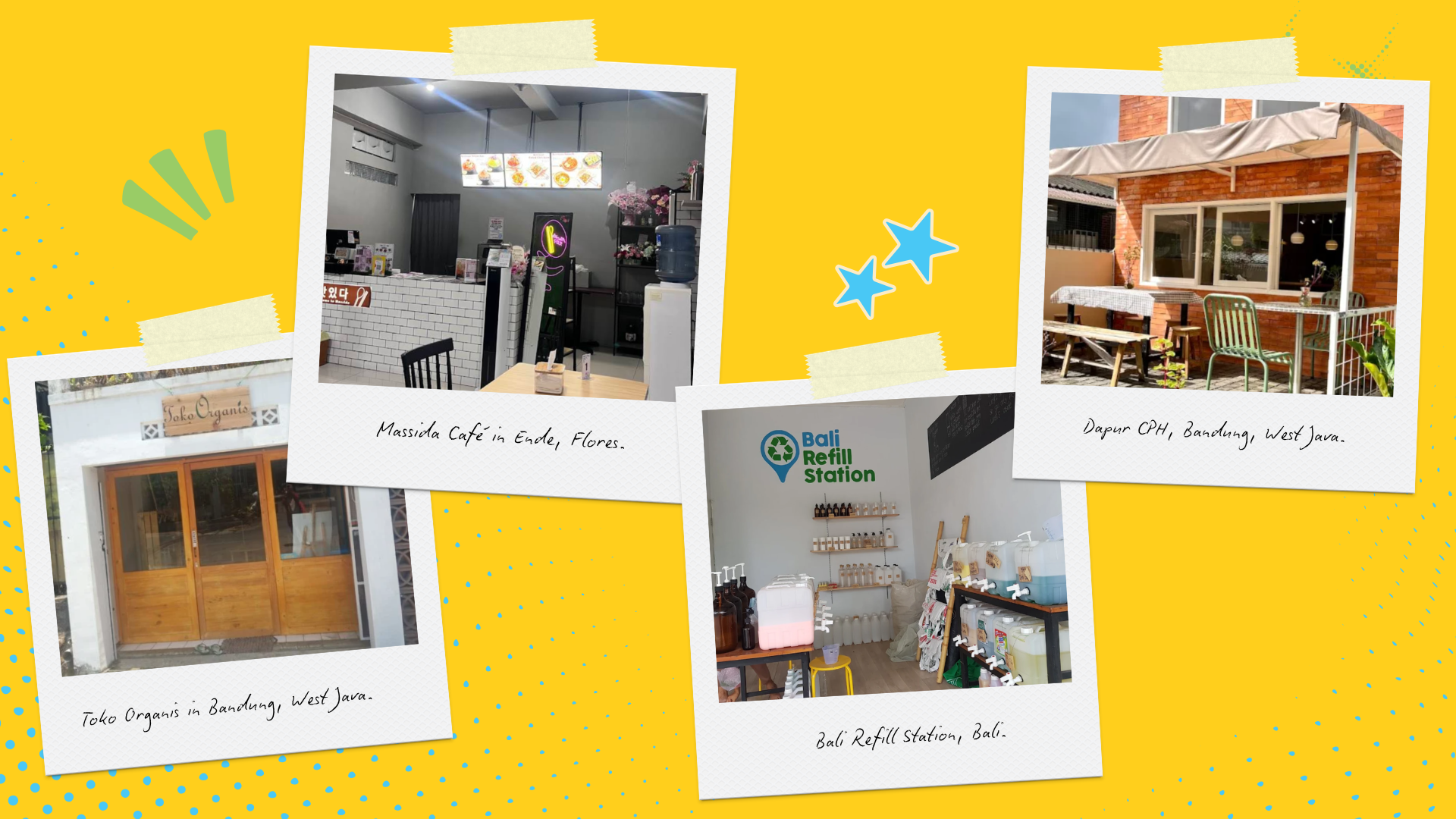
Four business owners in Indonesia with four different entry points. For Tiwi at Toko Organis in Bandung, West Java, it started after experiencing frustration as a thirsty customer. “Why do we provide a refill point? Because we ourselves felt helped when refill points started showing up around Bandung,” she says. She’d felt the gap firsthand.

For Berdhi, offering a refill point was a  statement of his principles. When he opened Massida Café in Ende, Flores, he built a no bottled water rule into the business from day one. To him, it was never optional. “This actually shows that our business also cares about environmental issues, especially plastic waste,” he says.

Lidya found Trash Hero organically, through Bali’s environmental community, and the fit was immediate. “We happened to meet people from the activist community in Bali, and that’s how we were introduced to the refill point concept, which happened to match our vision exactly, the vision of Bali Refill Station to reduce plastic waste, especially in the Bali area.”

And as for Ilham in Bandung, reuse was a habit long before his business even existed . Years of hiking and outdoor activities had already made washing his own gear second nature. So when he opened a restaurant, Dapur CPH, single-use plastic never quite made sense to him. “First, I’m not really a take-away user myself. Second, because I exercise and move outdoors almost every day, especially back when I used to hike mountains, I was already used to washing things myself. In terms of product cost, we didn’t want extra cost from using plastic, so we chose to wash everything instead. I’d feel guilty if there was a lot of waste.”

All feel that the choice they made is having an impact. At Massida Café, the proof came from some visiting customers from Korea. “When they saw the Trash Hero concept, they were pretty happy because it reminded them of the restaurant system back home, where free drinking water is almost always available,” Berdhi says. At Dapur CPH, Ilham reflects,  “some customers have started to bring their own food containers, and I think, with the trend of aesthetic tumblers or whatever, people have also started getting used to refilling water.” He isn’t stopping at the kitchen door either. “Recently I’ve even thought about starting a movement for refillable detergent, because that’s such a waste generator too.”

Berdhi put the case for joining simply: “For other business owners out there, I don’t think there’s anything to lose by trying to become a Trash Hero refill point partner. Sometimes big change comes from small changes made by a lot of people.” 

Ilham agrees. “For the greater good, we have to, because there’s really no downside, I mean, the impact is only getting bigger. The waste emergency in Indonesia is getting worse too. Plus, from a business standpoint, plastic prices keep rising, packaging prices keep rising, so there’s no harm in taking dine-in tableware and reusable containers more seriously. To business owners out there, let’s shift to zero waste so the earth gets cleaner and free of plastic waste, and join the Trash Hero refill network so more people can refill their bottles.”

Through the Water Refill Network, we’ve sold 113,328 bottles through our refill partners since the end of 2014. We assume that one bottle sold saves an average of 365 plastic water bottles, one per day for a year, and, from 2023 onward, that each refill partner provides 5 refills a day. That means we’ve avoided an estimated 44.9 million single-use plastic bottles through this project so far. Right now, there are 605 refill points in the network, and we’re open to any business who would like to join us – big or small. There is no cost to join, other than the water you provide.
So next time you’re heading out the door with your bottle in hand, check the map and find a refill point near you. If you run a business or organize events yourself, you already know what to do. 💛


read more
FayrouzMeet the businesses refusing to sell plastic bottled water

Beyond the beach: How Trash Hero chapters are changing their communities

by Fayrouz on 21/05/2026 No comments

When most people think of Trash Hero, they picture volunteers on a beach, bags in hand, collecting what the tide and the streets have left behind. And yes, that is where it all started, and where it still shows up every single week, in communities across the world.

But the weekly cleanup has always been more than a cleanup; it is a gathering point and a starting place, and for many Trash Hero chapters, it is where the question gets asked: what else can we do?

The stories below come from chapters in many regions; they are different in scale, in method, and in context, but they share the same instinct: that real change happens in communities, built slowly, by people who show up.


Your favourite supermarket was audited, it didn’t do great

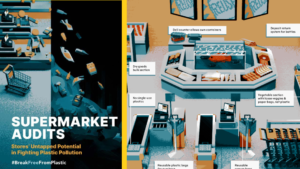
Trash Hero chapters in multiple countries took part in a first-of-its-kind pilot project to audit supermarket packaging practices worldwide. The project from Break Free From Plastic, follows on from their successful six year brand audit campaign. This time, the spotlight is being turned on supermarket chains and their significant role in plastic pollution. Trash Hero volunteers in Thailand, Malaysia, Switzerland and the UK supplied 35 audits for the report, which shows most stores are ignoring easy measures to reduce waste.


Growing farmers’ income with waste

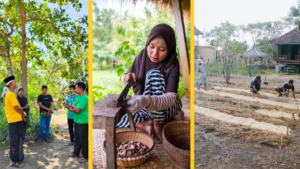
Trash Hero Bayan in Lombok, Indonesia engaged local cashew nut farmers in a community composting project. Over several months, the team taught them how to separate and compost their food scraps using simple methods. The farmers were able to improve soil quality, grow healthier cashew trees, and nearly double the value of their harvest. To date 30 households and 40 farmers have joined the project, and village chiefs have expressed interest in making this type of food waste management mandatory in the district.


The Big Plastic Count, Swiss edition

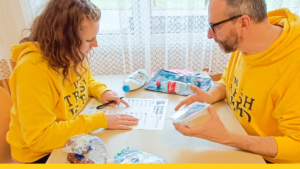
Trash Hero Switzerland took part in the country’s first ever Big Plastic Count. The citizen science campaign that started in 2022 in the UK asks people to record the number of plastic items they throw away during one week. 11,586 people in Switzerland took part, logging 215,463 pieces of plastic. The resulting report highlighted that 95% of this waste was burned or exported and called for more investment in reusable packaging and refill infrastructure.


Reuse fit for a king

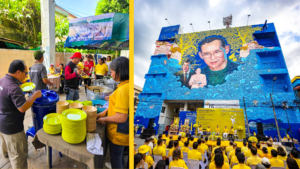
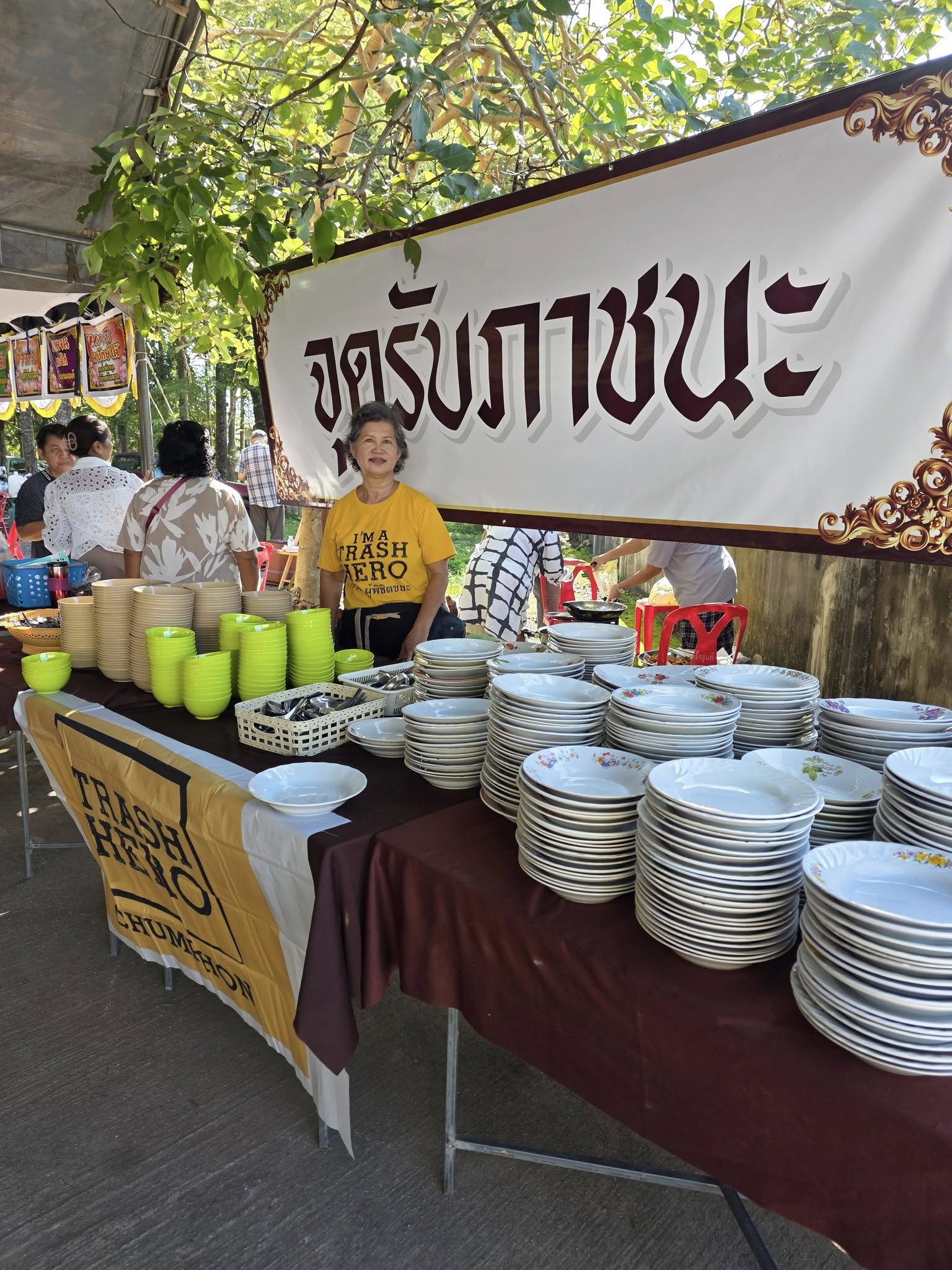
Trash Hero Chumphon took their reusable tableware to a Street Art Festival in the city. It was used to cater for more than 1,000 workers and visitors who came to see the new mural honouring the late King Bhumibol – all without single-use plastic. The team’s “community tableware bank” has been lending reusable cups, cutlery and dishes to event organisers free of charge for the last 4.5 years. In 2025, it was used at seven events in total, avoiding an estimated 23,350 pieces of single-use plastic, and strengthening the case for all types of gatherings to be zero waste.


All aboard for a lesson on waste

Trash Hero Lübeck in Germany held a two-hour workshop on cigarette butts in an unusual venue – on board the historic Fehmarnbelt, a floating lighthouse on the Untertrave river. Participants learned about the toxicity of plastic filters and their impact on soil and water when they are discarded. At the end, they were also treated to a special tour of the boat from Captain Holger!


Think global, act local

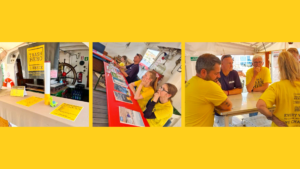
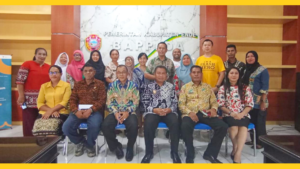
Trash Hero Ende were invited by the local government to give input at their “100 days of strategy” meeting. The volunteers shared their insights into the root causes of waste with the Regent and Vice Regent, highlighting the need for waste separation and urging strict regulation of illegal dumping, burning and single-use plastic. Enforcement was a key issue and Trash Hero supported the Regent’s call for better application of the Environment Agency’s existing rules, with education and community engagement.


Change this big rarely starts with a grand plan. More often it starts with a small group of people who care, a problem they can see right in front of them, and the decision to do something about it. That is what Trash Hero has always been at its heart. Not a campaign or a movement with a grand manifesto, but neighbours showing up for each other, week after week, in ways big and small.

This is just a small window into what our chapters have been up to this year. There are many more stories like these in our latest Annual Report, from communities all over the world.

If something in these stories felt familiar, or made you wish you had something like it where you live, come find us or your nearest chapter, and if there is not one near you yet, well, that is exactly how every single one of these stories began.

read more
FayrouzBeyond the beach: How Trash Hero chapters are changing their communities

Women building our zero waste future

by Seema on 07/03/2026 No comments

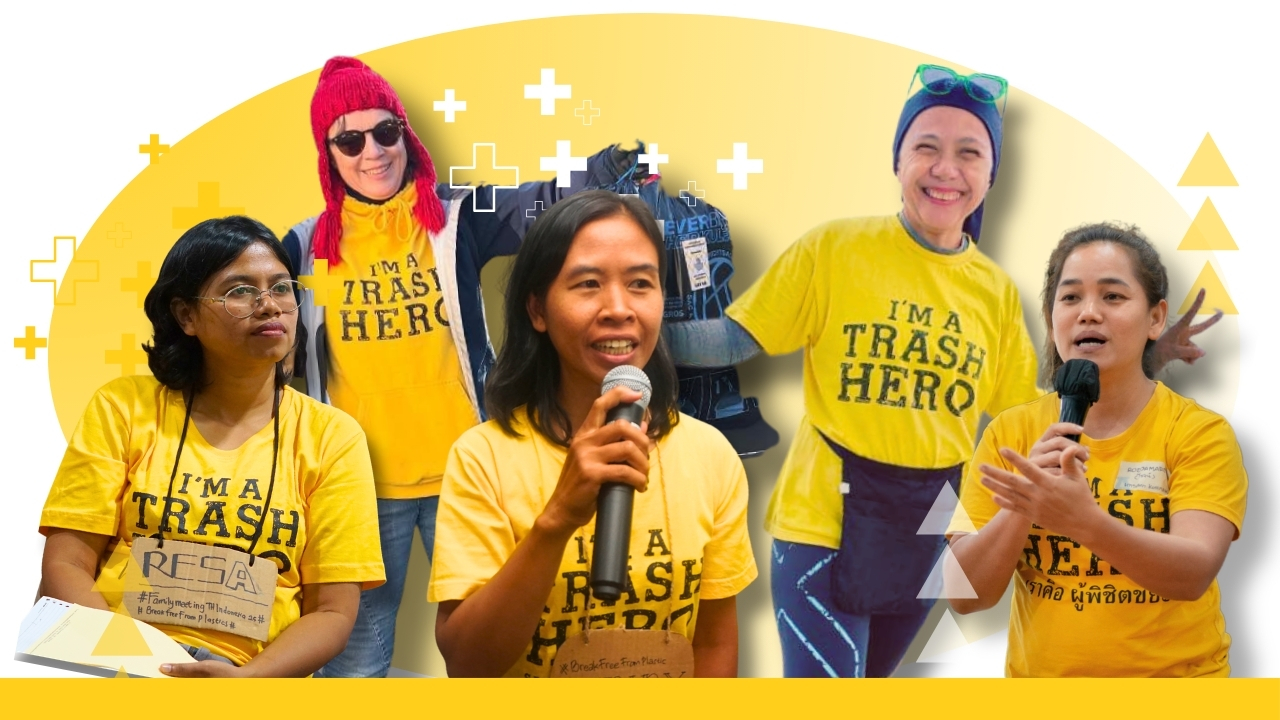
This International Women’s Day, we are spotlighting five volunteers who are transforming the way their communities think about waste.

From classrooms in Indonesia to restaurants in Thailand, from island cleanups in Malaysia to bookstores in Europe, these women are not waiting for permission or the perfect moment to act. They are composting, refilling, questioning packaging norms, transforming kitchen scraps into products, and enforcing waste separation where none existed before. They are also inspiring others to rethink what is “normal”.

Their stories prove that zero waste is not an abstract ideal, but something already being built through daily, practical decisions.

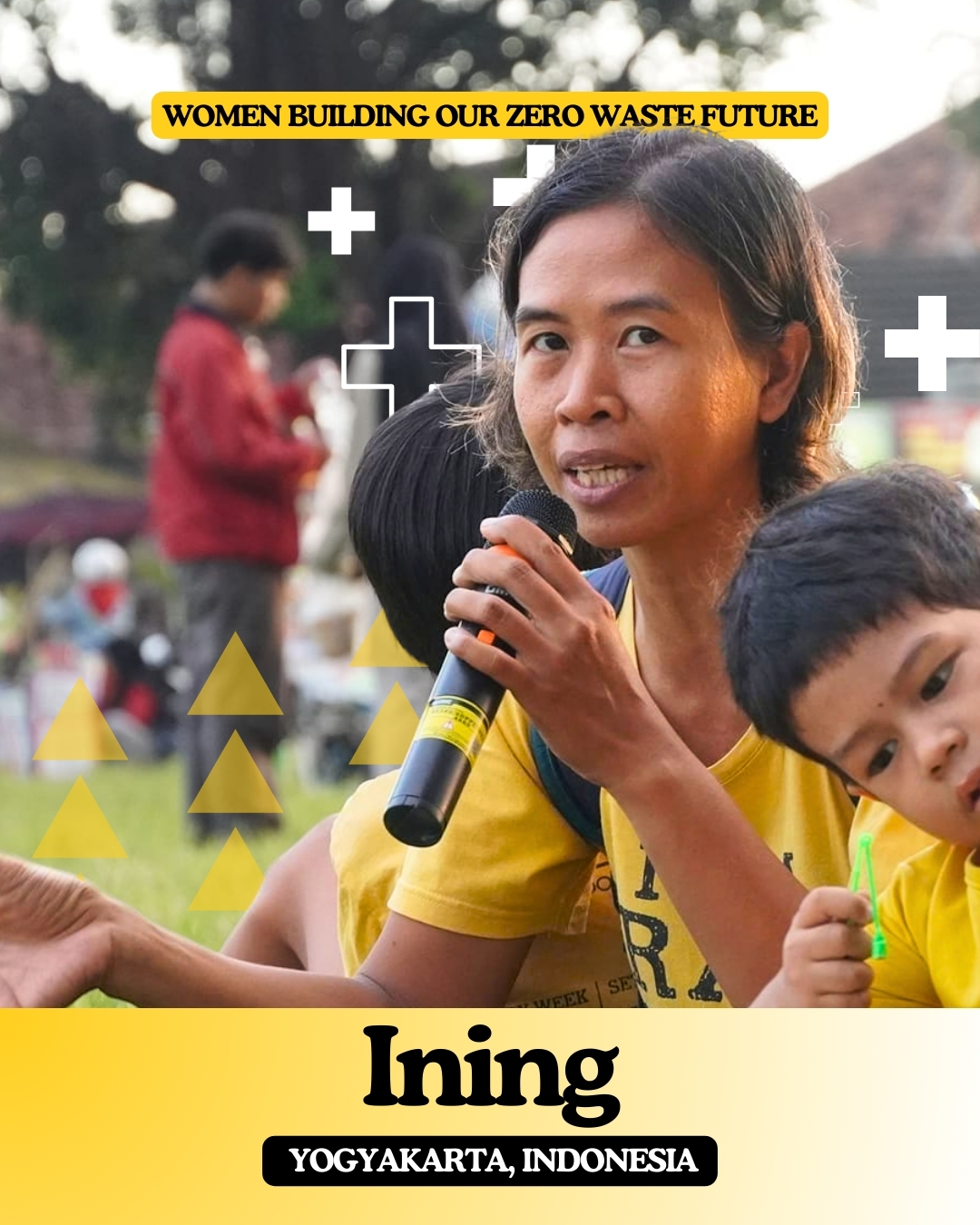
Ining, Trash Hero Yogyakarta, Indonesia

When Ining was a child, she couldn’t ignore the plastic waste she saw on the roadside. On her way home from school, she would pick it up and carry it back home to throw away. No one asked her to do it, but to her it felt wrong to walk past it.

That instinct stayed with her. As she grew older, she became more conscious of her own consumption. She started to buy only what she needed, avoid single-use plastics and opt out of fashion trends. In 2017, her school joined Clean Up Jakarta Day alongside Trash Hero. There she met our volunteer Amelia and decided to get involved. Nearly nine years later, she is still going strong.

Today, Ining teaches science at a Montessori junior high school in Yogyakarta. And she is weaving environmental action into the fabric of school life at every opportunity. She has helped introduce a water refill system, encouraged students to bring reusable bottles and lunchboxes, organised tree and mangrove planting outings, and supported the creation of a zero waste canteen. Outside of school, she regularly joins cleanups, speaks at community events and campuses, and runs workshops turning organic waste like cooking oil, coffee grounds and eco-enzymes into useful products like soap and candles. At home, she composts and gardens with the results.

The journey hasn’t been simple. When the school first introduced its zero waste policies, some parents and staff protested that it was too complicated. At home, not everyone shares the same level of awareness. Neighbours sometimes see her composting and raising maggots as “dirty”, though the default local waste practices involve burning or throwing waste in the river.

But for Ining, this work is not a burden. “Being a volunteer and activist is not an obligation,” she says. “It is part of my identity.” What keeps her going is simple: sharing good things makes her happy.

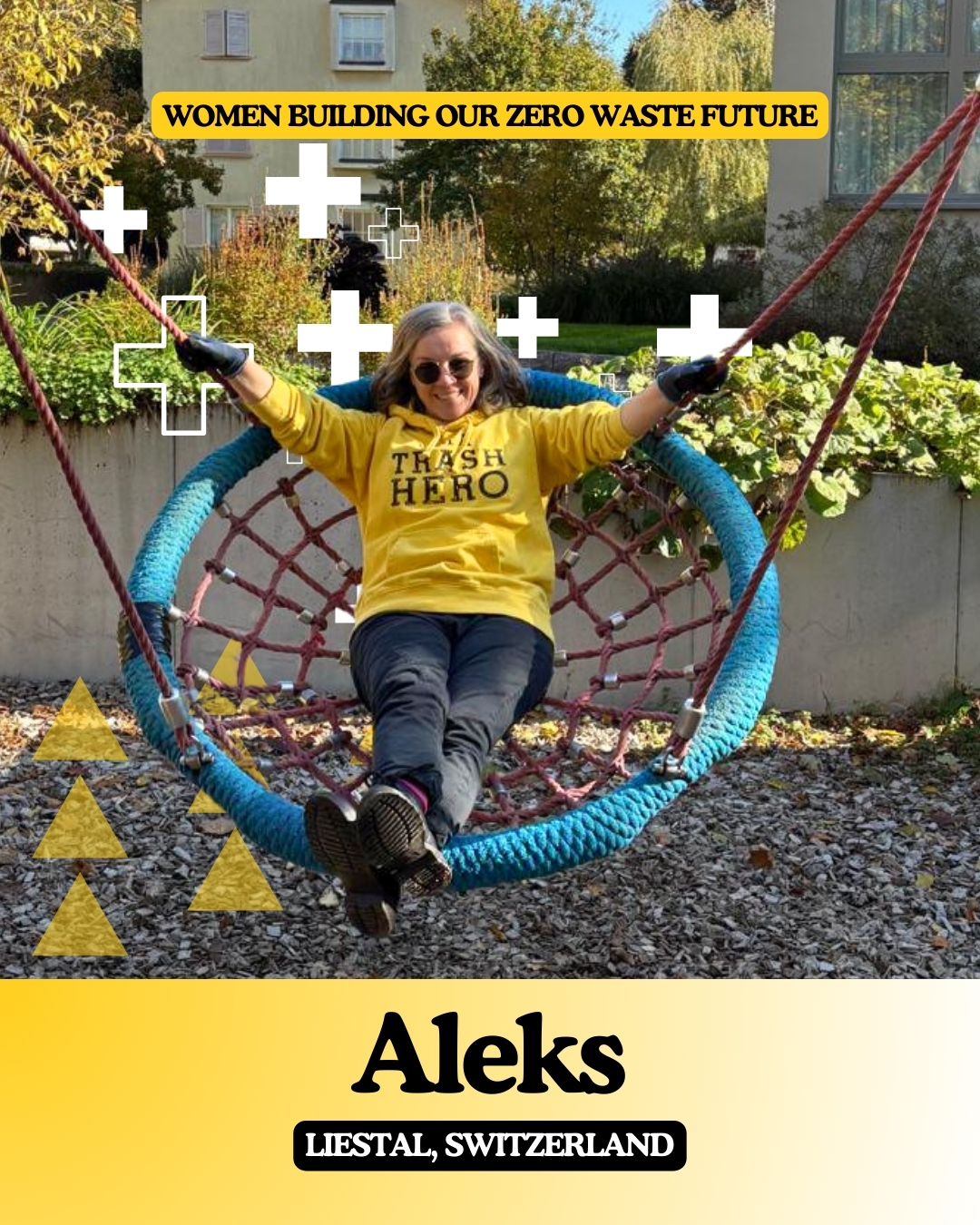
Aleks, Trash Hero Liestal, Switzerland

For Aleks, it started with a photo. On holiday in Montenegro in 2011, she wanted to take a picture on a beautiful beach, but the sand was covered in washed-up trash. So she cleared it away. The surprising thing was that cleaning the beach felt better than taking the photo.

From that moment on, she developed the simple habit of picking up waste wherever she went, whether on beaches, in the mountains or in cities. But the habit led to bigger questions. Why is there so much packaging? Why are unpackaged products rare and expensive? Why is organic food costly while pesticide-laced food cheap? Who benefits from this system?

These questions eventually led her to found a Trash Hero chapter in Liestal in 2024. Her goal was not just to clean up, but to inspire others and raise awareness of the need for change. Many people have since joined and local businesses have offered to donate tools, materials and even window space to spread the message.

She has noticed something powerful: a striking number of women are deeply involved, both as active participants and as supporters. Their commitment reflects a strong sense of responsibility for the health of their community and environment.

“Every action, no matter how small, makes a difference,” she says. Change can begin with one piece of trash – and expand into questioning the systems that created it.

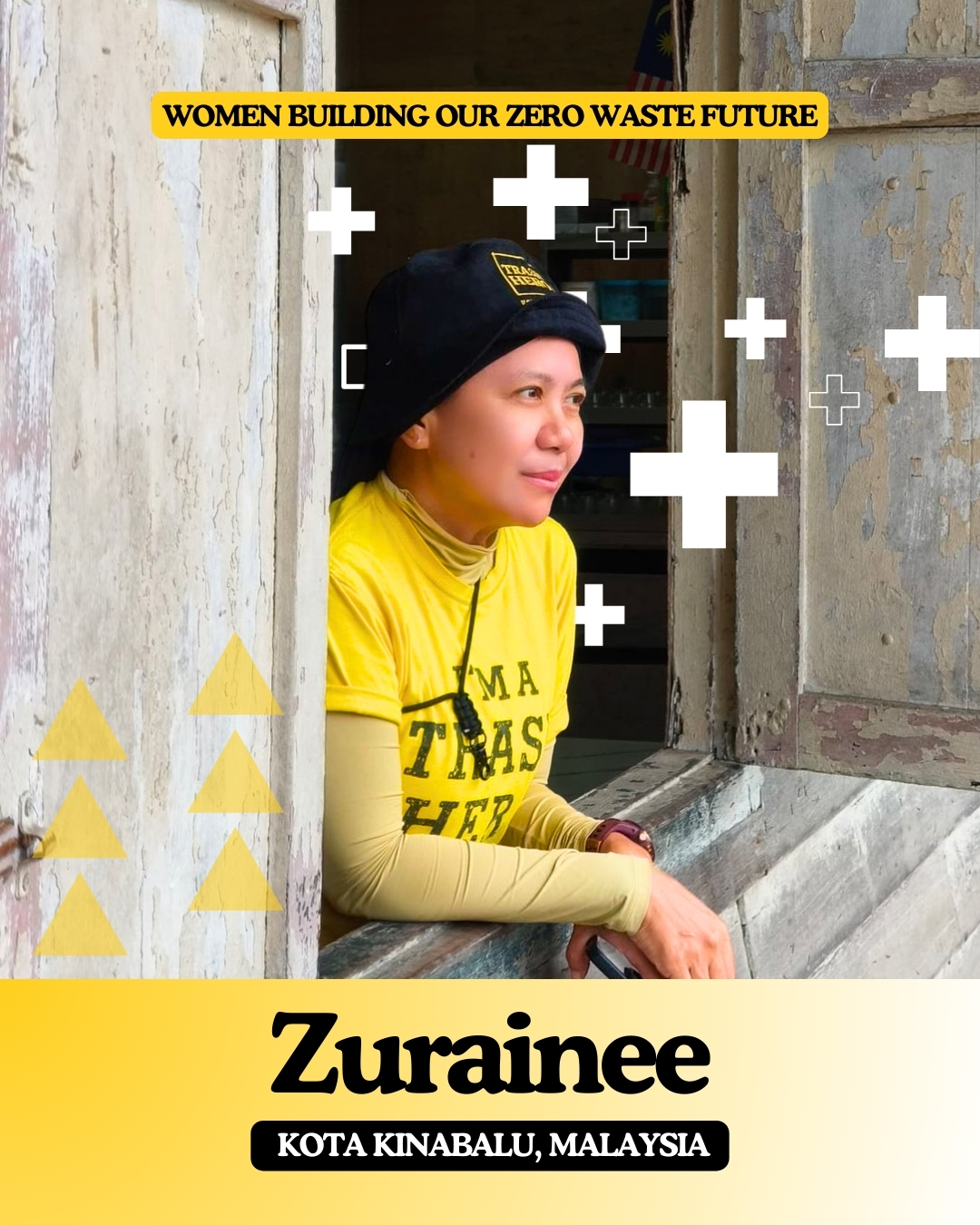
Zurainee, Trash Hero Kota Kinabalu, Malaysia

Zurainee grew up by the shoreline of Kota Kinabalu, Sabah, Malaysia. As a child, the beach was a playground. Over the years, she watched it change. What was once clean and pristine slowly became scattered with rubbish.

“It is heartbreaking,” she says, “to see how pollution has crept into our environment.”

A viral social media post inspired her to take action. It was not a campaign or speech, but a video of a man who had been filmed picking up rubbish, without knowing he was being recorded. His quiet sincerity moved her deeply. If he could try to change things without expectation of recognition, so could she.

She joined – and now leads – her local Trash Hero chapter. Their beach cleanups reflect simple values and are respectful of nature. Volunteers use fabric gloves and reusable gunny sacks instead of disposable materials, avoiding the creation of new waste. Refreshments are served zero-waste style — water refills, food on banana leaves. She has shared this approach with other local organisations to use at their own events.

At home, Zurainee separates organic waste and composts it. Used cooking oil and aluminium cans are sent for recycling. Her family carries reusable bottles and avoids single-use plastics. They choose pre-loved clothing over buying new.

Over the years, she has seen awareness grow and friends and neighbours adopt greener habits. Her message to women is clear: perfection is not the goal. “Zero waste is about small, conscious decisions every day,” she says. “What we practise, our children see. And what we value, our families adopt.”

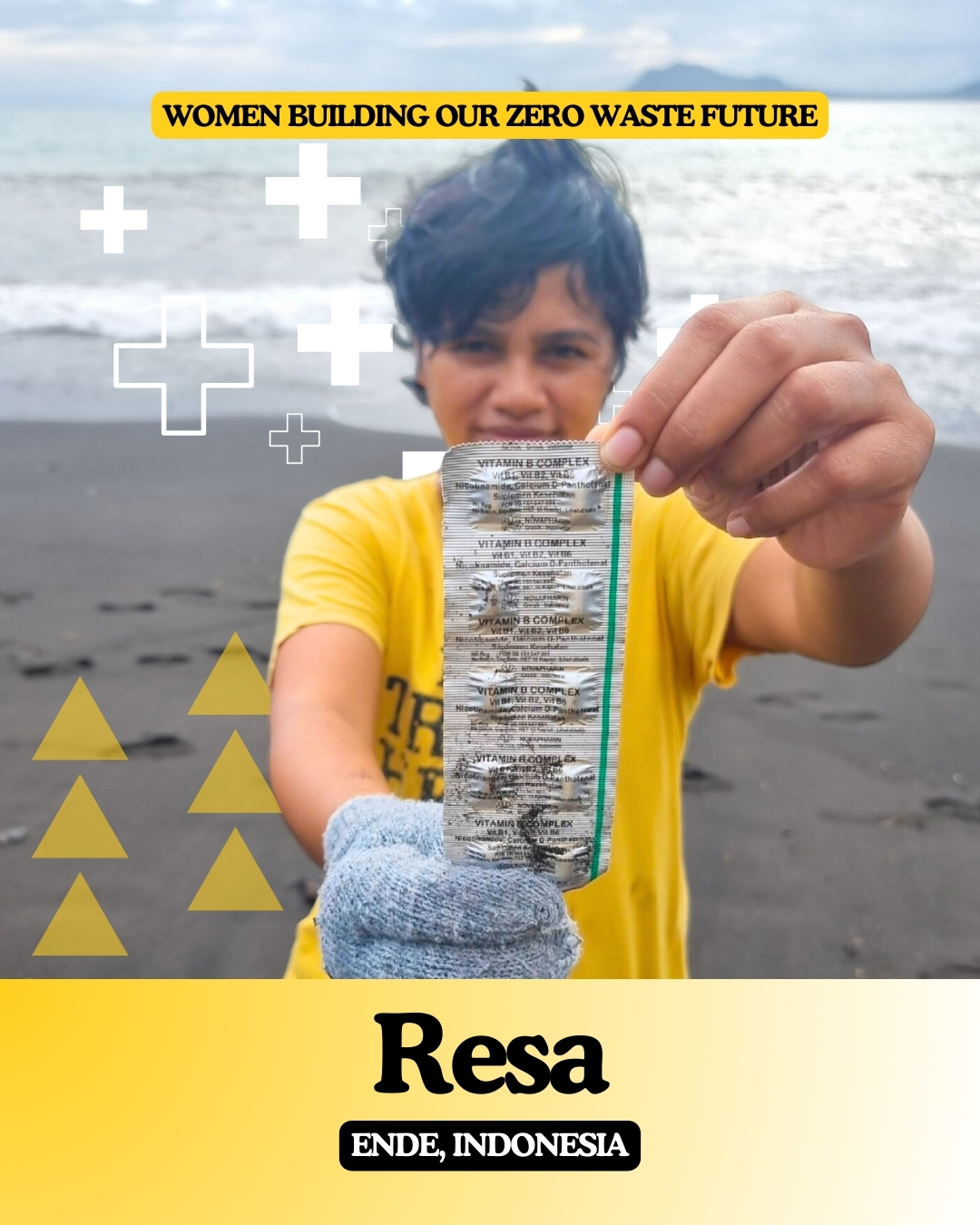
Resa, Trash Hero Ende, Indonesia

Resa’s environmental journey began in college, during an internship at an organic farming foundation in Bogor, Indonesia. There, she learned what it means for humans to live in harmony with nature – not dominating it, but working alongside it.

Years later, visiting Raja City Beach, she was surprised by how clean it looked. She discovered that Trash Hero Ende had recently organised a cleanup there. This moved her: she felt the sweat, effort and commitment behind it. She joined her first cleanup in September 2019 and has been an active volunteer ever since.

In her daily life, Resa works in monitoring and evaluation for a humanitarian NGO. Outside work, she focuses on reducing single-use plastics both at home and in her community. She is currently launching a refillable laundry and dish soap business designed to tackle sachet waste – one of the most persistent forms of plastic pollution in Indonesia.

The concept of refill itself is not new. For example, people traditionally buy kerosene by bringing their own containers to fill. But refillable cleaning products are not common, and Resa has found habits and perceptions are hard to shift. Even at the market, some vendors still insist on handing her plastic packaging, believing it is more polite, rather than letting her use her own bags and containers.

But she perseveres. Change, she knows, requires patience. “Although my contribution cannot control all the plastic waste produced worldwide,” she says, “I want to do whatever I can, no matter how small.”

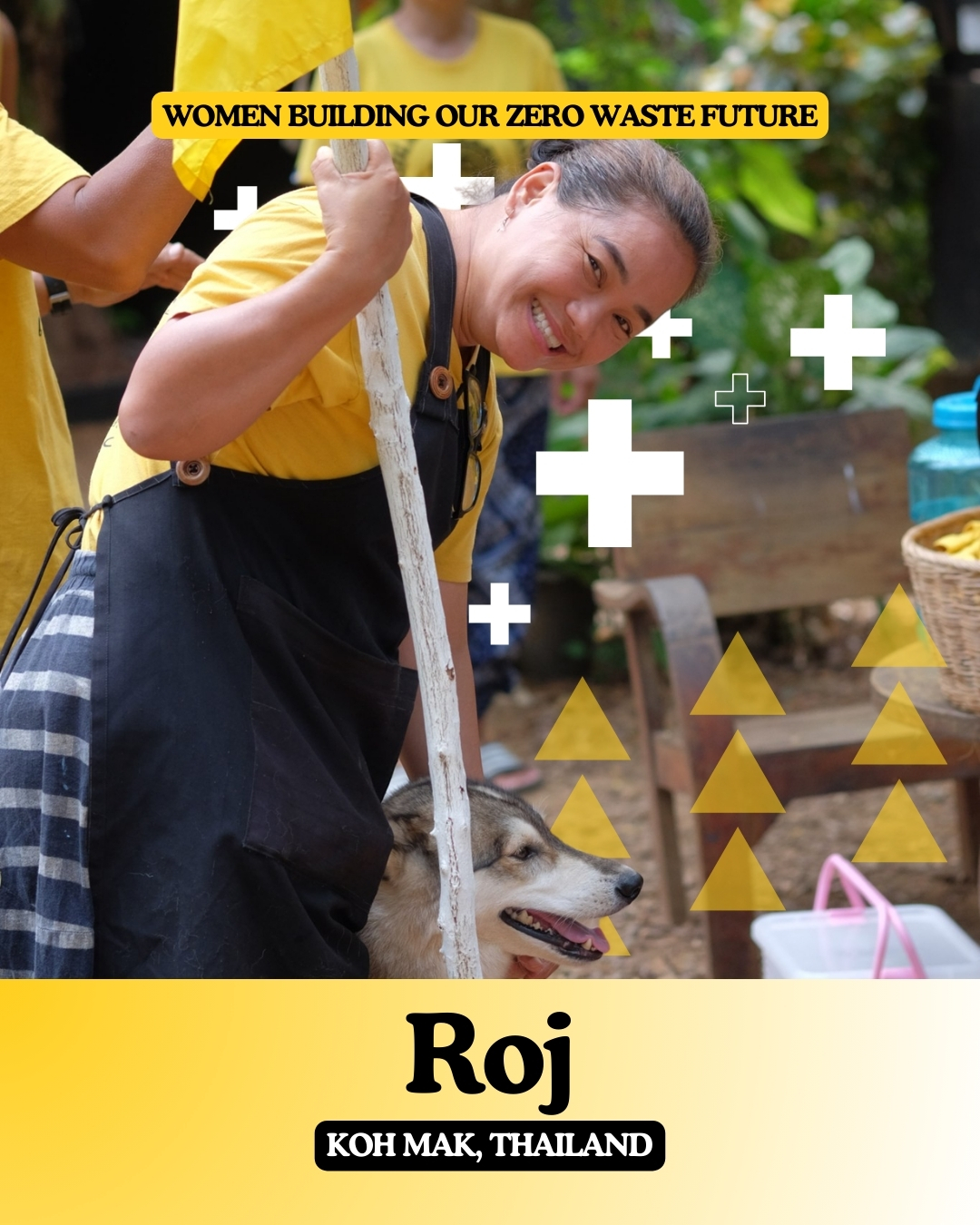
Roj, Trash Hero Koh Mak, Thailand

Roj’s awareness of waste began far from home. During an internship at a restaurant in Germany, she saw waste being carefully sorted into different categories – something that was not common in Thailand at the time. The experience left a lasting impression.

Later, when she opened her own restaurant on the island of Koh Mak, she decided to implement proper waste separation from the start. The result was striking: once waste had been sorted, very little remained for municipal collection.

Today, her restaurant has also significantly reduced single-use plastics. Plastic straws have been replaced with glass. Instead of selling bottled water, they provide refillable glass bottles. Used cooking oil is transformed into cleaning soap. Lime peels and kitchen scraps become natural dishwashing liquid.

They are not entirely zero waste – takeaway packaging for instance remains a challenge – but perfection has not stood in the way of progress. Living on a small island and in close proximity to nature makes every choice visible. So Roj has learned to do what she can, consider each item and use it more mindfully.

There have been some cost savings, she says, but more important is the sense of pride. “We feel proud to be a restaurant that cares about the environment. Our staff and the people around us are supportive and that keeps us improving.”

Roj joined Trash Hero Koh Mak in 2018 after seeing the value of keeping the island clean. At first, she contributed by baking brownies for volunteers each week. Today, she leads the chapter.

Her advice to others considering reducing waste is practical: start small, one change at a time.

read more
SeemaWomen building our zero waste future

This is what showing up looks like

by Seema on 29/01/2026 No comments

Change doesn’t start with promises. It starts with people who show up. 

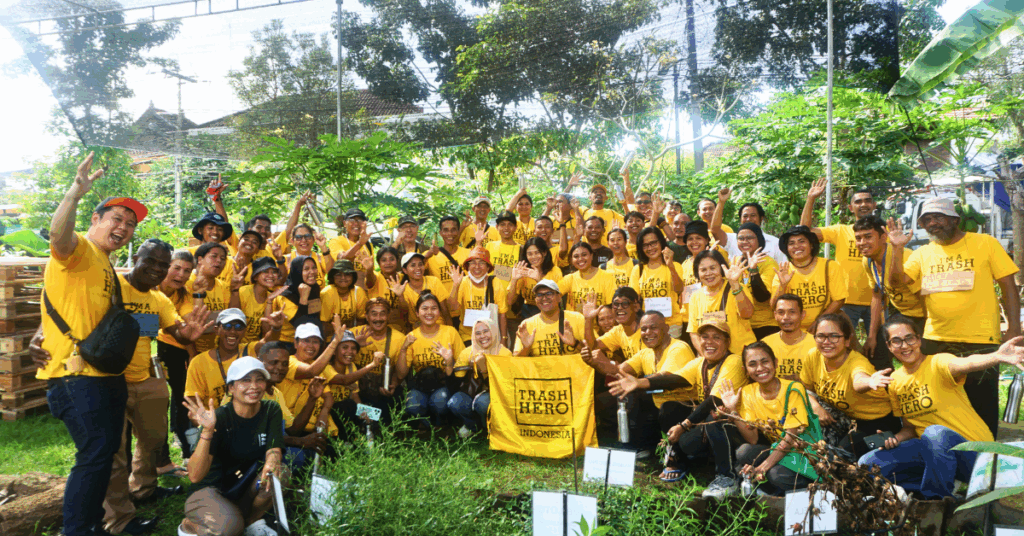
Every week, Trash Hero volunteers take action in their communities – to clean, educate and change the way people view, handle and prevent waste. This year, we were active in 95 locations in 14 countries (Cambodia, Czech Republic, Germany, Indonesia, Japan, Kuwait, Malaysia, Myanmar, Serbia, South Korea, Switzerland, Thailand, USA, and Vietnam). 

After collating the data logged globally during 2025, we’re proud to share what we achieved together in this short video:

Below, we break down the impact of each of our core programmes.

Action and Awareness

In 2025 alone, Trash Hero volunteers organised 2,071 community cleanups, mobilising 37,089 volunteers, including 10,922 under 16s. Together, they collected 115.1 tonnes of trash.

This brings the total impact of our Action and Awareness programme from December 2013 to December 2025 to:

  • 25,378 cleanups organised
  • 599,248 volunteers mobilised (including 165,842 under 16s)
  • 2,716,807 kg of trash collected 

Trash Hero Communities 

Thanks to their consistent and reliable action, our volunteers are often given opportunities to share their knowledge and perspectives on waste. This includes giving educational presentations, supporting zero-waste events, or joining policy discussions. In 2025, Trash Hero volunteers organised or participated in 237 community events, engaging 14,425 people in the issues surrounding plastic pollution and the actions needed to solve it.

Since 2022, Trash Hero volunteers have engaged 40,110 people in 700 such events.

Our Trash Hero Communities programme also includes our water refill network, which currently consists of 584 participating businesses. In 2025 alone, they have prevented the use of 1.8 million single-use plastic bottles and 98 tonnes of CO2 emissions. Since the project began, it has:

Kids and Education

Our Trash Hero Kids programme engages primary school children in the stewardship of their environment, using a story and activity book to support long term behavioural change. In 2025, 629 new kids enrolled in the programme. We also ran 59 events for kids, introducing 6,856 under 16s to the critical issues of plastic pollution. We started logging these events in 2022; since then we have held a total of 298 kids’ events, involving 21,366 children.

Thank you to everyone over the years who has joined, organised, donated, shared, and believed. You are a vital part of our movement.

We hope you’ll join us again in 2026. 

read more
SeemaThis is what showing up looks like

What we learned from our volunteers in 2025

by Seema on 03/12/2025 No comments

Insights from the Trash Hero global volunteer survey

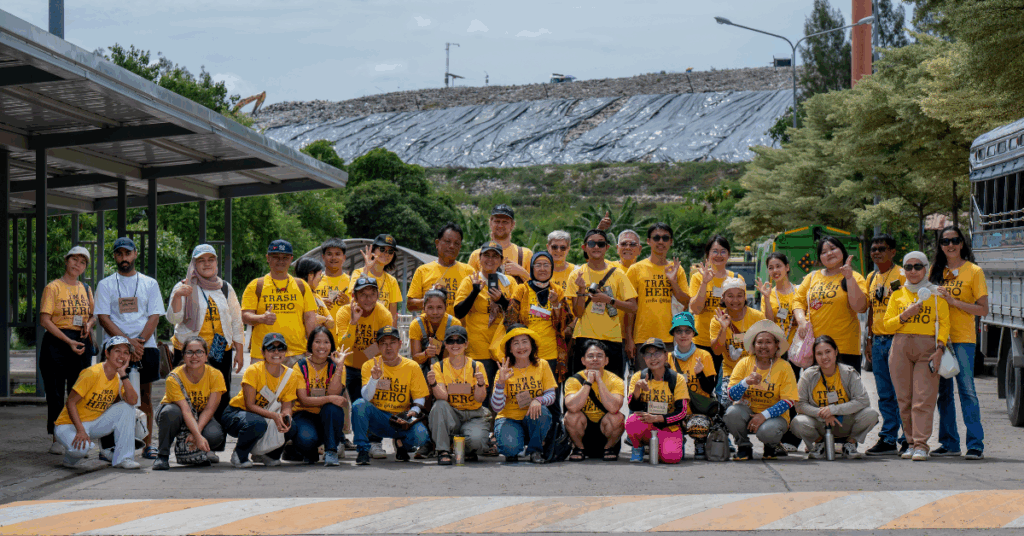
What is it like to be a Trash Hero? Earlier this year we asked our volunteers to share their experiences in an anonymous survey. 156 volunteers from chapters around the world took part. This represents roughly half of our regular volunteer base, spread evenly among chapter leaders, core team members and frequent participants (with no special responsibilities).

The answers they gave will help to guide our work over the coming months. They show what’s working, what needs attention, and how this movement continues to grow – not just in numbers, but in confidence, wellbeing and community power. Here are the key takeaways.

1. Volunteering feels good – and meaningful

Across all regions, the message was clear: people enjoy showing up.

  • 94% enjoy volunteering
  • 92% feel valued
  • 88% feel they’re making a difference

Even though the work can sometimes feel never-ending (we leave a place clean, but the trash is always back next time), most felt connected to the bigger picture and able to contribute in a way that matters.

“During my time as a Trash Hero volunteer, I’ve felt incredibly useful to the community. Even with small activities like this, the impact was very good for the community and the environment too.” Regular volunteer, Indonesia

“People become more aware through the sharing of [activities] on social media. Feedback often indicates that people pick up litter themselves or are more mindful of waste prevention.” Core team member, Trash Hero Lübeck, Germany

2. A strong sense of purpose and belonging

Many volunteers spoke about the feeling of being part of a global movement.

  • 85% feel a sense of purpose
  • 86% feel part of something bigger

That sense of belonging is one of the strongest markers of resilience – and one reason our chapters have continued for years with steady participation.

“I feel like I’ve become a more connected, wiser, and more useful person since joining Trash Hero. There’s a real positive contribution I can make.” Core team member, Trash Hero Larantuka, Indonesia

3. Personal growth: confidence, skills and wellbeing

Volunteering with Trash Hero isn’t only about taking care of the environment. It changes people too.

  • 81% say they have gained new skills and knowledge
  • 73% report improved health and wellbeing
  • 66% feel more confident after joining

Asian volunteers were more likely to notice these changes than their European counterparts. People typically learn how to run cleanups, coordinate teams, talk to local businesses, debunk false solutions and advocate for change. Small weekly actions build leadership from the ground up.

“Through volunteering, I gained much knowledge in plastic waste pollution and ways to address it.” Core team member, Trash Hero Gaw Yan Gyi, Myanmar

“It made me more confident to express myself and not feel embarrassed to do good deeds, even if what we do is dirty work.” Co-leader, Trash Hero Patong, Thailand

“I’ve expanded my network and knowledge about waste management, the dangers, and risks of plastic waste.” Core team member, Trash Hero Belu, Indonesia

4. The ripple effect: habits and communities shift

The impact doesn’t stop at the beach, river, or street.

  • 83% say they have reduced their own waste
  • 63% noticed positive changes around them

Volunteers often become the catalysts for bigger shifts — encouraging reuse habits, starting community discussions, or feeding data into research and policy work.

“My family has changed (kids now take their own tumblers to school, husband takes his own tumbler to the office, we go to the market with a basket, to Alfa [minimart] with a tote bag, weddings, etc. with our own water bottles). In neighbourhoods and communities at every meeting or event, there’s no longer bottled water; the committee provides refillable water, and participants bring their own tumblers.” Core team member, Trash Hero Ende, Indonesia

“The topic [of waste reduction] is being discussed, and my efforts have made it more visible within my circle of friends.” Leader, Trash Hero Bern, Switzerland

“In the beginning, when we started cleaning up trash, we would collect it and post reports online. It was like pointing out that the area was dirty — which the municipality might not have liked. But we kept doing it consistently, gradually building understanding. In the end, the municipality began helping by managing the trash we collected every week.” Co-leader, Trash Hero Pattani, Thailand

5. A safe, supportive environment

The large majority of people (83%) reported no negative experiences during their volunteering. The difficulties that were mentioned included:

  • 2% felt volunteering took too much of their time
  • 4% felt underappreciated
  • 7% reported experiencing or having to deal with a conflict

We’re addressing these issues with individual help and improved support systems. The positive experience reported by most volunteers – many of whom have served close to a decade or more – speaks to a strong local leadership and organisational culture across 95 chapters in diverse locations.

“For me, Trash Hero isn’t just about cleaning up the environment. It’s about recharging my energy. An hour at Trash Hero leaves me enjoying every moment, reenergized, feeling at peace, and welcomed by my friends in the community.” Regular volunteer, Indonesia

“It is a good experience. Members are very supportive. It’s an activity that’s always full of smiles.” Regular volunteer, Trash Hero Ao Nang

6. What this means for our mission

Trash Hero has always been a bridge: grassroots action on the ground, linked to systemic change at the local and global level. These results show that our movement stays strong not only because of numbers, but because of relationships: people feel valued; they learn and grow; they experience health, community and purpose; and they see the system around them start to shift. This is how transformation happens – from the inside out, and from the community up.

An invitation: If you’re already part of this movement: thank you. Your actions, every week, are shaping a zero-waste future.
If you’re new, or curious, or looking for a way to start: come along. Find your local Trash Hero chapter. Be part of the real solution!

read more
SeemaWhat we learned from our volunteers in 2025

Communicating our mission: volunteer training

by Lydia on 23/07/2025 No comments

Changing people’s perceptions and behaviours isn’t as simple as just presenting facts. At Trash Hero, we’ve always believed that empathy, leading by example and encouraging small, visible steps play an important role in shifting behaviour and fostering lasting change. 

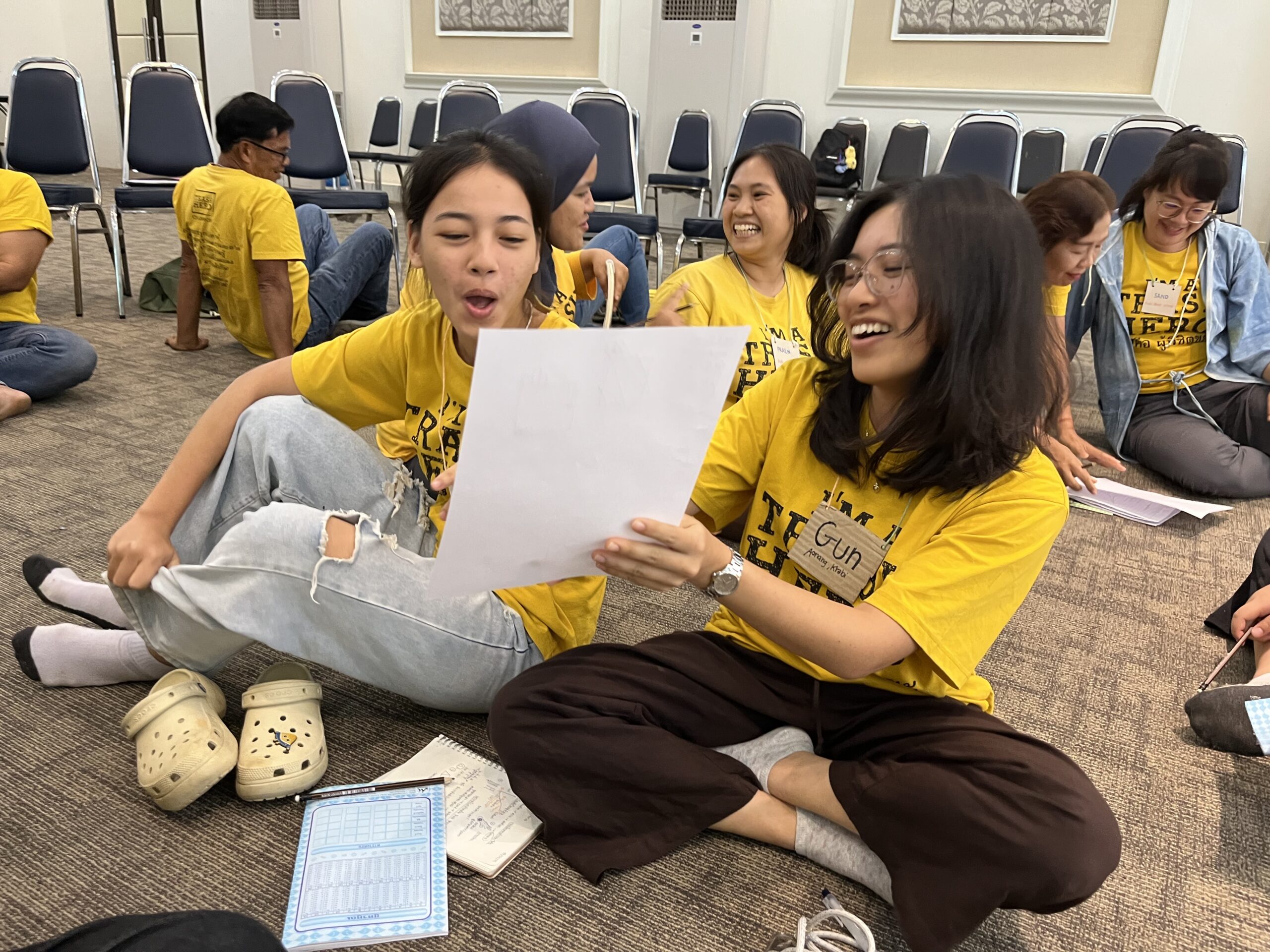
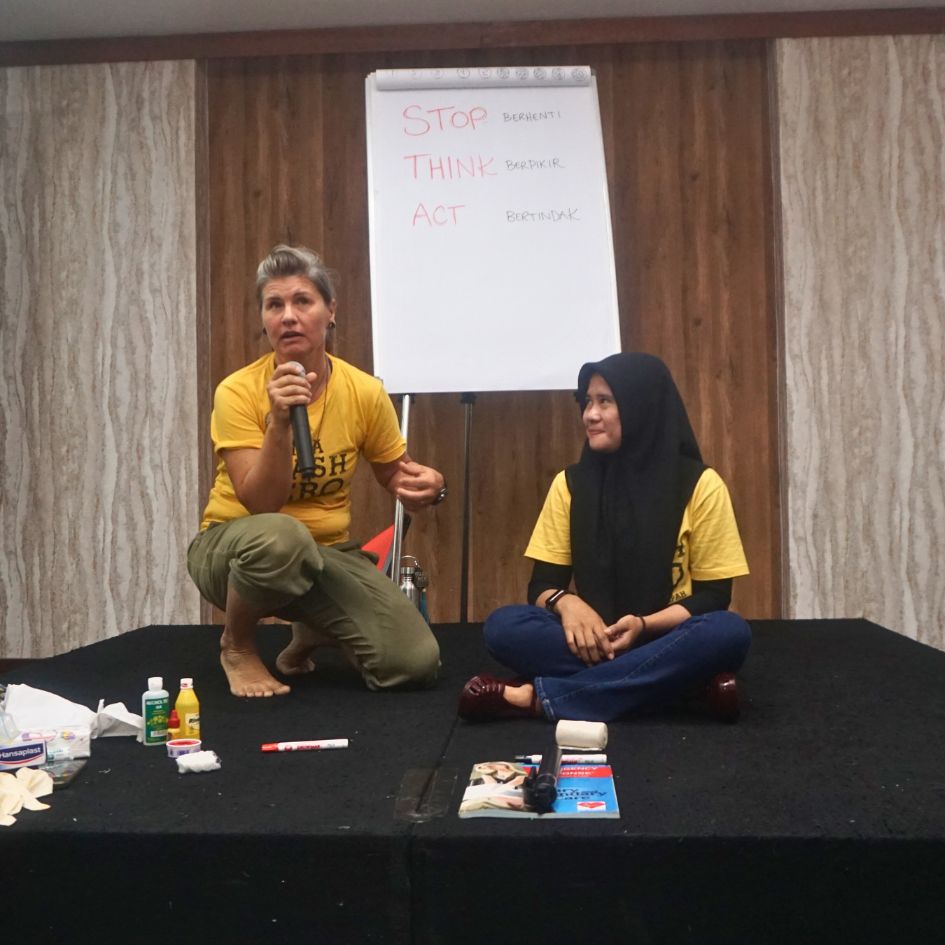
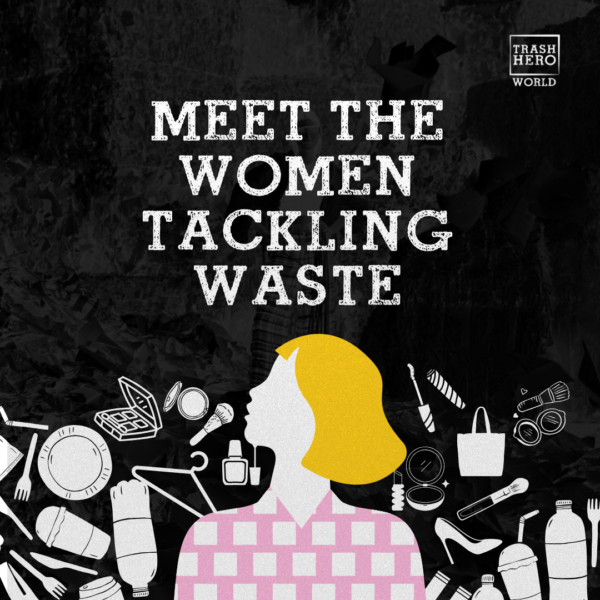
It’s a philosophy we embraced at our 2025 Family Meetings in Southeast Asia. These gatherings bring together our volunteers for three days of training that goes further than many might expect. As Ni Luh Putu Pradnyadari from Trash Hero Yeh Gangga, Indonesia, put it: “I initially thought that this FM activity would only invite me to discuss plastic and how to run Trash Hero, but it was far more than that. This activity actually changed many perspectives and indirectly changed mindsets and behaviours.”

The training sessions, held in Kuta, Bali, Indonesia, and Bangkok, Thailand, were designed to equip participants with the skills and knowledge needed to effectively communicate our mission and amplify their impact. 

On the agenda

This year, we focused on effective community engagement. We looked at how individuals and societies change and the strategies and skills needed to make this happen. We also explored how greenwashing affects our work and the latest science on plastic and health.

As Krish from Trash Hero Da Nang, Vietnam shared: “With more knowledge, I feel more confident in helping people become aware of environmental protection.”

An energetic approach to learning

The understanding that facts alone won’t change people’s minds also shapes how we run our training sessions. We created an energetic and engaging learning environment designed to keep volunteers inspired and connected. 

  • Interactive workshops encouraged volunteers to ask questions, think critically, and share their unique experiences.
  • Quizzes and games kept the energy high while reinforcing key learning material in a fun way. 
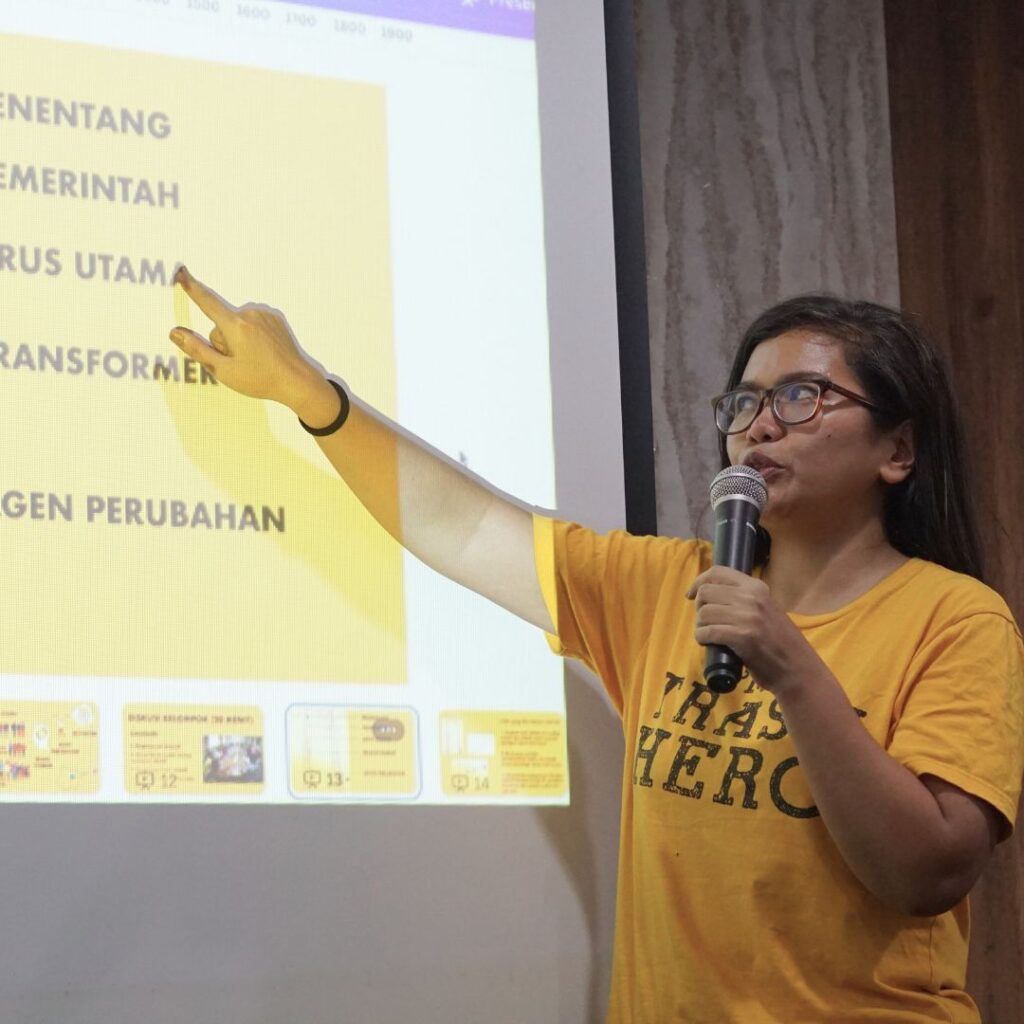
  • Informative presentations provided essential, up-to-date knowledge on plastic pollution, zero waste solutions and the wider systemic issues.

Memorable moments and real-world insights 

The weekends were filled with memorable moments and fun experiences, including field trips.

In Indonesia, volunteers visited Banjar Tegeh Sari, a pioneering zero waste community. The visit allowed participants to see innovative local solutions in action and discuss how they could apply these insights back home to ignite their own zero waste projects. 

In Thailand, participants visited the fire department tasked with managing the Praeksa Mai landfill, which processes over 4,000 tonnes of mixed waste every day. Seeing waste on such a large scale was an impactful moment for many volunteers. After this, they visited a local restaurant that’s participating in a new city-wide scheme to separate organics, offering a glimpse into practical solutions. Maksym from Trash Hero Ho Chi Minh, Vietnam, summarised the day: the landfill helped him “understand the scale of the disaster and the restaurant [helped him] to understand the small solutions everyone can make.”

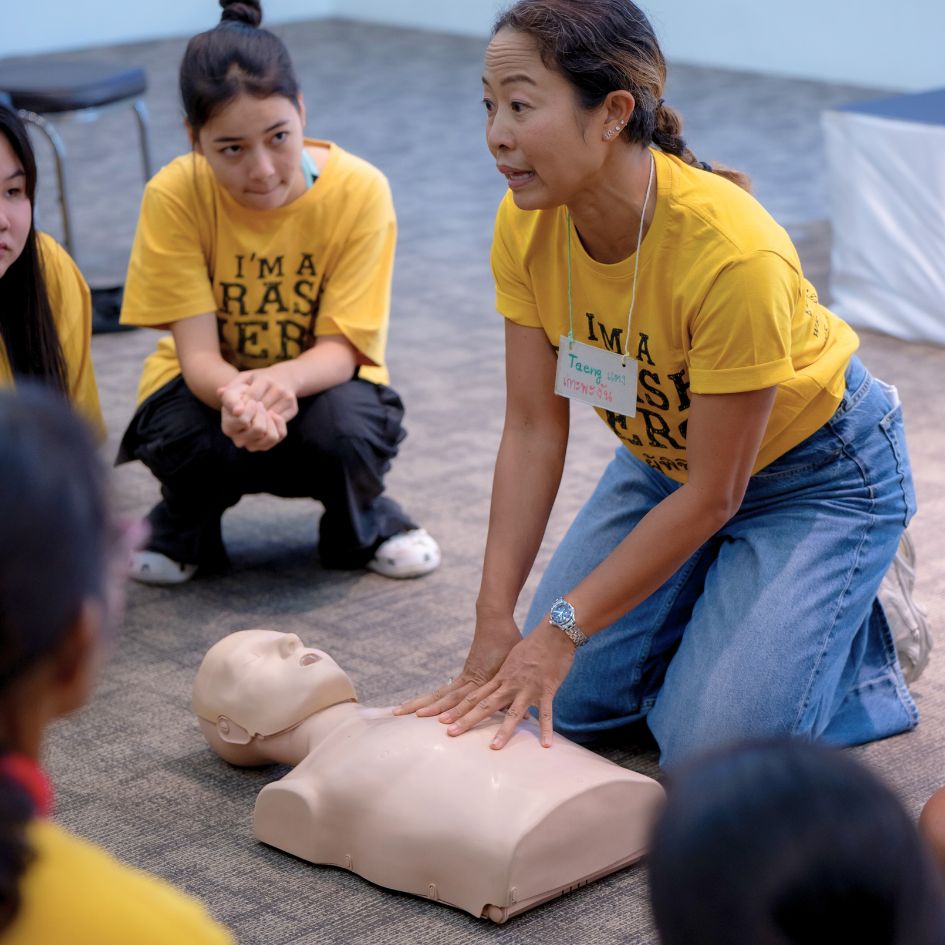
On the final day of the meeting, in both locations, we ran a basic first aid training session aimed at dealing with potential minor injuries that could occur during a cleanup. This gave the volunteers added confidence to deal with issues that could arise, which is part of our commitment to the health and safety of cleanup participants. 

Trash Hero World covers the travel, food, and accommodation costs for all participants of the family meetings. We also handle the logistics and content design, creation and delivery, ensuring the volunteers can focus entirely on learning and connecting. The shared experiences, deep learning, and powerful connections made at these meetings keep us motivated in our mission to create a world free from plastic pollution. The impact of these gatherings extends far beyond the three days of training, as Yobin Bataona from Trash Hero Lembata shared after the meeting: “I’m starting to be optimistic that every small step we take will create a domino effect.

Watch highlights from both weekends here.

Trash Hero Indonesia Family Meeting 13-15 June

Location: Kuta, Bali

Participants: 56

Chapters: 29

Trash Hero Family Meeting Thailand 20-22 June

Location: Bangkok, Thailand

Participants: 37

Chapters: 18

read more
LydiaCommunicating our mission: volunteer training

Women tackling waste

by Lydia on 07/03/2025 No comments

Women make up a huge part of the Trash Hero movement, as both volunteers and staff. This International Women’s Day, we are highlighting some of our female leaders who are tackling waste around the world and inspiring others to do the same.

Isabelle, Trash Hero Damansara

Malaysia

When Isabelle, a young volunteer from Kuala Lumpur, Malaysia, grew tired of watching plastic waste pile up in her neighbourhood, she felt it was time to stop talking and start doing. She discovered Trash Hero through an online search and found our proactive ethos resonated with her own.

She decided to start her own Trash Hero chapter and mobilise her fellow students to join her in tackling plastic pollution. In just a few months (August 2024 – Feb 2025), Trash Hero Damansara has organised seven cleanups with 71 volunteers, the majority of whom were under 16. 

Her age is far from being a limitation: Isabelle has used her existing school network to encourage other young people to join the movement, inviting student clubs such as the SKISS Leo Club and HELP Interact Club to join the cleanups.

“Be the first to step up”

Isabelle believes that even small actions, like using reusable bags and water bottles, make a positive difference. She wants to inspire others and change their mindset. Later this year she will give a presentation at her school about reducing waste.

Her family and friends have been very supportive and she feels her experience as a Trash Hero has been valuable for her own personal growth. She remains a firm believer in taking concrete action: ”instead of waiting for others to make the first move, be the first to step up!”

Follow Trash Hero Damansara on Instagram


Hawa, Trash Hero Ambon

Indonesia

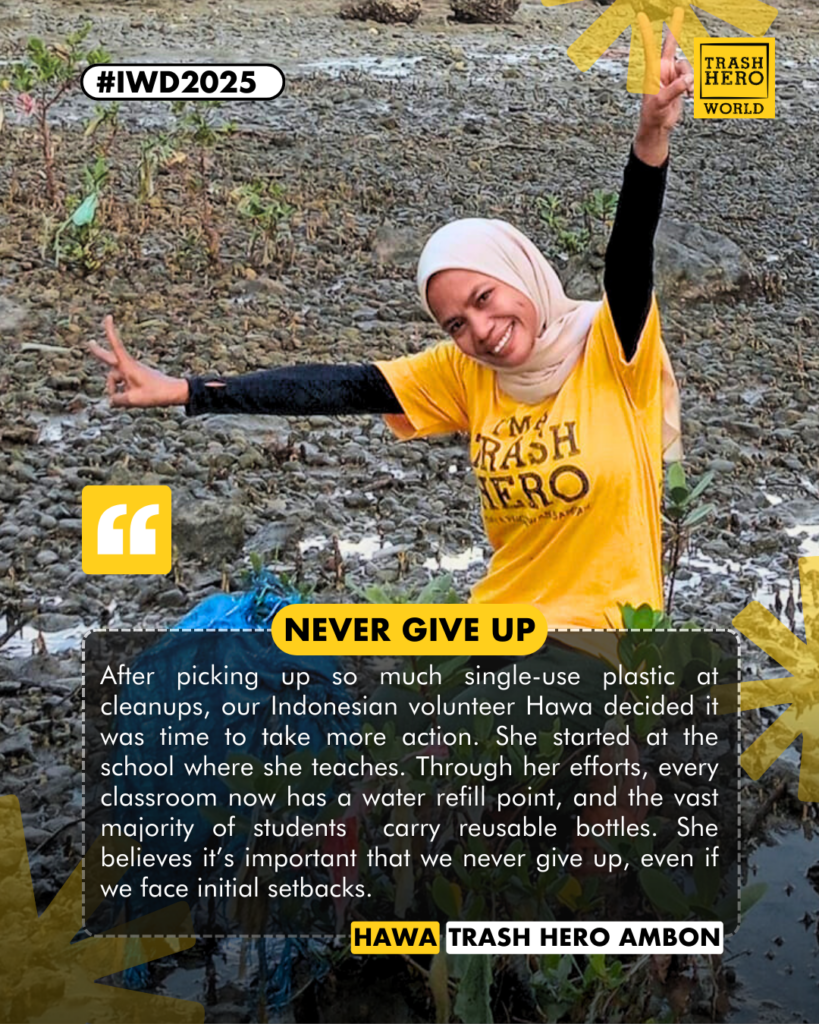
After volunteering with Trash Hero Ambon, Hawa, a teacher in Layeni Village in Ambon, became a champion of waste reduction. She says witnessing first hand the impacts of plastic pollution at the cleanups made her determined to do something about it.

She and her friends began educating local youth through their community outreach programmes, focusing on the danger of single-use plastic. At first this was challenging: although they had support from the local government, their messages were met with resistance. Changing behaviour with advocacy alone is not easy.

Then, seeing an opportunity for change at her school, Hawa built upon an existing initiative encouraging teachers to bring reusable bottles. She convinced the administration to make water refill stations available in every classroom, enabling the change she wanted to see. Now the teachers and most students bring reusable water bottles to school, instead of buying water in single-use plastic. 

“Never give up”

Hawa took practical steps to foster a school-wide culture of refill and plastic waste prevention. Her advice to other women is, “Never give up. The environment is like an old house that must be kept beautiful and pristine.

Follow Trash Hero Ambon on Facebook.


P’Jin, Trash Hero Chumphon

Thailand

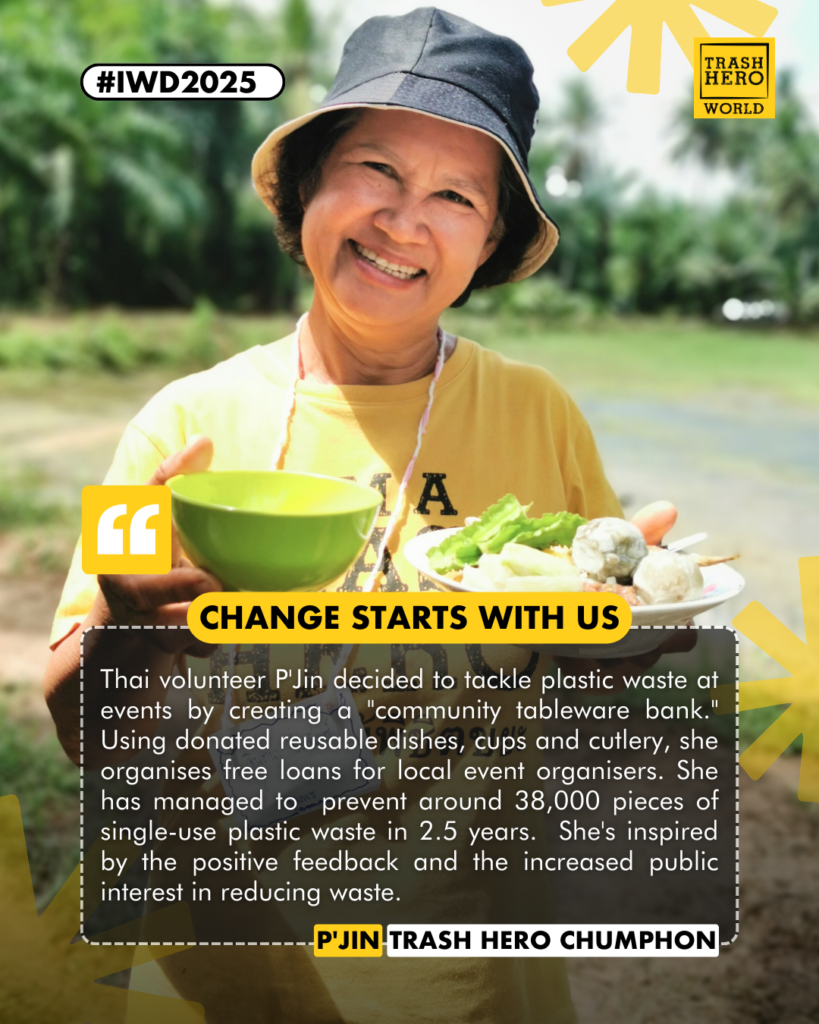
Jintana Cheunjan (P’Jin) started volunteering with Trash Hero Chumphon around seven years ago. She has always loved nature, especially the sea. As a Trash Hero volunteer, she found she was always invited to events to help people manage and sort their trash. She quickly realised that this would be a never-ending job unless we stopped creating the waste in the first place.

She wanted to offer event organisers her collection of reusable bowls, cups, and cutlery as a substitute for the single-use foam and plastic they typically provided. However, she soon realised this wasn’t an easy option because her items weren’t a matching set, making them easily lost or misplaced.

“Change starts with us”

At an event with the local Lions Club, she mentioned the issue to the organisers, and they decided to donate a full set of cooking pots, utensils, plates, cups, and cutlery to Trash Hero Chumphon. For the last four years, she has been lending the set free of charge to various events in their local area, from government workshops to religious festivals.

After a while, she started keeping a log of all the events that have used her “community tableware bank” and estimates they have been able to avoid almost 38,000 pieces of single-use plastic over the past 2.5 years.

They have also received good feedback for their efforts. P’Jin says most people are happy to have the option to reduce waste rather than deal with it later. It also makes her happy to see that more zero-waste events are happening and that she is setting a good example to those around her. She is especially inspired to see the change in kids at school events they host. She tells them that every day they don’t create waste, they should feel proud of themselves.

Follow Trash Hero Chumphon on Facebook


Sofia, Trash Hero Komodo & Mburak

Indonesia

In 2008, Sofia took a trip through Southeast Asia. It was the first time she had seen pristine beaches blanketed in plastic pollution. Later, a powerful documentary about waste made clear the global scale of the problem and she felt compelled to act.

She started small, making changes in her everyday life, such as switching to reusable bags and water bottles and encouraging others to do the same. She then helped to set up Trash Hero Komodo – our first chapter in Indonesia – and later Trash Hero Mburak, organising hundreds of community cleanups and education events. 

Then the discovery of permaculture profoundly reshaped her thinking. One thing in particular resonated with her: the idea that “we all need to give more than we take – or at least the same.” In other words, being “sustainable” is not enough, we need to regenerate.
“We all need to give more than we take – or at least the same.”
After further training, Sofia and her family committed to this idea full time. They slowly expanded their home vegetable garden into the Nepa Organic Farm, cultivating local fruits, herbs and vegetables. They are now able to meet their own needs and those of their one worker and his family. Surplus is sold to a few restaurants in nearby Labuan Bajo. 
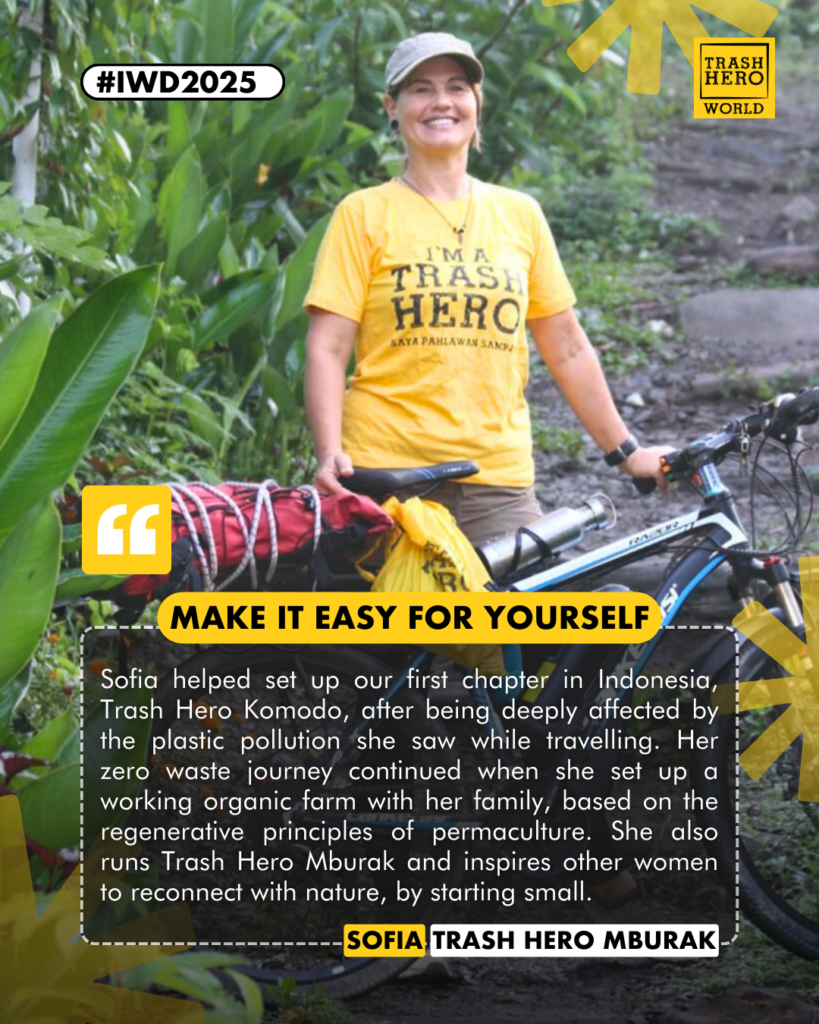
The farm operates without synthetic pesticides and fertilisers. No plastic packaging is used and food transportation is minimal, reducing pollution. For Sofia, the farm embodies her commitment to waste reduction and living in harmony with nature.

The journey to get here has not been easy, but she is determined to continue and wants to encourage other women to try zero waste living. For those starting out, she says it is important to look beyond obvious areas of consumption, to things like menstrual health, which involves a lot of toxic single-use plastic. It’s all about creating “new habits and making it easy for yourself”, she says.

Follow Trash Hero Komodo and Trash Hero Mburak and Facebook.


read more
LydiaWomen tackling waste

Volunteers creating the world we deserve

by Lydia on 12/02/2025 No comments

Imagine a world where everyone understands the impact of plastic on our bodies, health, and environment, and supports real solutions to the plastics crisis. A world where businesses prioritise preventing waste and the health and well-being of people and the planet. 

Every week, Trash Hero volunteers are working in their communities to make this dream a reality. This year, we welcomed 14 new chapters to the Trash Hero family, and the USA and Japan rejoined our growing network. We’re now active* in 103 locations across 15 countries (Cambodia, Czech Republic, Germany, Indonesia, Japan, Kuwait, Malaysia, Myanmar, Poland, Serbia, South Korea, Switzerland, Thailand, USA, and Vietnam). 

Let’s take a look at the impact each of our core programmes has made:

Action and Awareness: 

In 2024 alone, Trash Hero volunteers organised 2,446 community cleanups, mobilising 46,501 volunteers, including 17,036 under 16s! Together, they collected 105.2 tonnes of trash!

This brings the total impact of our Action and Awareness programme from December 2013 to December 2024 to:

  • 23,304 cleanups organised
  • 562,144 volunteers mobilised (including 154,918 under 16s)
  • 2,601,608 kg of trash collected 

Trash Hero Communities: 

Trash Hero volunteers, through their consistent action, are given opportunities to share their knowledge and inspire others. This includes giving presentations, building zero-waste projects, and providing input at policy discussions. In 2024, Trash Hero volunteers organised or participated in 173 community events, engaging 13,537 people in the issues surrounding plastic pollution and the actions needed to solve it.

Since 2022, Trash Hero volunteers have engaged 25,685 people in 463 events.

Our Trash Hero Communities programme includes our free water refill network, which currently consists of 579 participating businesses. In 2024 alone, these businesses have helped prevent the use of 1.9 million single-use plastic bottles, avoiding 104.4 tonnes of CO2 emissions! Since the project began, we have:

Kids and Education: 

Our Trash Hero Kids programme is based on a story and activity book that engages young people in the issues of plastic pollution. In 2024, 585 kids enrolled in the programme – which over time encourages long-term behaviour change. We also ran 70 one-off awareness events for kids, introducing 5,401 under 16s to the critical issues of plastic pollution. This brings our total since we started recording in 2022, to 239 kids’ events, involving 14,510 kids!

In total, 23,330 copies of our kids’ story and activity book have been printed, and it’s available in 8 different languages.

Thank you to all of our volunteers and supporters – we could not have achieved this without you! 

Join us in creating the world we deserve, a world free from plastic pollution. 

Watch our latest impact video here: 

*Active chapters are those regularly organising Trash Hero events. If a chapter leader steps down and there is no one to replace them, or the team want to take a break for 3 months or longer, the chapter is “inactive” and not included in our reporting.

read more
LydiaVolunteers creating the world we deserve

Beyond cleanups: Trash Hero in the community

by Lydia on 04/10/2024 No comments

Regular cleanups build trust and engagement within communities. Once trust has been established, volunteers can take our mission one step further through our Trash Hero Communities programme. 

Trash Hero Communities aims to create consensus for zero waste systems and lifestyles that can address the plastics crisis. Events range from educational presentations to implementing reuse systems at events. 

 Below we showcase a few examples from our chapters around the world.

Trash Hero Tuaran, Malaysia

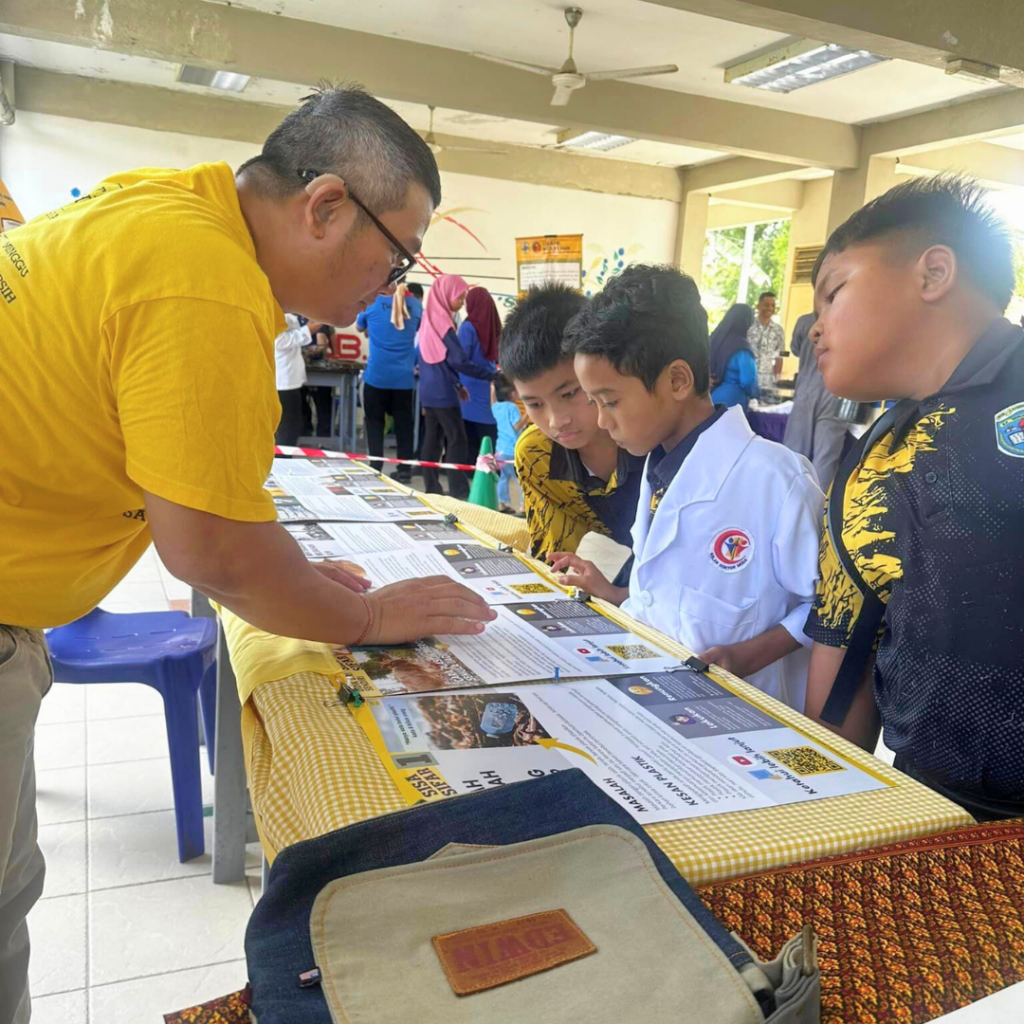
Trash Hero Tuaran has been actively involved in local schools for several years, giving presentations and helping them reduce plastic waste. Their efforts have led to a strong relationship with the school community, resulting in an invitation to participate in a two-day exhibition on the 11 and 12 September. Other attendees included the Department of Health and the Lok Kawi Wildlife Park.

During the exhibition, the chapter leader Wallcon, promoted the Trash Hero mission, encouraged people to join cleanups and used our series of “Educate Yourself Zero Waste” posters to start important discussions with kids and teachers. Over 350 students attended and we hope to see them at future cleanups or joining our Trash Hero Kids programme

Trash Hero Pattani, Thailand

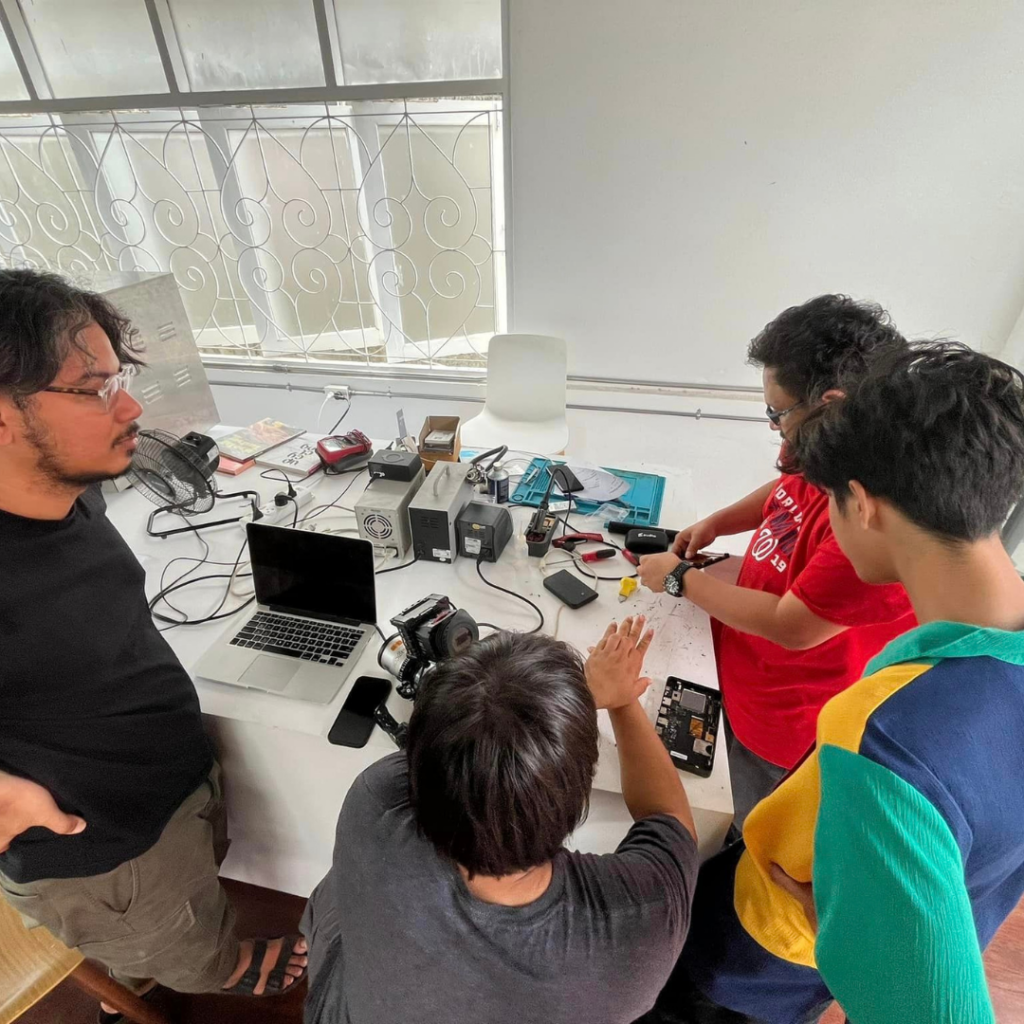
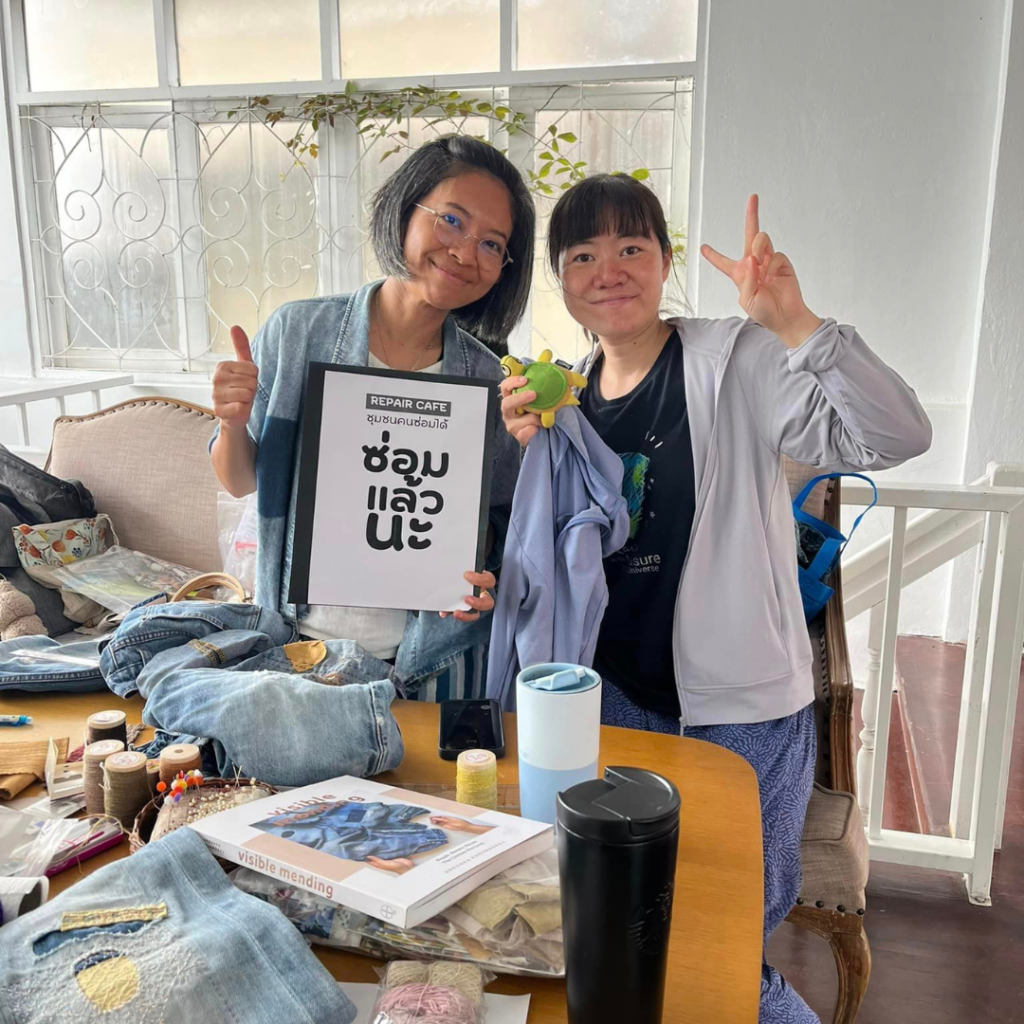
Trash Hero Pattani has hosted a variety of community events, including a “Repair Cafe” held on 31 August. Expert volunteers offered their skills to repair items free of charge, all attendees had to pay for was the cost of any new parts needed. At the inaugural session, six people volunteered their fixing skills, giving new life to bikes, electronics and clothing. These events, which now have a regular spot on the calendar, help to reduce waste and encourage people to think differently about consumption.

Trash Hero Indonesia

The Climate Policy Unit of the Centre for Strategic and International Studies (CSIS) invited Trash Hero Indonesia to a focus group discussion on public awareness and understanding of climate change. The discussions were held in several major cities across Indonesia, as the organisation strived to understand the best action to take to mitigate climate change. Trash Hero attended the discussion in Sanur in August, alongside lecturers, other NGOs and students. 

The opening question, “Do people understand climate change?” sparked a lively discussion among the 17 attendees. Trash Hero representatives challenged the view that everyone understands the causes of climate change. They highlighted the fact that the entire lifecycle of plastic contributes to climate change and this is not something that is widely recognised. This prompted discussion on the need to reduce plastic production by investing in reuse and refill initiatives.

Trash Hero Luzern,  Switzerland

Festivals are filled with single-use plastic, especially cups. The fields are left covered with trash that takes hours or even days to clean up. In 2017, Trash Hero Luzern helped the Sunset Beatz festival, held in Baldeggersee Lake, realise things had to change! Together, they developed a deposit return system for drinks. Festival-goers deposit $2 for a reusable cup, which they get back when the cup is returned. The new system has been used every year since, preventing the use of over 100,000 single-use plastic cups, and saving the organisers and volunteers hours of cleanup time! 

Trash Hero Nagekeo – Indonesia

Volunteers from Trash Hero Nagekeo collaborated with Soverdia Nagekeo to reduce single-use plastic at a conference in June: “Laudato si’ wajah bumi yang terluka”. Usually, such events rely heavily on single-use plastics, with water provided in single-use bottles or cups, lunch served in plastic boxes and many food items wrapped in plastic. 

To reduce plastic usage, volunteers approached local businesses, requesting reusable cups, glasses, plates and cutlery for the 400 attendees over 3 days. Some businesses donated items, while others agreed to loan them. The plates and glasses may all be different colours and sizes, but it’s a beautiful representation of how, with the help of passionate and dedicated volunteers, a community can come together to reduce plastic.

These examples demonstrate the diverse ways in which Trash Hero Communities can start long-term change. By going beyond cleanups and fostering sustainable practices, we can create a cleaner and healthier future for everyone. 

To learn more about our Trash Hero communities programmes click here. To find your nearest chapter and see if they can help your event go zero waste, click here

read more
LydiaBeyond cleanups: Trash Hero in the community

The key to volunteer motivation: Trash Hero Family Meetings

by Lydia on 26/06/2024 1 comment

What keeps Trash Hero volunteers organising regular cleanups year round? Perhaps the secret lies in our regular Trash Hero Family Meetings. Here, our chapter teams can network, share and better understand the “why” behind our actions. It’s an intense and often deep experience. As one volunteer from Thailand put it: “there is no other seminar as worthwhile to the soul and to the world“.

These meetings bring volunteers together for 3 days of: 

  • knowledge building: workshops and presentations on the issues surrounding plastic pollution
  • skill strengthening: building capacity for community leadership
  • boosting motivation: creating positive energy and inspiration through sharing and connecting with others

This year’s Family Meetings, held in Indonesia and Thailand, centred around a fundamental question: why do we do cleanups?  

The answer – which is not necessarily what people expect – shaped the rest of the content: to provide education about zero waste and build community engagement

  • Workshops encouraged volunteers to think critically about waste. We explored the big picture, understanding that litter is just a symptom of a larger systemic problem.
  • Informative presentations shared new knowledge about the impact plastic has on the climate and our health.
  • Group sessions looked at building trust in communities, leadership skills and effective communication. 
  • Games and quizzes helped keep everyone energised while also reinforcing the learning material.
  • A group cleanup showed the possibility for education, best practices and (in Indonesia) a brand audit.

The Indonesian gathering saw almost 60 participants travel from all corners of the country to Sanur, Bali from 31 May – 2 June.

In Thailand, the event took place from 7 – 9 June in Bangkok. It brought together participants from across Southeast Asia, including Thailand, Malaysia, Cambodia, Vietnam and Myanmar. Sessions took place in parallel in Thai and English, with volunteers happily mingling during the breaks and cleanup activity. As one volunteer from Malaysia said “language was no barrier at all when you feel and see the same things

The sessions with guest speakers, leadership coaches Pak Made Pay (Indonesia) and Khun Amnat (Thailand), proved very popular, with their insights into team building and the qualities needed for effective leadership. Thank you to both for sharing their wisdom, which will no doubt have an impact on our chapter teams. We hope to provide similar training to all volunteers soon.

Following the meetings, we sent out a feedback survey to all participants and the response was overwhelmingly positive. 100% of volunteers who replied felt more knowledgeable about both zero waste and plastic pollution, and 96% felt their motivation increased. One volunteer from Thailand commented: “the event made me know more about plastic waste, from the source to the solutions, with activities that connect people from different regions.”

Trash Hero World fully supports the family meetings, covering the travel, food, accommodation costs for all participants. We also handle the logistics and content design, creation and delivery. 

In July, volunteers from Trash Hero in Switzerland and Germany will hold a zero waste picnic to celebrate their hard work and support new chapter leaders. The shared experiences, the learning and the connections – these are the things that keep us all motivated in our mission to create a world free from plastic pollution.

Let’s keep the momentum going. 

Trash Hero Indonesia Family Meeting 31 May – 2 June

Location: Sanur, Bali

Participants: 57

Chapters: 27

Trash Hero Family Meeting Thailand 7-9 June

Location: Bangkok, Thailand

Participants: 40

Chapters: 22

read more
LydiaThe key to volunteer motivation: Trash Hero Family Meetings