
Our round-up of the month’s most important stories.
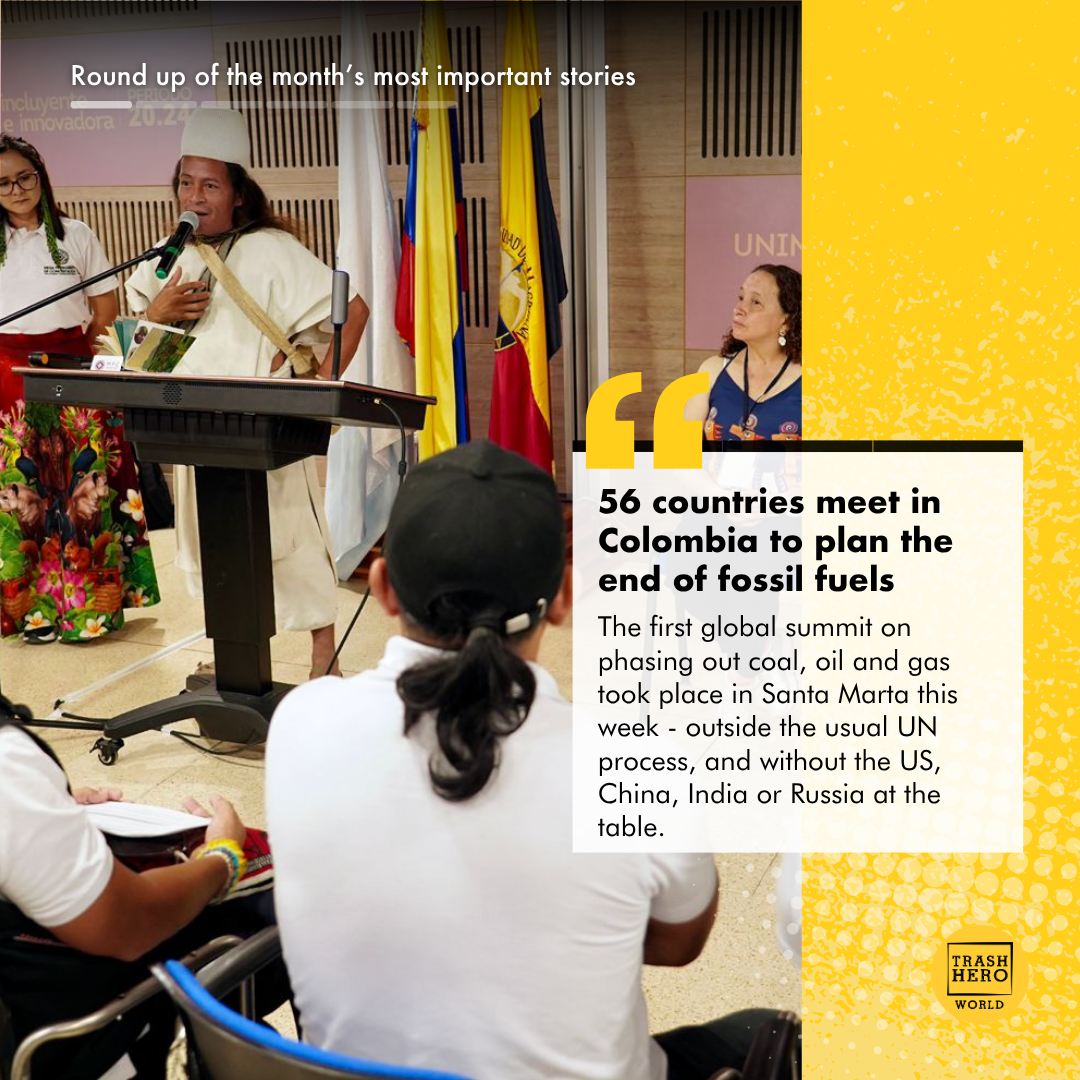
56 countries meet in Colombia to plan the end of fossil fuels
For the first time, 56 governments gathered in Santa Marta, Colombia to begin planning a fossil fuel phaseout – outside the usual UN process. Notably, calls to reduce petrochemicals were also on the table, with GAIA and others pushing for declining caps on plastic production as part of the transition. A second conference is already planned – in Tuvalu.
Gaza’s waste crisis: illegal dump sites and no end in sight
With Gaza’s waste infrastructure destroyed, 2,000 tonnes of rotting garbage is piling up daily next to camps of displaced families. The health consequences are only just beginning.
AI data centres are creating heat islands affecting 340 million people
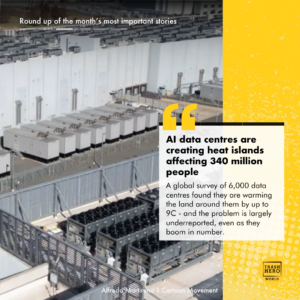
A global survey of 6,000 data centres found they are warming the land around them by up to 9C – and the problem is largely underreported, even as they boom in number.
Breast implants to baby toys: the surprising sources of microplastics
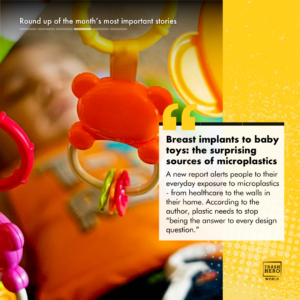
A new report maps microplastic exposure across five areas of daily life – from children’s toys and household paint to hospital equipment and breast implants. Premature babies in neonatal units are estimated to receive up to 115 microplastic particles in just 72 hours. If you want to reduce your own exposure at home, the BBC has a practical guide on where to start.
Plastic is entering wheat and tomato plants – and stunting their growth
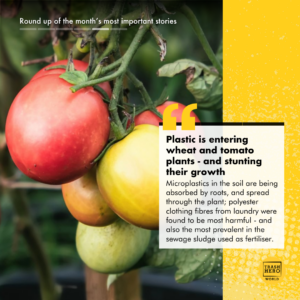
Microplastics in the soil are being absorbed by roots, and spread through the plant; polyester clothing fibres from laundry were found to be most harmful – and also the most prevalent in the sewage sludge used as fertiliser.
Sea levels are higher than we thought – and the land is sinking faster too
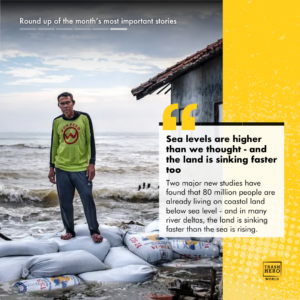
Two major new studies have found that 80 million people are already living on coastal land below sea level – and in many river deltas, the land is sinking faster than the sea is rising.
Every month we round up the top stories from the world of plastic pollution – and the work being done to stop it. From aquatic pollution to zero waste, you’ll always be up to date with the latest research, trends and greenwashing tactics.
To sign up click here.
Join the conversation