
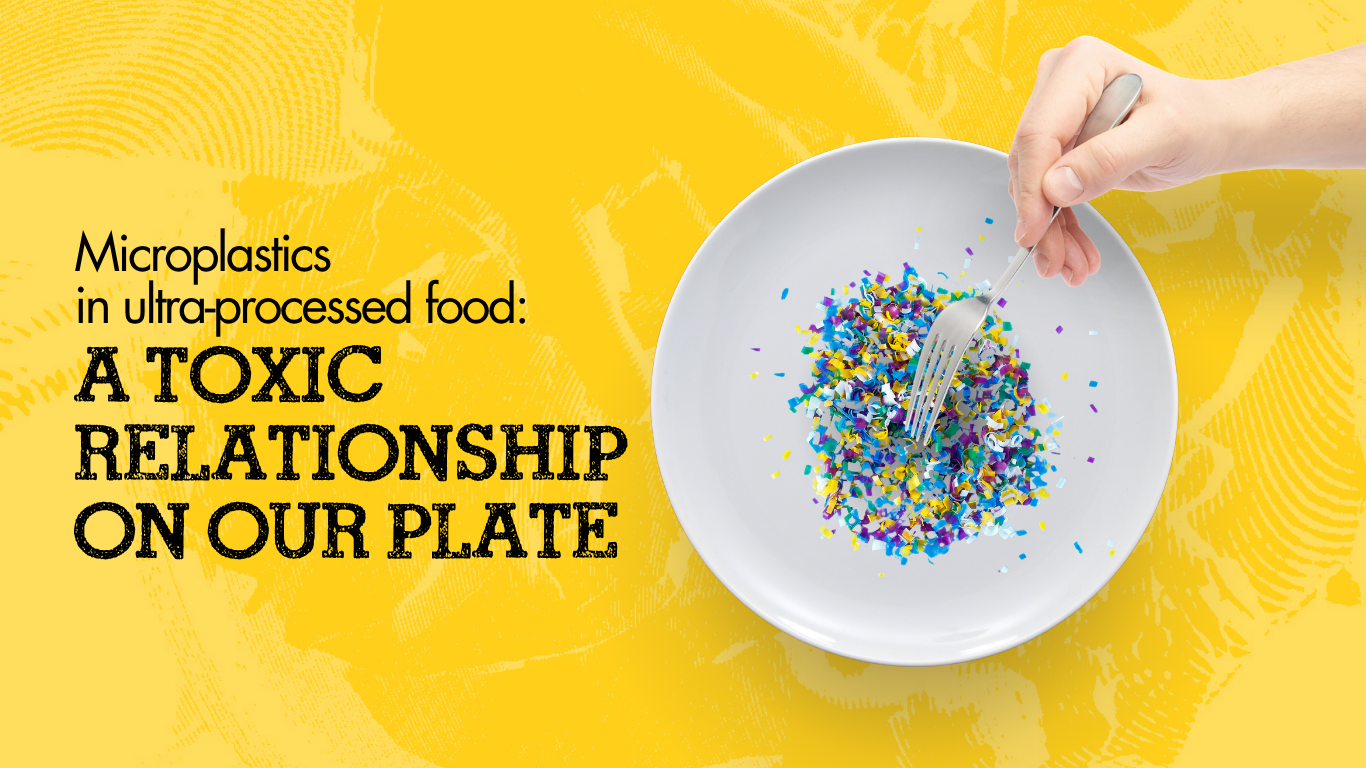
We already know ultra-processed food isn’t good for us. Instant noodles, packaged snacks, ready meals and sugary drinks: more than 75 long-term studies have now linked these foods to a long list of harms, from heart disease and diabetes to cancer and poor mental health. Unhealthy diets, in which ultra-processed foods play a major role, are tied to one in five deaths worldwide.
But there’s a second problem hiding in the same packaging, and it’s one we talk about far less. Ultra-processed foods and plastic are, in the words of one recent scientific review, in a “toxic relationship”: a co-dependent pair that generates enormous profits for both the food and petrochemical industries, at a growing cost to our health and the planet.
Why the two go hand in hand
Cheap, light and endlessly versatile, plastic is what makes ultra-processed food possible. It wraps it, preserves it, and carries the bright branding that sells it. It lets manufacturers stretch supply chains across the world, extend shelf life and reach even the poorest consumers, all at very low cost. Around 83% of flexible food packaging and nearly half of all rigid food packaging is plastic, and ultra-processed products are commonly encased in it.
But the link runs deeper than convenience: the two industries need each other.
Ultra-processed foods generate large and reliable profits for big food corporations: made from low cost and often addictive ingredients, portioned up, and sold as widely as possible. Cheap plastic is what makes that business model work.
Meanwhile ultra-processed foods give the petrochemical industry a vast and growing market for its plastic, at a time when the world is decarbonising and the energy and transport sectors are increasingly moving away from fossil fuels. The result is a profitable partnership, that neither side has much reason to give up, whatever the cost to our health or the environment.
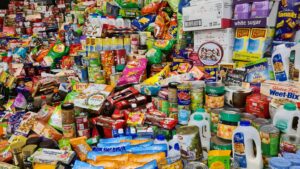
Photo by Nico Smit on Unsplash
What’s the problem with the packaging?
That close contact also comes at a price. Plastic contains upwards of 16,000 chemicals, at least a quarter of which are known to be hazardous, like BPA, phthalates and PFAS “forever chemicals”, with the majority of the rest untested. It is also constantly shedding micro- and nanoplastics, through simple friction, heat or fragmentation.
Chemicals can migrate out of plastic packaging and into the food inside through surface contact, or through particles shedded during manufacturing and use. They migrate most efficiently in exactly the conditions ultra-processed foods supply: long storage times, small packet sizes, in contact with oily or acidic contents, or with food that is heated up in the pack.
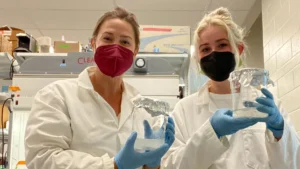
You can see this in the food itself. In a 2024 study by Ocean Conservancy and the University of Toronto, researchers tested 16 common protein products and found microplastics in more than 90% of them, with the more processed items carrying more. Chicken nuggets, for example, contained roughly 30 times more microplastic particles per gram than plain chicken breast. And heat makes it worse: the chemicals and particles in plastic leach into food more readily at higher temperatures – one reason not to pack, microwave or serve hot food in plastic.
Adding plastic chemicals to the existing health burden of ultra processed foods, with their high calories, low nutritional value and artificial additives, is unlikely to be good news.
What we don’t know yet
That microplastics and plastic chemicals get into our food is well established. What they do to human health over a lifetime is not. The evidence on microplastics’ health effects is, as the researchers themselves put it, “not yet conclusive.” Animal studies point strongly to possible risks for digestive, reproductive and respiratory health, hormone disruption and cancer. But there are limitations on human studies, due to the complexities of the chemicals involved, their interaction and accumulation, as well as the ethics of testing and available funding. The European Food Safety Authority, the EU’s official food-safety body, says it cannot yet draw firm conclusions, and its full risk assessment isn’t expected until the end of 2027. So we don’t yet have the proof to panic about our dinner, but we should still be paying attention to what’s on our plate.
The unpackaged alternative
The food that carries the least plastic tends to be the food that’s better for us anyway: fresh, whole, minimally packaged ingredients, cooked from scratch.
None of this requires a special shop or a big budget: buy loose fruit and vegetables where you can, never heat or microwave food in plastic. Keep leftovers in glass, steel or ceramic instead of plastic tubs. Each of these small choices lowers your exposure to both microplastics and packaging chemicals, and nudges your diet in a healthier direction at the same time.
It’s a reminder that traditional ways of eating, built around unpackaged, local, whole foods, had something right long before “ultra-processed” was ever a word. Less plastic in, less plastic out.

The real fix: cut it at the source
Individual choices help, and they’re genuinely worth making. But as the researchers behind the “toxic relationship” review put it plainly, consumers don’t have the power to solve a problem of this scale. That responsibility lies with policymakers.
The long term solution is to redesign the industrialised system that ties food and plastic together in the first place. That means shifting towards fresh, whole and minimally processed foods that need shorter supply chains and far less packaging; scaling up reuse and refill systems in place of single-use wrapping; and holding companies accountable for the true costs of the products they sell, rather than leaving those costs to fall on our health and our environment. It also means a strong Global Plastics Treaty that limits plastic production at source and takes a full life-cycle approach, alongside proper testing and transparency for the chemicals allowed near our food. The EU has already shown that regulation can work, restricting intentionally added microplastics in products and forever chemicals in food contact materials.
Caring about what’s on our plate and caring about plastic pollution were never two separate issues. They’re the same fight: for our health and for the health of the planet.
***
Yates, J., Kadiyala, S., Deeney, M., Carriedo, A., Gillespie, S., Heindel, J.J., Maffini, M.V., Martin, O., Monteiro, C.A., Scheringer, M., Touvier, M., & Muncke, J. (2024). “A toxic relationship: ultra-processed foods & plastics.” Globalization and Health, 20:74. https://doi.org/10.1186/s12992-024-01078-0
Baechler, B.R., Granek, E.F., Mazzotta, M., et al. (Ocean Conservancy & University of Toronto) (2024). “Microplastic concentrations in commonly consumed proteins.” Environmental Pollution. https://www.sciencedirect.com/science/article/pii/S0269749123022352
European Food Safety Authority (EFSA). “Microplastics and nanoplastics in food.” https://www.efsa.europa.eu/en/topics/microplastics-and-nanoplastics-food
European Commission. “Global action on plastics.” https://environment.ec.europa.eu/topics/plastics/global-action-plastics_en
Join the conversation