
Our round-up of the month’s most important stories.
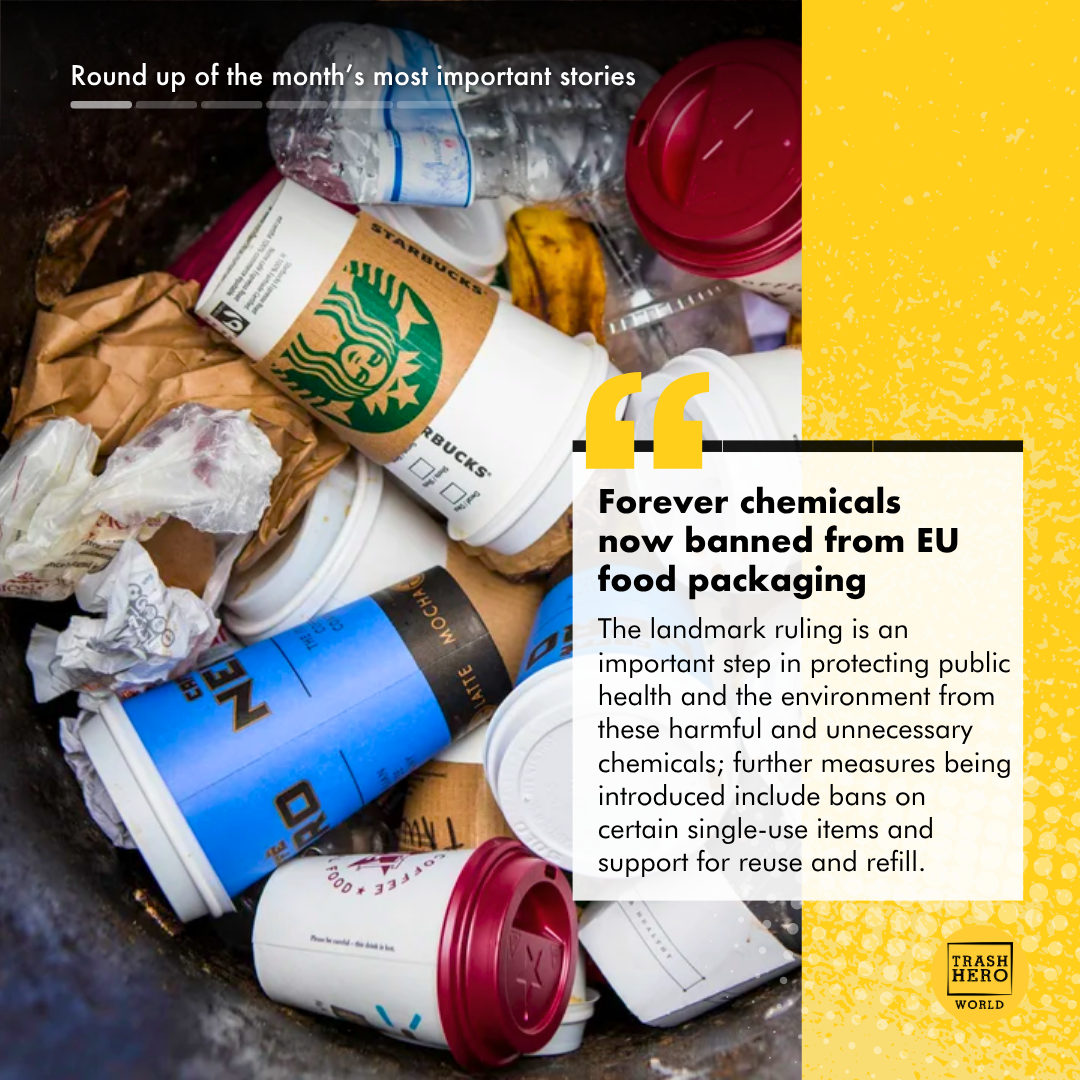
Forever chemicals now banned from EU food packaging
The landmark ruling is an important step in protecting public health and the environment from these harmful and unnecessary chemicals; further measures being introduced include bans on certain single-use items and support for reuse and refill.
One year on, the plastics treaty is “going backwards”
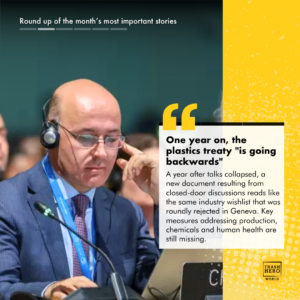
A year after talks collapsed, a new document resulting from closed-door discussions reads like the same industry wishlist that was roundly rejected in Geneva. Key measures addressing production, chemicals and human health are still missing.
New study links microplastics to ALS
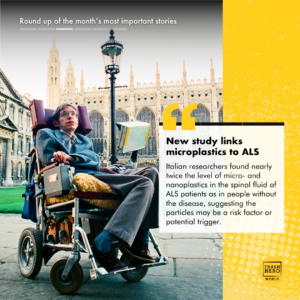
Italian researchers found nearly twice the level of micro- and nanoplastics in the spinal fluid of ALS patients as in people without the disease, suggesting the particles may be a risk factor or potential trigger.
Malaysia returns over 3,000 tonnes of e-waste
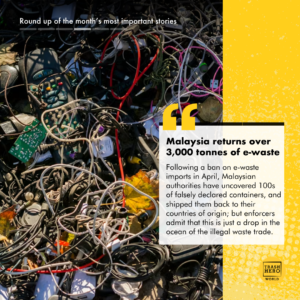
Following a ban on e-waste imports in April, Malaysian authorities have uncovered 100s of falsely declared containers, and shipped them back to their countries of origin; but enforcers admit that this is just a drop in the ocean of the illegal waste trade.
Massive plastic pellet spill devastates English coast
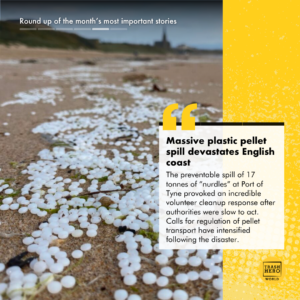
The preventable spill of 17 tonnes of “nurdles” at Port of Tyne provoked an incredible volunteer cleanup response after authorities were slow to act. Calls for regulation of pellet transport have intensified following the disaster.
Plastic has infiltrated Amazonian wildlife
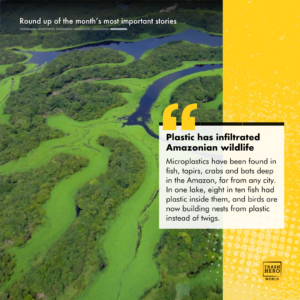
Microplastics have been found in fish, tapirs, crabs and bats deep in the Amazon, far from any city. In one lake, eight in ten fish had plastic inside them, and birds are now building nests from plastic instead of twigs.
Every month we round up the top stories from the world of plastic pollution – and the work being done to stop it. From aquatic pollution to zero waste, you’ll always be up to date with the latest research, trends and greenwashing tactics.
To sign up click here.
Join the conversation