
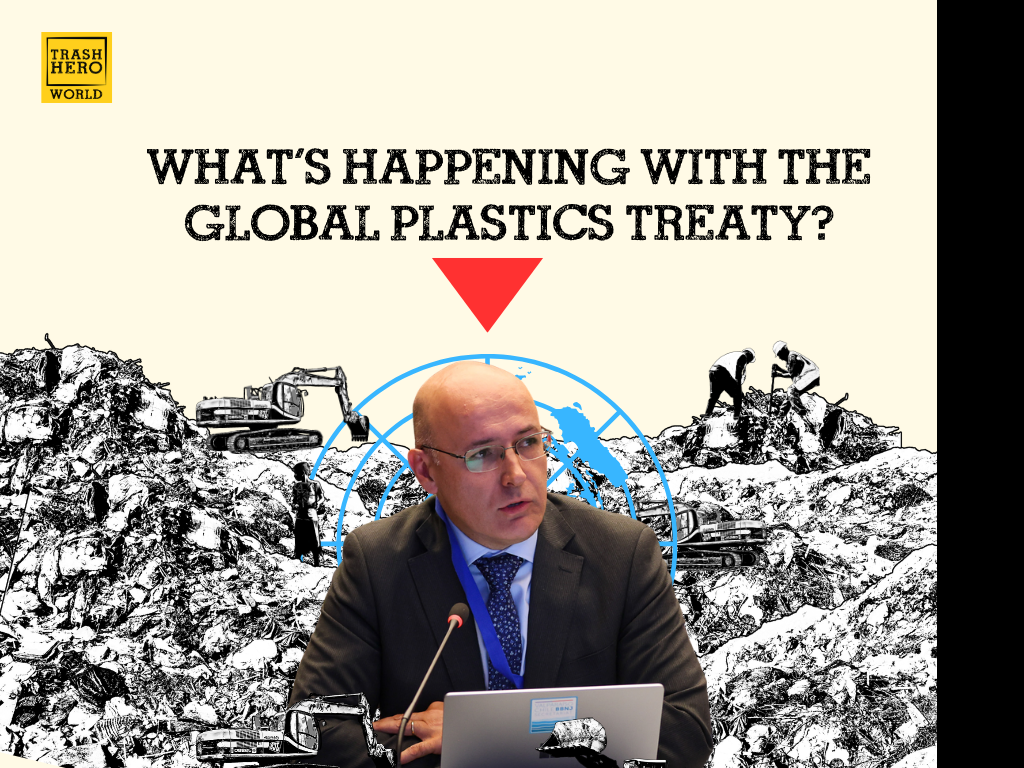
In August 2025, negotiators gathered in Geneva for INC-5.2, the session meant to deliver the world’s first legally binding treaty on plastic pollution. After 10 tense days of talks, more than 80 countries rejected the Chair’s final proposed draft as “unacceptable”: it set no limits on plastic production and barely addressed the chemicals of concern that make plastic pollution hazardous. The talks collapsed without agreement, no new date was set, and two months later the Chair resigned.
A year on, has the process actually moved forward, or simply moved rooms?
A new Chair, and a series of closed-door meetings
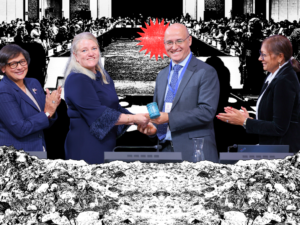
Julio Cordano of Chile was elected the new Chair of the INC in February 2026. Since then, negotiators have held several virtual meetings and one in-person gathering of Heads of Delegation. All were closed-door: no observers or press in the room.
For a treaty intended to affect every person in the world, that absence is significant. Civil society groups, scientists, Indigenous Peoples, waste pickers and other rights holders who have engaged with the process since its start have been systematically excluded from the sessions where the substance is being decided.
The new text
This closed-door process produced its first tangible output this month: an “Aid to Negotiations” text, which the Chair described as an informal reference document meant to facilitate future talks and hold “no surprises” for delegations.
The response from those who have reviewed it was critical: Break Free From Plastic members called the text a step backward that undermines the credibility of the negotiating process, arguing it fails to reflect the input gathered from member states over the past year. France described it as “disappointing” and Micronesia said it was a “lowest common denominator” document.
The Center for International Environmental Law said it had weakened ambition rather than building on the political will for strong measures already shown.
Independent legal and scientific reviewers say the new text closely resembles, and in some areas is significantly weaker than, the draft rejected a year ago. In other words, a year of private consultations has not moved the needle in any significant way.
The unresolved question
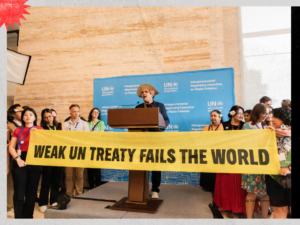
Beneath this stasis sits the dispute that sank INC-5.2: should the treaty address plastic production, or only “mismanaged” plastic waste?
The majority of states align with the treaty’s mandate to address harms across the full life cycle of plastic. They argue that a credible treaty must include production limits, on the grounds that plastic pollution starts at extraction, and downstream cleanup cannot keep pace with continued growth in production.
A smaller bloc, led by major oil- and petrochemical-producing states, wants the treaty’s scope limited to downstream measures: waste management, recycling, and litter reduction. They claim that plastic brings immense benefits to society and is essential for “development”, while denying the science on microplastics, toxicity and human health impacts.
With this “like-minded” group also exercising their veto power at every opportunity, it is hard to see a way out of this impasse within the UN process, unless a vote (allowed in the rules of procedure) is called at the next talks.
Why production is the central issue
Global plastic production is projected to nearly triple by 2060 under current trends, by which time its emissions would be eating up almost a third of the global carbon budget designed to limit climate breakdown. Recycling plastic is inefficient and problematic, and no realistic expansion of waste infrastructure can keep up with production, nor mitigate the harms of the material itself on ecosystems and human health.
A treaty that only addresses waste management, without tackling the source of the problem – the amount and toxicity of what is produced in the first place – would be failing the world. The “Aid to Negotiations” text is on course to do just that.
What’s next
The calendar for the coming months is already set:
- 27–30 September 2026: Heads of Delegation closed-door talks in Bangkok
- 25 January – 2 February 2027: various closed-door informal consultations
- 13–24 March 2027: INC-5.4, the next formal negotiating session
This gives negotiators roughly six months to break the deadlock.
The bottom line
A new Chair, months of private meetings, and a text that resembles the one states already rejected. One year later, the process is still being undermined by the plastics industry.
Ambitious countries must continue to insist that the central question of whether the treaty should tackle production or just waste management, is answered by the UN mandate: to end plastic pollution “based on a comprehensive approach that addresses the full life cycle of plastic”.
Sources: Break Free From Plastic, “BFFP members denounce plastic treaty Chair text” (Aug 2026); Center for International Environmental Law, “Chair’s Latest Global Plastics Treaty Draft is a Lowest-Common Denominator Text” and “What to Watch for in the New ‘No Surprises’ Plastics Treaty Draft” (Aug 2026); Environmental Investigation Agency via Oceanographic Magazine; Climate Home News, “‘We’ve gone backwards’ – new plastics treaty text dims hopes for production curbs” (Aug 2026); Geneva Environment Network / UNEP INC meeting notifications.
Join the conversation